Fri Fun Facts: Women in #HigherED #IT

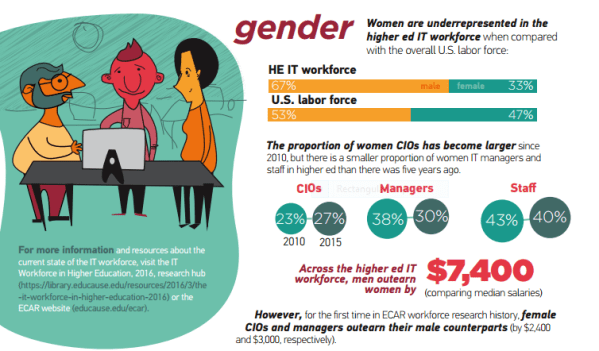
Today’s Friday Fun Fact post is dedicated to women. Women are a minority in higher education information technology workforce. Here is a great infographic from Educause.

educause gender higher ed IT

From the infographic you see that men comprise 2/3 of the higher education information technology workforce. The numbers look accurate based on my experience in higher education. I find that the highly technical work is often completed by men; while the teaching and learning with technology support staff are more likely to be women. There is definitely some interesting data here to think about related to specific areas in higher education.

The Way You Work: Revisited

Academic work requires so much solitary work and this makes it flexible and at times impossible. Work always beckons and the to do list can become burdensome. We are at the start of Summer term at the campus where I work, and it is the perfect time to think about how you can re-focus on the way you work. What works for you?
Right about now academics are thinking about the long list of things to accomplish during the Summer. Honestly, though, how do you work?

I find that I need some white noise when I am doing certain tasks and other tasks requires quiet or music at a low volume. At the day’s end when I am completely alone this is the time that I listen to music set high. I like to chunk out as many tasks as I can during these evenings alone at work. My job requires lots of meetings and this means that I have to catch up from the meetings. I am an early riser and tend to get lots completed before anyone else in my family wakes up.

I have blogged previously about the importance of having good work and life balance and boundaries. I know that this is extremely important, but the reality of work is that some months are more busy than others. I am also trying to think about the way I work and what keeps me organized and able to get things done. I love coffee and the entire process of making and savoring it. This ritual is part of my morning and reading the papers. I also realize that the caffeine is necessary most days.

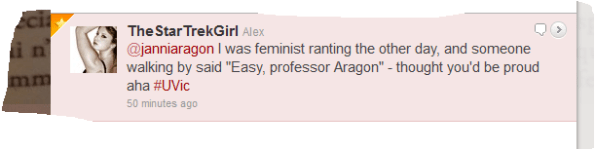
I need desk time to plan and think, and I need to walk around and will find myself in walking meetings. <They are awesome!>  . I will talk into my phone and dictate notes from a meeting or send myself emails to update. I also use this time to clear my head and plan for the next meeting, task, or day. I need some alone time to organize my day. I use Todoist to organize my tasks and I have found this tool works well for me. While this is not a feminist rant, I was thinking about this quote and feel it fits.

Aragon Rant_Twitter


Epiphanies

Most instructors have likely experienced this. You get your mail in the department and you have a card from a former student that essentially says the following: I took your class a number of years ago and wanted to say thank you. I thought you were crazy, but now that I’ve been working I find that I think of you and the class fondly. I am sorry for being a jerk. Your class was important. Thank you. I appreciate the thanks, and I also appreciate the apologies for sarcasm or making the class discussion more difficult. These notes are quite meaningful.

Approximately ten times per year, I get emails, cards or Facebook messages like the above from my former students. Funny enough the cards are from an array of students and it is sloppy to say it is from the haters. The cards come from former students who are being honest. Some might think  that they were difficult, but I find that their memory and my memory vary. I can think of two very difficult groups over the years, and I have heard from one person out of that group, and the apology appeared honest at first. I say that, as that former student appeared lots in my social media being rather antagonistic. I wish I could say that the above is pure hyperbole. It is not.

Lately, this has happened more than most years. I think it’s the fact that the numbers of students that I have taught has increased or maybe it is the fact that I just finished my tenth year at the fourth university. They know how to contact me via snail mail, email or social media.

My point here is I have found that the students who send these notes surprise me. I am happily surprised that they contacted me. I am happily surprised with the thanks, and reminded about the privilege that I have working with them in the classroom. But, each card notes that I was approachable, enthusiastic or that my playing devil’s advocate made a difference. My students are not jerks. They are diligent, hard-working, exhausted, balancing lots, and do what they can. They are imperfect. And, so am I.

Great caption, excuse the f bomb


Fill the Right Cup: Revisit

cloudsinmycoffee

Ray Bradbury explained, “We are all cups, constantly and quietly being filled. The trick is, knowing how to tip ourselves over and let the beautiful stuff out.” This metaphor works for me. And, I have taken care to surround myself with people who fill the cups, and not only take away from you. 

Which cups do you fill? Do you fill the cups of optimism, pragmatism, or pessimism? It is important to think about where you expend your mental energy. Thinking back to my grad school days there were moments when the pessimism cup was the cup that I filled and that was not a good thing, but those moments of overwhelm and impostor syndrome were intense. I have to thank my peer mentors and faculty mentors for helping me fill the other cups.

My networks helped me stay grounded during grad school. Sure, we had our moments when would complain about our workloads and our financial situations, but overall it was pretty fabulous to read, research, teach, and write for a living. My peer mentors were primarily from the cohorts ahead of me and to this day some of my closes friends are from my grad school days. I met both of my best-friends in grad school.

Related to this, peer mentors listened. The listening cup was overflowing and there are times when I miss that interaction–the ability to have long conversations. The cup that we need to keep filling is the listening cup. Listening is an important part of a supportive and honest network. As I am working with undergraduates through graduate students, I am thinking about the importance of them finding good peer networks. I am only one part of the puzzle and know that the rest of the puzzle must include peers.

I knew that at home I had support, and my friends and networks at work in the department and larger academic community helped me through my grad school days. Peer mentoring is invaluable and if your cohort does not feel supportive, seek out peers ahead of you for guidance or go outside of your department. This advice is appropriate for those of us years out of grad school, too. And, if you are years into your career remember to connect your students to other students and to other faculty. Expand your students’ networks–this is part of the mentoring or coaching process.

 Fill the cups! Confer, trust, connect, mentor, listen, and celebrate your success…and by all means surround yourself with your friends and family.


Girls Learning Code: Scratching at the Surface 

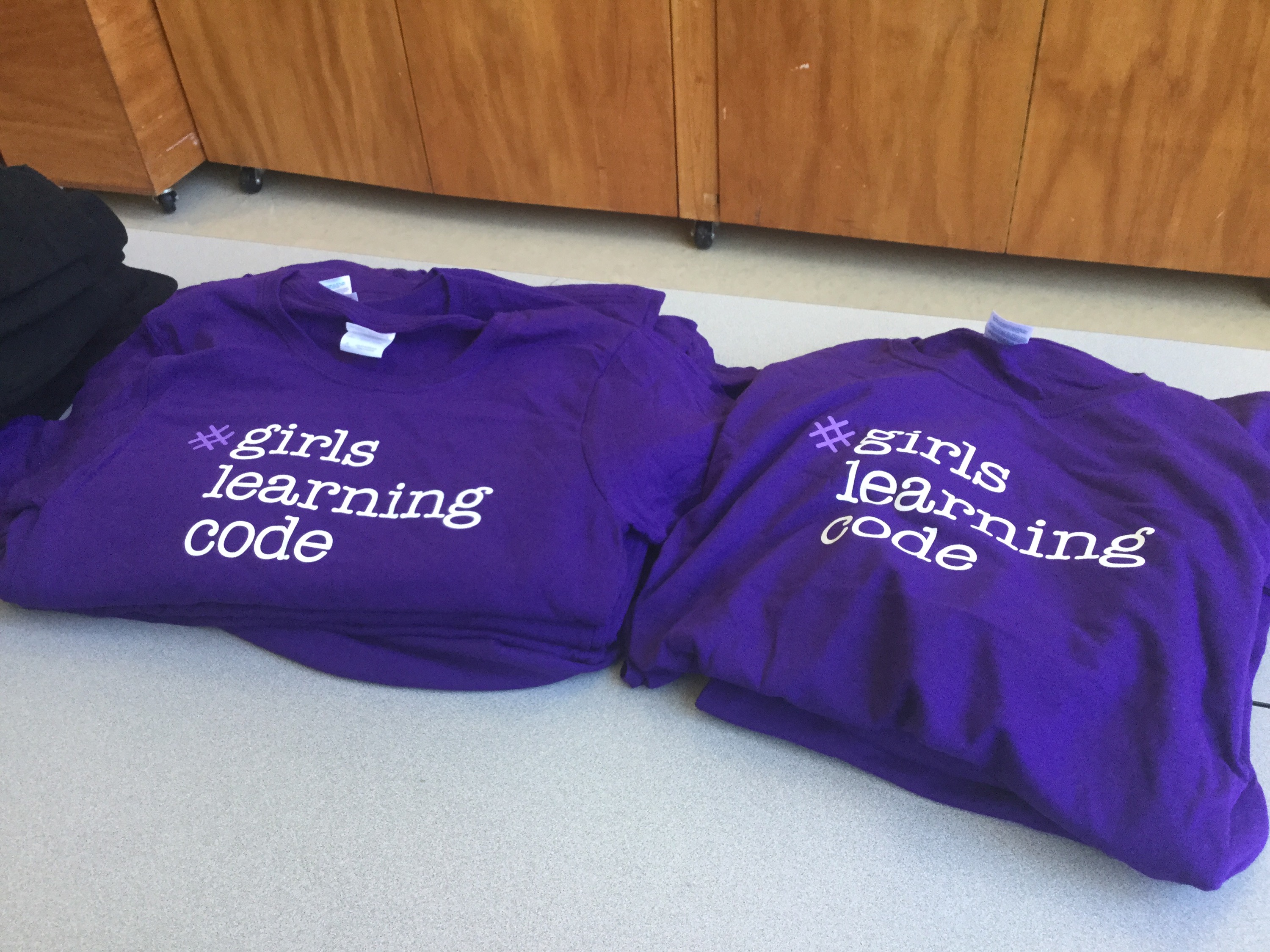
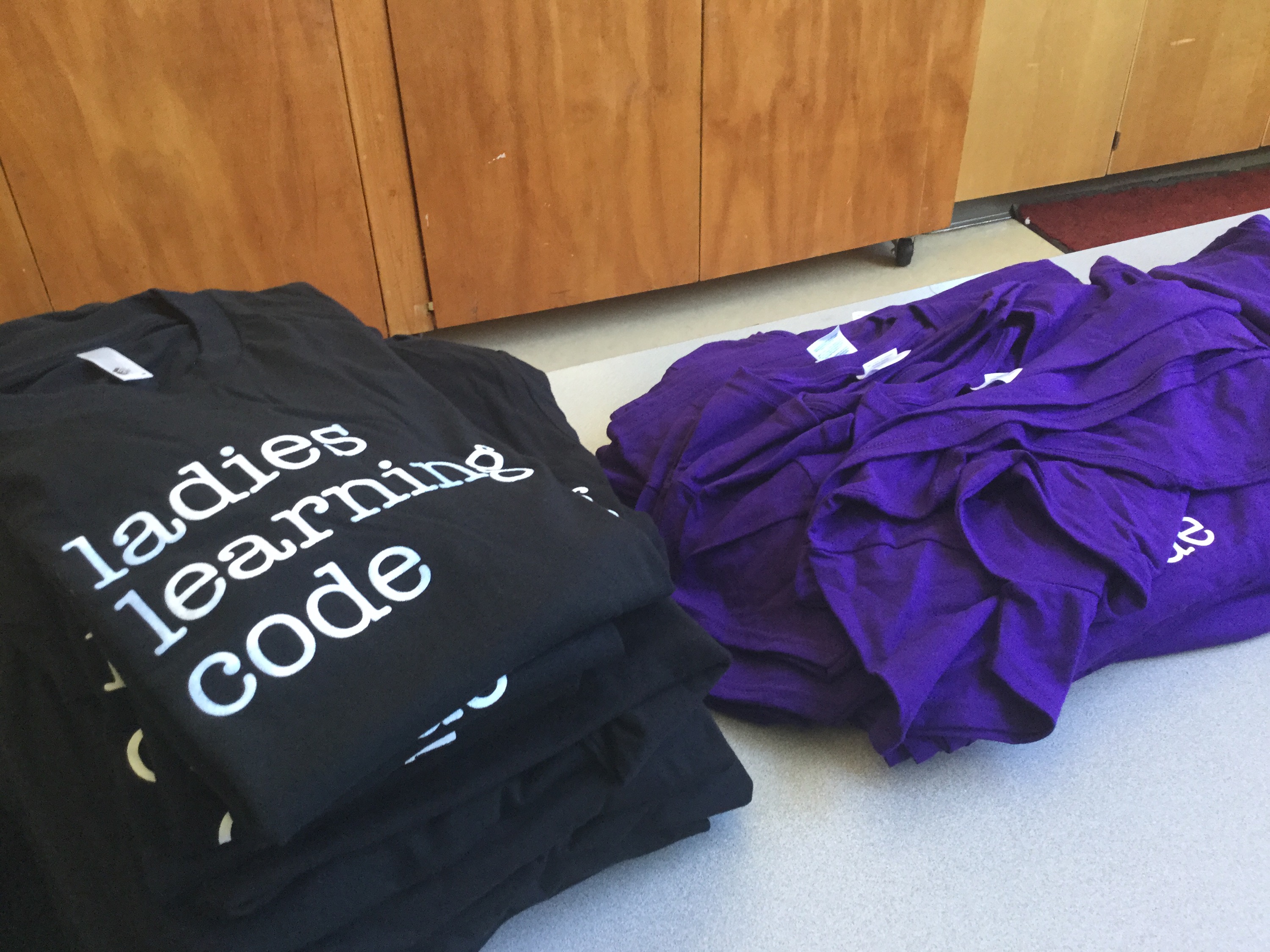
This last weekend I volunteered at one of the local Ladies Learning Code events. I helped by doing social media for the Girls Learning Code event at St. Margaret’s, an all girls school in Victoria, BC. The “code” for the day was learning Scratch, and the girls had fun designing games. The school had donated space including the use of their labs, a large area for the girls to eat their lunches, and then the presentation of the games. We ended up using a computer lab at the Junior School and another lab next door at the Senior School campus. Thank you to the school! 

The day was fun and the girls demonsrated their wicked skills with Scratch. Some of the girls were familiar with Scratch, and others were new to it. Regardless, they had fun. The labs were warm with the hum of the computers and the din of conversation among the girls and the mentors roving around to assist. The mentors donated the bulk of their day to help. And, I want to speak to the mentors. 

The vast bulk of the mentors were women, and virtually all of them shared one message. They wished that Girls Learning Code existed when they were young, and that we need more women in the tech industry. One mentor noted that she has never worked on a project team with another woman. And, another mentor noted that in some of her Computer Science courses she is the only woman or one of three in a class of 50. Yeah, re-read those sentences. It’s 2015. We still have work to do. 

A few of the mentors were men and they echoed the comment. “We need more women and girls coding.” The mentors were great and coached the girls through the day. But, I really hope that the girls were left with the messages that it’s cool to like Math, Games, Computers, and Science. The mentors were introduced to the parents, and again the mentors shared their stories. I am sure that some of the girls and parents left the event with a sense of optimism. I hope to see these girls at more of the Girls Learning Code events. 

I used #llcyyj on Instagram, Vine, and Periscope. The Twitter handle is @llcvictoria. 


Leaning In

This post first ran on Inside Higher Education as part of the University of Venus blogs. I’m sharing it here on my blog.

I’m going to offer a few reviews of Sheryl Sandberg’s Lean In and this first one is going to be a sweeping overview of the entire book. There are specific chapters that I want to speak to as well, but first I’ll do a review of the book and the Lean In movement. In order to get access to the Lean In circles, er… movement, you have to join the site via Facebook, which is of no surprise given that Sandberg is the Chief Operating Officer of Facebook. I say this in both an honest and tongue in cheek way, as I know that the Facebook metrics are working away analyzing users use of the Facebook platforms and various add ons.

The Lean In site offers anecdotes from different women who are members of Lean In and they each share their stories of times in their life when they leaned in. The members are mostly women and some men from different backgrounds (race, class, and work sector). What they share is an inspiring story about a learning experience or successful moment in their lives—either at work or in their personal lives. The anecdotes are concise. There are also videos that vary in time and some are quite lengthy (40 minutes long). I’ve enjoyed poring through the site and reading and watching the different stories. Some feel like testimonies and are quite personal, whereas others read like a motivational speech.

Getting back to the book, Sandberg is asking that women own their skills and success. Try to sit at the table; overcome the imposter syndrome. But, she also warns that we will have moments when we must work together and help others. This isn’t a book about selfishly helping yourself or being selfless. This book offers her personal story about when she had to lean out and focus on family or other issues in her life, or moments when she leaned in to get to the next stage in her career. She refers to statistics, feminism, and important stories as she shares her truth. She also acknowledges that some women (and men) will stay at home and do the important work of raising children, so she gives a nod to the parents who choose to stay at home and does refer to this opportunity as a privilege. I was glad to see this reference, as it is a privilege to stay home. Of course, some women are indigent and at home, but the opt out conversation is often lacking any discussion of class privilege or mention that women of color have been leaning in for years, if not decades and that their leaning in is complicated by racialized sexism.

On a side note, I’m really tired of the reviews and commentaries that are published by a commentator who has not opened the book. Not cool. And I am not keen with the haterade against the book based on the fact that Sandberg is a wealthy, Jewish woman. The review needs to say more than simply attacking the messenger. The book is not perfect, but Sandberg offers some great points that many of us need to hear again and again. I cannot represent all Latinas and know that I have class and heterosexual privilege, but I will say this: there are many takeaways from this book. It is important to believe in yourself, network, make smart decisions, invest in yourself, and help others. Mentor, coach, sponsor. Get mentored, sponsored, and coached. There is more to this book and so-called movement.

Now, I have heard lots of commentary about how this book does not help all women or is myopic in its view. These comments are interesting to me. No book will speak to everyone. This book and its message, though, might help some women realize that they deserve to be at the damn table. The book and its anecdotes might squelch feelings of impostor syndrome. The videos on the Lean In site might also make some women and men realize that they need to serve as a better mentor or coach to those around them. My suggestion to my current students or students who just graduated–Lean In.

Peer to Peer Mentoring: Leaning In

This is a good post to share for my March Month of Mentoring. I will post another about the book, since I have read it!

Now, I haven’t read Sheryl Sandberg’s Lean In yet, but I’m going to weigh in based on the reviews offline, online, her 60 Minutes interview, as well as based on joining Lean In’s site last week. The conversations about the book and the phenomena of Lean In as a movement reminds me of Graduate Women Scholars of Southern California. This was a peer-mentoring women’s group facilitated by one of the Women’s Studies faculty members at San Diego State University. Dr. Susan Cayleff saw that her office hours were busy with women graduate students asking the same questions. In 1991 she decided to try hosting once per month meetings at her house related around a particular topic.

These monthly meetings were workshop-like and typically led by one of the members and the Cayleff. The topics covered varied from how to put together your CV, prepping for a conference presentation, working on your thesis/dissertation, dealing with your committee, and more. These meetings provided a safe place of support for women students. We were Leaning In. We were learning from one another and sharing strategies. It was a bullshit free zone for the most part and we were allowed to admit that we were second guessing our choices or having a hard time finishing projects. The women involved were primarily from the Art (Humanities) and Social Sciences from the local universities in San Diego; however, there were several from Los Angeles and even one or two who were from the Bay Area, but living in San Diego.

Thanks to this peer-mentoring group I was better prepared for grad school. Sure, I occasionally felt like I was faking it or didn’t belong, but overall the mentoring sessions reminded me that I had to make academe my own (or attempt to do so). I think that Lean In is on to something and that peer to peer mentoring is important. If Sandberg’s book and the site get more women to connect–great! I have benefited from strong mentors throughout my academic career and to this day have some great peer mentors and coaches. I have blogged before about how mentoring is my mandate. It is. Part of my mentoring is getting my students or peers to Lean In.

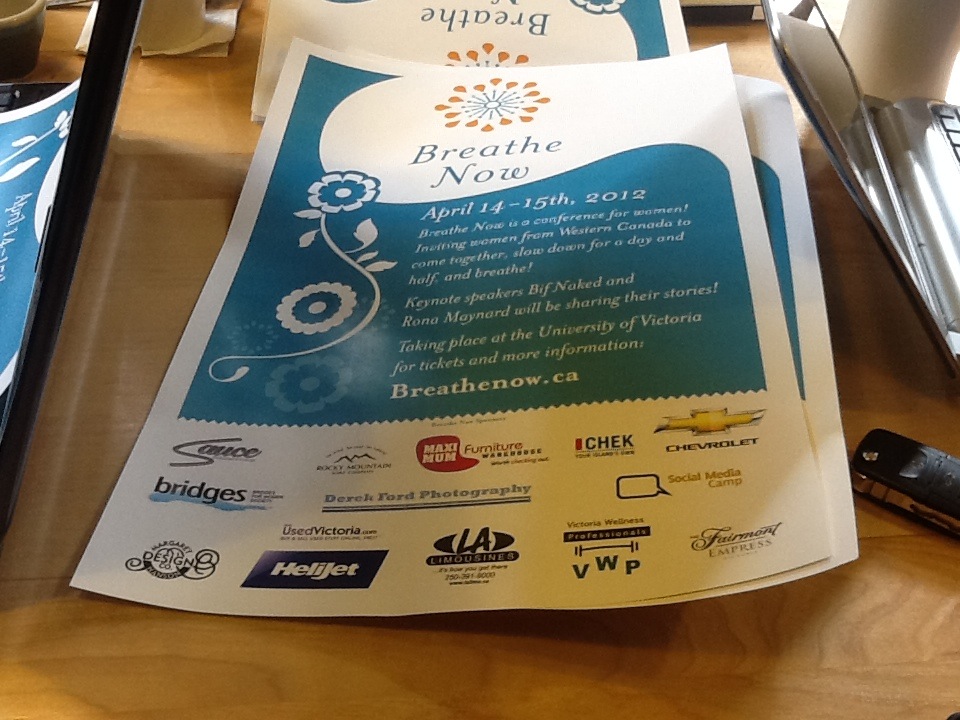
I need to read Sandberg’s book. And, yes, I know that she’s Harvard educated and part of the elite. I know that she’s wealthy–Google, then moved to Facebook as their Chief Operating Officer. But, from perusing different bios and videos, I can see that there is lots to gain from Lean In. And, I also know that we can be are worst enemies in our work lives, as well as our personal lives. Self-doubt, not negotiating, and making poor decisions hurts us all, but women more so at work. I am not an acolyte with rose-colored glasses. I think my main point is that I know how to Lean In and the Breathe Now is yet another example—a conference that I co-planned. Many of us have been networking, strategizing, and organizing. We know this work well. But, I’ll speak more to Sandberg’s book and movement after I read the book and pore through more of the blog.

496

Mentoring: Job Searches and Month of Mentoring

Mentoring Matters. Mentoring comes up as one of the larger words in my blog’s word cloud. There is a good reason for this. I write (and think) about mentoring, coaching, and sponsoring lots. I am trying to make my March posts all about mentoring.

I was happy to have a great conversation recently with a former student from more than ten years ago about her last job search. She was lucky enough to find out about a local mentoring program at the local Jewish Community Center. Now, it is important for me to note a few things. My former student is not Jewish and the program was free! She knew that she needed a local mentor to help her with her job search, so she researched different possibilities and found this program.

She was assigned a seasoned mentor who was not quite twice her age. They met every other week to chat about work and her job prospects. Some might think of this relationship as a job coach, but it is billed as mentoring program. I’m glad that she was pro-active to seek a mentor during her job search. I was also proud of her for her initiative to take charge of her own success.

Not everyone has a good old boys or even a good old girls network. You need to establish your own networks and this might mean getting out of your comfort zones and going to meetings in your community or different communities. It is going to take work. There are days that feel like I have the same conversations over; however, I sit back and realize that for my mentee this is relatively new for them.

I am also reminded that those of us in the position to do so need to mentor, coach, and sponsor to help others network. We are only as good as our networks and we need to be willing to share our networks and lift others up so that they can have success, too. I remember a friend from a mentoring group calling me Spiderwoman thanks to the network webs that I weave. I like that. Spiderwoman!

Book Review: “I Hate Feminists!” December 6, 1989, and Its Aftermath

The book’s title caught my eye. I remember where I was when the news broke that a male student killed fourteen women students on a college campus in Canada. Melissa Blais weighs in on the terrible events that took place on December 6, 1989 in this short, and powerful book. Blais does not makes sense of the tragedy, as that is not the book’s intent. Each chapter examines what took place and the consequences. The chapters are divided accordingly: Introduction, Feminist Participation, Marginalization to Disparagement, Commemorations, Negotiating the Representation of the Massacre, and the Conclusion.

Some have called the events the Montreal Massacre and others have refer to the Polytechnique violence. Regardless of the shorthand this tragedy caused many to take a serious look at targeted violence against women. Of course, violence existed prior to this event, and the fact that the women were college co-eds caused more attention by some. Blais teases apart the ways in which the newspapers covered the events and the consequences of the murder to the feminist and anti-feminist movements in Montreal and surrounding areas.

I read the English translation (thank you Phyllis Aronoff) and doubt that anything was lost in translation. The book is not an easy read, as you will want to put it down and think about some of the points that Blais makes. I read the book and thought about what has changed since this tragedy. I also thought about the Highway of Tears in British Columbia and the missing and murdered women in Juárez. I have mixed feelings. I know that many things have improved, but I think that some have stayed the same.

I have had the honor of sitting on the Dec 6th planning committee at work and this is the sort of work that requires a sincerity of the larger project–stopping violence against girls and women. I recall hearing some engineering students lamenting that they had to be reminded about the event and how burdensome it was to have to do this. I think it is more burdensome to not remember the 14 women from Montreal, and the women before and after them. The commemorations have become about stopping violence and it is crucial to remember this.

One of the things that came out of my reading this book was that I found out that my colleague, Maureen Bradley wrote some thoughtful work about the events. And, Bradley’s work is cited in this book. I encourage you to look at Bradley’s website about her other work since. Overall, I Hate Feminists is a book is worth reading and then thinking about the different ways that you support anti-violence efforts in your community. The book lingers–as it should.

IMG_3153

Blais, Melissa. 2014. “I Hate Feminists!” December 6 1980, And Its Aftermath. Translated Phyllis Aronoff and Howard Scott. Toronto, Canada, Fernwood.

50 Shades of Meh: Women in Pop Culture

I can recall reading about women’s fan fiction with great interest. The cultural studies work about shipping and the Kirk/Spock love triangle was fascinating to me in the early 1990s. When fan sites began to devour (pun intended) the Twilight series, I did not think this was anything particularly new or exciting. Then, the fan sites frenzy gave birth to E. L. James and her 50 Shades of Grey series. I read the first book carefully and pretty much yawned through it. The writing was similar to the Twilight  series, which was no surprise given that this book came from one of the fan sites. The book was painfully difficult to read as it was obvious that the author was not familiar with the norms in this SadoMasochism (SM) or Bondage and Discipline (BD) community. BDSM as the abbreviation.>

Right about now, most readers will think one of two things: huh and wait, how do you know about this? Well, my MA thesis was about Women and Consent. This does not make me an expert, but it certainly makes me interested in the series, the movie, and conversations related to consent in pop culture. I have been mulling over a few things about the book(s) and now the movie, which apparently has made some real money. This series has popularized grey ties and re-ignited conversations about BDSM, and the popular culture depictions of a BDSM relationship. Now, if you want to read well-written books in this area you can see the Erotica Booklists or see what Susie Bright suggests–many know her by her alter ego, Susie Sexpert.

The BDSM issue is an extremely divisive issue for feminists. In the 1980s, the sex debates/sex panics/sex wars * culminated with the emergence of “anti-sex” and “pro-sex feminists.” The lack of cohesion and agreement among feminists and others centered around the definition and understanding of women’s sexuality. One of the problems was that feminist epistemology has never been unified in terms of defining what constitutes women’s sexuality. The various sides of the debates acquired their own definitions of women’s sexuality and furthermore, what constituted a feminist sexuality. -there is one feminist sexuality? No. And, if you have followed sex positive discussions, this is still not ironed out.  For ease of discussion, though, I will refer to the two major sides of the sex debates.>

There were different, heated opinions regarding women’s exercise of power and consent. Can women consent? The anti-sex side viewed women’s sexuality as something that male-identified society defined, controlled, and used against women. By contrast the pro-sex camp acknowledged women’s power to pursue pleasure and exercise sexual consent with others in SM sex or non-SM sex. Subsequently, women’s bodies were interpreted as either a site of domination or power among the two loudest or most prominent factions. And, this might shed light on how sex positive debates are at times fraught with controversy, when perhaps they should not be.

Feminists need to take consciousness raising to the level of self-education of women’s various sexualities. It is self-effacing for feminists not to make coalitions among one another and acknowledge the diversity of the movement and identity. We must understand the history and struggles behind women’s sexuality and how this aspect informs women’s identity in society. Clearly this does not require a monolithic feminism with feminists united in one belief. Feminists must work toward developing an inclusive theory of sexuality that includes pleasure, desire, and autonomous consent to sex thinking of women as having sexual agency.

In the future an inclusive sexual theory that embraces various sexualities and sanctions sexual consent as part of women’s sexuality is auspicious. Continued research into theories of sexual politics and consent is justified and needed in the hope of someday securing equality and not playing with the same tired tropes about male dominance of women, as witnessed with the 50 Shades series. This is one of the many reasons why I think: 50 Shades of Meh. I read the book, and do not have to see the stylized version of the book from Hollywood. My safe word here: no.

*Yes, I linked to Wikipedia. It is a good synopsis and written for the lay audience. <Do not be cheeky.>