Childbirth Reflections

I’ve been thinking about the ways in which birth experiences influences the ways in which you feel about your health care provider and yourself. I heard a great MA Thesis defense this year and during the latter part of the defense there was some discussion about personal birth experiences. This made me think about my two birth experiences with my daughters. Both births required some intervention. And, here I am thinking about them some ten years later.

I did not opt to find out the gender of either of my girls. And, I had a birth plan in mind. I did not follow the birth plans, but I did end up with two baby girls. My eldest was encouraged to join us via the breaking of my waters and I labored for some 11 hours with her. I was quite thankful that for the epidural and will never forget the excruciating back labor. It really was like someone was trying to grate the skin off my back and hurt like nothing I had ever felt before. The next wonderful thing that I experienced were the shakes post-childbirth thanks to the epidural–with my teeth chattering. The rails of the hospital bed were cushioned so that I would not hurt myself, during my seizure like shakes.

The easiest part of my birth experience was breastfeeding. I had no issues with breastfeeding post-child birth. I also have warm memories of that first diaper change with the meconium being released by each daughter. Oh, good times.

My second (and last) child birth experience was more traumatic. I started off laboring standing and was feeling pretty good; however, in the matter of 10 minutes I went from laboring standing to the nurses realizing that something was wrong. I was summarily prepped for surgery and had an emergency c-section. I will never forget the moment on the hospital bed with my arms strapped down and feeling the doctor tug and open me up. I did not feel any of the surgery, but I could feel movement, and then my daughter was taken out of me. My doctor explained that the umbilical cord was wrapped around my daughter’s neck twice and this explained the fetal distress. I shed tears of joy and relief. I felt guilty that every contraction strangled my poor girl. This daughter is more of a fighter and she comes by it naturally. Listening to other women’s child birth stories I am struck with the joy, honesty, and in some cases regret.

I did not feel guilty about the interventions that I had with my birth experiences, then, I do not now. And no one else is going to change my mind. Smiles.

How Do You Answer?

I have read Lean In and have blogged about it previously. At BlogHer13 I heard Sheryl Sandberg speak and got to meet her and take a quick photo. I also have read the updated book for college grads. And, I’m a lapsed member of the Lean In movement and circles (Education). At this year’s BlogHer14 in San Jose, California, I attended the Lean In circle workshop.

I am looking at the great cards that Dr. Carole Robin did with Lean In. I saw the question, smiled and immediately pictured a few things: my loveys and coffee. I was chagrined that I saw his face, and my two daughters’ faces, then pictured coffee. The question is not as simple as it looks. What brings out the best in you?

My immediate answer was personal. My family and my home brings out my best. When I think of extending that circle some, I can answer that question with my family of origin, my good friends, colleagues, the warm sun on my skin, my students, a great meal, and a strong Dark and Stormy. There are different nuances to the question and answer that you might give.

When I am teaching, a great class can bring out my best. I try to give my A game to my students, but a strong group of students who like the material can make a big difference with the class. Likewise, when I sit on a committee and other are committed to the agenda and the execution of the final product, the committee work moves more smoothly.

My Loveys bring out my best. My friends bring out my best. My work brings out my best.

20140727-153756-56276919.jpg

BlogHer14 Takeaways

I attended the 10th BlogHer held in San Jose, California. This was my third BlogHer and I was really looking forward to the media sessions and the future of blogging. I also wanted to network and check in with the WordPress Happiness Bar consultants, as I had some questions about my site and other more general questions related to the enterprise instance of WordPress at work.

What was different this time? Prior to the conference, BlogHer contacted attendees to sign up for different Skype groups, and queried BlogHer veterans if they would be willing to mentor a newbie. I joined a few groups: Bloggers of Color, Parents of Tweens & Teens, Scandal, and Game of Thrones. I wished there was an Orphan Black group, but where would they stop?! I was paired with a few women who were new to the conference and had Skype messaging conversations with them. I ended up meeting one of my “buddies” at registration and got to know her during the conference. A big thank you BlogHer for making this arrangement, and for continuing the conversations post-conference, as it’s a great way to keep building the community.

I do not know if the pairing was a new thing, but it worked great for me. I got to chat with my new friend about her work and reasons for attending BlogHer and we just had honest conversations about work, social media, blogging, entrepreneurship, family, and more. BlogHer is a different type of conference. It is diverse in terms of topics covered and the attendees. I sat at many sessions or keynote presentations and noticed the diversity in the room and this is a quick observation based on phenotype and not knowing every story or identity.

What else did I learn? People are doing amazing things with technology on their blogs. Lots are using different media platforms to share video, make videos or just add to the overall presentation of their sites. Infographics are used more and this could explain Canva’s presence as a sponsor. I got the sense once again that the consumerization of the platform is key for many users. People want to move their blogs forward, share their story, and in some cases make money in the process. It was interesting to see so few refer to privacy or security. And, as I noted in my Twitter posts, this is something that I am more cognizant of, given that I live in a province with the most strict privacy and records management guidelines in the country. As an expat living in Canada, I live in both worlds in the Twittersphere and Blogosphere. My personal footprint is radically different than my work footprint or use, but that is for another post.

Overall, BlogHer continues as an amazing conference and space for women (and some men and other allies). My only regret is that I do not have a clone who can attend other sessions for me to soak it all in and take notes. Rock on, BlogHer!


blogher1


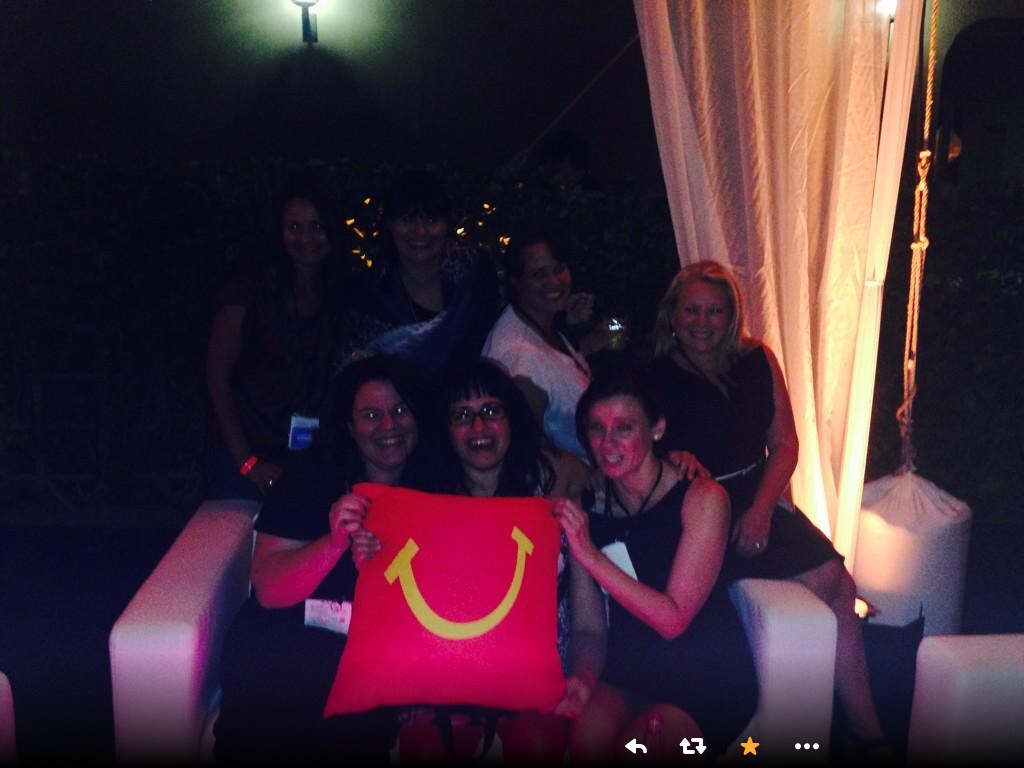
mcbloher2

Blog Her, Blog Her

I am going to a conference for professional development this week. You might have heard of the conference–BlogHer. This year marks its 10th conference. You have to figure that some 11-12 years ago the group of women founders looked around the Silicon Valley and realized that they were doing something unique and needed to network with other women. Voila–BlogHer was born.

Now, BlogHer is a tween and is going strong based on the various other conferences, website, and more. I am happy to attend this year’s conference in my home state, California. And, I am looking forward to learning more and making connections. Lifts coffee cup–to BlogHer.

20140721-073505-27305134.jpg

Make Sure that Your Girls Aren’t Too Ambitious

One of my students shared the Cosmo Special Report in the October 2013 issue. I photo copied the article, read it, and have carried it around for two months. I wanted to blog about it immediately, but alas, grading and other work related responsibilities got in the way of a response. Here I am just weeks before a new year begins and I am finally ready to comment on the nine page article, “The Ambition Gap” by Lorie Gottlieb. The Cole’s Notes version is that single women are more ambitious and successful than their male cohort and consequently are having a hard time finding an equal. It is more complicated than this, but this article speaks to the supposed crisis of heterosexual masculinity (see Michael Atkinson for an informed position), women’s success, and the alleged post-feminist era. Yes, the article assumes that the coupling is between a heterosexual couple.

The first point that I want to make is that we are not in a post-feminist era. We are not in a feminist era. We are in an era that extols the importance of equality, but we wring our hands when we talk about the reality of who is successful, who sits at the table, and who are the high earners. Now, clearly, happiness and ambition are not mutually exclusive. What Gottleib is getting at, though, is that men are “losing their drive” (144). She recounts story after story of the young, single, successful woman who is more successful than their male partners or former partners. Thanks to the success of Liberal feminisms, we see more women working, buying homes, and in managerial positions (Gottleib 145). However, I want to ask: which women? Surely, we need to disaggregate and examine these numbers. Lots of statistics in the US and Canada illustrate that more single headed households are women headed households. We are also quite familiar with the fact that men, on average, make more money than women. And, when we look at upper management, board of directors, and chief executive officers the picture becomes more homogenous–male and white.

On page 147, Gottlieb has a column dedicated to “Watch Out for These Red Flags.” And, what are they?
1. He has no plan 2. He doesn’t communicate 3. He’s envious of your success 4. He takes advantage 5. He’s resistant to change

I am no dating expert; however, I think that these are red flags for most in their 20s and older and not so much about an ambition gap. Gottleib offers a shallow examination, but at the same time does not ask more important questions regarding race, class, sexual orientation, education, and types of career. Women might earn 60% of the undergraduate and graduate degrees (148), but she does not break this down enough for me. Why do I care? My experience as a university professor and one who has continued to look at women, politics, leadership, and higher education, I know that women tend to gravitate to certain fields of study that do not translate into higher earning jobs. We see women over-represented in Education, Humanities, and Social Work and under-represented in Engineering, Sciences, and Computer Sciences. This, then, influences the earning power for women.

What do I like about the article? Well, it was provocative and I read it closely several times. I also appreciated her column about “How You Can Bridge the Gap.” She pulls from Sheryl Sandberg’s Lean In (my thoughts on the Lean In movement).

She offers some points of advice: 1. Prescreen 2. Establish boundaries 3. Accept trade-offs 4. Give him a nudge

This advice is timeless and part of having a healthy partnership for heterosexual or same-sex couples. What do we do? Encourage people to think about what they want and how they want to pursue their dreams. Encourage girls to go into the STEM fields and work on the leaky pipeline for women and work. I am also concerned with this notion that women are too ambitious. There are parts of the article that equate being single with too much work success. This message is problematic.

Frosh Chants and Consequences

In the last few weeks, three Canadian universities have made headlines within days of one another and not the way that development officers like to see. Students at St. Mary’s University (SMU) in Halifax, NS chanted a truly unfortunate chant at a university sanctioned event. Students from the University of British Columbia Sauder School of Business said the same chant during some Frosh activities. Then, the Engineering students at Memorial used an unfortunate term on their mugs for their pub crawl. Student leaders at SMU and UBC have resigned. All three schools have noted that investigations will take place and awareness campaigns or sensitivity training workshops are forthcoming.

As a feminist social scientist I was not surprised that the students felt it was acceptable to engage in the chants. We live in a hypersexualized world where social justice activists, rape crisis workers, and academics working in Women’s Studies or other fields continually explain that rape culture thrives. During the last sixteen years, I have dedicated my career in Political Science and Women’s Studies to teaching courses related to gender and difference in an academic setting. I work with undergraduate students and I see and hear things on campus. While the chants are offensive–these are not isolated events, we need to ask why students feel compelled to participate in the chants. I have seen posters on campuses for different student events, like a sailing club’s pub crawl event called: “outrigger and gold digger” pub crawl. One only has to walk around a university to find some very interesting posters for events usually held off campus.

Thanks to the chants we are talking more about Rape Culture. But, what is Rape Culture? Rape Culture is the end product of the hypersexulization of women and men and excuses harassments, chants, and acts of violence against women and men. Rape culture causes people to think that joking about having non-consensual sex with a minor is not rape–but a light hearted moment. Rape Culture allowed the sexualized violence of Steubenville to take place, where at first the town appeared to defend the young men involved and attacked the victim. And, I argue that this hypersexualized culture makes posting questionable photos on Facebook acceptable, but a photo of a nursing mother objectionable. Rape culture also educates boys and men that girls and women are always sexually available to them. We need to have more conversations about consent and sexualized violence. We also need to discuss what make up the components of healthy sexuality.

What is telling about these episodes is the varied reactions. For instance, the comments online on newspaper sites or other platforms. My students chide me and say, “Don’t look at the comments.” I try to not do so, but then occasionally I wonder what people are saying.  The comments are at times instructive and then illuminating about the sheer depth of rape culture. Why do I say this? Well, when people post that they should be able to joke about sexual assault and that it’s just a joke, I take issue with that. There are certain things that we should not joke about and instead understand that violence against women is not a joking matter. I have a great sense of humor, but there are some issues that deserve serious conversations. Let’s continue the learning and the conversation.

Lean In Keynote: Blog Her 13

I am at Blog Her 13 in Chicago and this morning attended Sheryl Sandberg’s keynote and then attended the Lean In Circle workshop. Where to start. The keynote was more of a discussion between Lisa Stone, Blog Her, and Sheryl Sandberg, Facebook COO. Sandberg was on the floor taking photos with delegates, signing books, and just meeting people. I had a chance to take a photo and talk to her for a few precious minutes about her book, Lean In. She was gracious with the crowd and was eventually pulled away for the keynote. As I waited in line for my moment with her, I was reminded of my Comic-Con experiences and felt like a fan girl.

Her keynote hit on the points outlined in the book and Stone asked some great questions. She also shared that the Blog Her Visionaries survey was filled out quickly within hours. I am one of these people and was happy to fill out the short survey about the book and movement. What I enjoyed most was how honest Sandberg came across. On the table sat some Lean In branded sheets to write down what you would do if you were not afraid. Sandberg shared her’s: Write a book about feminism. Yes, you read that correctly. She also seemed comfortable with embracing the term, feminism. It is clear that she is a strong advocate for women and men and their success. She made a point to share that some male executives have told her, “You have cost me lots of money.” Why? Because women are asking for raises!

I have previously blogged about her book and the movement. I am registered with the Lean In site and in an Education circle. I will blog later about the Lean In Circle workshop. It was amazing and I am still processing it. I have a page of notes to mull over, as I think about my workshop experience. Overall, I was glad that I woke up early to get a rock star seat at the keynote. And, I got to finally meet Veronica Arreola, Professional Feminist! We had a good chat about the book, too.

20130727-145846.jpg

20130727-145910.jpg

Helpful Info for Women in Political Science

Orgs, Books and More!

CPSA: http://www.cpsa-acsp.ca/ (French: http://www.cpsa-acsp.ca/postings-f.shtml)

Société Québécoise de Science Politique: http://www.sqsp.uqam.ca/

APSA, Women’s Caucus for Political Science: http://www.apsanet.org/content_2907.cfm (Organization webpage: http://www.apsanet.org/)

ISA—Feminist Theory and Gender Studies: http://www.isanet.org/ISA/Sections/FTGS.aspx

WPSA, Caucus for Women and Gender Justice: http://wpsawomen.com/Home_Page.html (Organization webpage: http://wpsa.research.pdx.edu/)

Websites

Eduseed: Promoting Higher Education Among Historically Disadvantaged Communities: http://www.eduseed.org/

Mama Phd (IHE): http://www.mamaphd.com/

Ontario Womens Liberal Commission: http://owlc.liberal.ca/news-2/women-queer-women-politics-involved-earth-problem/

Sister Mentors: Promoting Higher Education Among Women and Girls of Color: http://www.sistermentors.org/home.htm

The Chronicle of Higher Education: http://chronicle.com

Fear of Feminism: http://chronicle.com/article/Fear-of-Feminism/138631/

Gay Mentors in Modern Academe: http://chronicle.com/article/Gay-Mentors-in-Modern-Academe/130883/

Rejection and Its Discontents: http://chronicle.com/article/RejectionIts-Discontents/139403/

Self-Sabotage in the Academic Career: http://chronicle.com/article/Self-Sabotage-in-the-Academic/138875/

The Professor Is In: http://theprofessorisin.com/

The Thesis Whisperer http://thesiswhisperer.com/

Tomorrow’s Professor: http://cgi.stanford.edu/~dept-ctl/cgi-bin/tomprof/postings.php

TP Msg. #1259 Motherhood: How Faculty Manage Work and Family

http://derekbruff.org/blogs/tomprof/2013/05/30/tp-msg-1259-motherhood-how-faculty-manage-work-and-family/

TP Msg. #1250 Let’s Make a Deal—Six Myths About Job and Salary Negotiations

http://derekbruff.org/blogs/tomprof/2013/04/30/tp-msg-1250-lets-make-a-deal-six-myths-about-job-and-salary-negotiations/

TP Msg. #1241 The Chair’s Role in Facilitating a Collegial Department

http://derekbruff.org/blogs/tomprof/2013/03/28/tp-msg-1241-the-chairs-role-in-facilitating-a-collegial-department-2/

University of Venus (Inside Higher Education): http://uvenus.org/

Women in Higher Education: http://www.wihe.com/

Women Suffrage and Beyond: Confronting the Democratic Deficit: http://womensuffrage.org/

WMST-L Archives http://userpages.umbc.edu/~korenman/wmst/wmsttoc.html

Journals of Interests and Journal Articles

Cambridge Journal of Education

Gender and Education

International Feminist Journal of Politics

Journal of Feminist Scholarship

Journal of Women, Politics & Policy

Politics and Gender

The Review of Higher Education

Women’s Studies in Communication

Acker, Sandra, and Grace Feuerverger. “Doing Good and Feeling Bad: the work of womenuniversity teachers.” Cambridge Journal of Education 26, no. 3 (1996): 401-422, doi: 10.1080/0305764960260309.

Bower, Glenna G. “Gender and Mentoring: A Strategy for Women to Obtain Full Professorship.”

Collins, Gail. “‘The Feminine’ Mystique at 50.” New York Times, January 23, 2013. http://www.nytimes.com/2013/01/27/magazine/the-feminine-mystique-at-50.html?pagewanted=all.

Elley-Brown, Margaret J. “The Significance of Career Narrative in Examining a High-Achieving Woman’s Career.” Australian Journal of Career Development 20, No. 3 (Spring 2011): 18-23, doi: 10.1177/103841621102000304.

Gaze, Beth. “Working Part Time: Reflections on Practicing the Work – Family Juggling Act.” Law and Justice Journal 1, no. 2 (2001): 199-212. http://search.informit.com.au/documentSummary;dn=755722715628569;res=IELHSS.

Goeke, Jennifer, and Emily J. Klein and Pauline Garcia-Reid and Amanda S. Birnbaum et. al. “Deepening Roots: Building a Task-Centered Peer Mentoring Community.” Feminist Formations 23, no. 1 (2011): 212-234. http://muse.jhu.edu/.

Kreider, Tim. “The ‘Busy’ Trap.” New York Times, June 30, 2012. http://opinionator.blogs.nytimes.com/2012/06/30/the-busy-trap/.

Mills, Melanie Bailey. “Intersections between Work and Family: When a Playpen Can be Office Furniture.” Women’s Studies in Communication 31, no. 2 (Summer 2008): 213-217, doi: 10.1080/07491409.2008.10162535.

Samek, Alyssa A. and Theresa A. Donofrio. “‘‘Academic Drag’’ and the Performance of the Critical Personae: An Exchange on Sexuality, Politics, and Identity in the Academy” Women’s Studies in Communication 36, no. 1 (2013): 28-55, doi: 10.1080/07491409.2012.754388.

Books

Armstrong, Sally. Ascent of Women. New York: Random House, 2010.

Baker, Maureen. Academic Careers and the Gender Gap. Vancouver: UBC Press, 2012.

Cote, James E., and Anton L. Allahar. Ivory Tower Blues: A University System in Crisis. Toronto: University of Toronto Press, 2007.

Evans, Elrina, and Caroline Grant, eds. Mama PhD: Women Write about Motherhood and Academic Life. New Brunswick. N.J.: Rutgers University Press, 2008.

Jalalzai, Farida. Shattered, Cracked, or Firmly Intact?: Women and the Executive Glass Ceiling Worldwide. Oxford: Oxford University Press, 2013.

Krull, Catherine and Justyna Sempruch, eds. A Life in Balance? Reopening the Family-Work Debate. Vancouver: UBC Press, 2011.

Newman, Jacquetta, and Linda A. White. Women, Politics, and Public Policy. Oxford: Oxford University Press, 2012.

Noddings, Nel. Happiness and Education. Cambridge: Cambridge University Press, 2003.

Noddings, Nel. The Maternal Factor. Berkeley and Los Angeles: University of California Press, 2010.

Osbord, Tracy L. How Women Represent Women. Oxford: Oxford University Press, 2012.

Robinson, Ken. How Finding Your Passion Changes Everything. New York: Penguin, 2009.

Sandberg, Sheryl. Lean In: Women, Work, and the Will to Lead. New York: Knopf, 2013.

Valian, Virginia. Why So Slow?: The advancement of women. Cambridge: MIT Press, 1999.

Twitter Handles to Follow (Working List!)

@AMaioni Antonia Maioni, President of Congress, McGill, Political Science

@ideas_idees Federation

@ATRWibben Annick T.R. Wibben, University of San Francisco, International Studies

@janniaragon, UVIC, Political Science

@partnershipuvic, UVic Corporate Relations

@JLisaYoung, Lisa Young, Dean of Graduate Studies, University of Calgary, Political Science

@OrsiniMichael, Michael Orsini, University of Ottawa, Political Science

@ChristineNLewis, Christine Lewis, Congress Coordinator, UVic

@UA_magazine, University Affairs, Ottawa, ON

@EmmMacfarlane, Dr. Emmett MacFarlane, University of Waterloo, Political Science

@uvicpoli, Uvic, Political Science Dept.

@pmlagasse, Philippe Lagasse, University of Ottawa, Political Science

@thedaleykate, Kate M. Daley, York University, Political Science (PhD Candidate)

@geoffsal, Geoff Salamons, University of Alberta, Political Science (PhD Candidate)

@Mireille2013, Mireille Paquet, University of Montreal, Political Science (PhD Candidate)

@SuleTomkinson, Sule Tomkinson, University of Montreal, Political Science

TED Talks

Huffington, Arianna. “Arianna Huffington: How to succeed? Get more sleep.” Filmed December 2010. TED video, 4:11. Posted January 2011.

Katz, Jackson. “Jackson Katz: Violence against women—it’s a men’s issue.” Filmed November 2012. TED video, 17:41. Posted May 2013.

Koyczan, Shane. “Shane Koyczan: “To This Day” … for the bullied and beautiful.” Filmed February 2013. TED video, 12:04. Posted March 2013. http://www.ted.com/talks/shane_koyczan_to_this_day_for_the_bullied_and_beautiful.html.

Lemmon, Gayle Tzemach. “Gayle Tzemach Lemmon: Women entrepreneurs, example not exception.” Filmed December 2011. TED video, 13:16. Posted January 2012. http://www.ted.com/talks/gayle_tzemach_lemmon_women_entrepreneurs_example_not_exception.html.

Pierson, Rita. “Rita Pierson: Every kid needs a champion.” Filmed May 2013. TED video, 7:48. Posted May 2013. http://www.ted.com/talks/rita_pierson_every_kid_needs_a_champion.html.

Robinson, Sir Ken. “Ken Robinson: Changing education paradigms.” Filmed October 2010. TED video, 11:41. Posted December 2010. http://www.ted.com/talks/ken_robinson_changing_education_paradigms.html.

Sandberg, Sheryl. “Sheryl Sandberg: Why we have too few women leaders.” Filmed December 2010. TED video, 14:58. Posted December 2010. http://www.ted.com/talks/sheryl_sandberg_why_we_have_too_few_women_leaders.html.

Stokes, Colin. “Colin Stokes: How movies teach manhood.” Filmed November 2012. TED video, 12:53. Posted January 2013. http://www.ted.com/talks/colin_stokes_how_movies_teach_manhood.html.

Zimbardo, Philip. “Philip Zimbardo: The demise of guys?” Filmed March 2011. TED video, 4:47. Posted August 2011. http://www.ted.com/talks/zimchallenge.html

Many thanks to Ms. Sylvia Alves for her assistance in curating this array. This is a draft and please share, but note that this is from the two of us!

Please Stop: Post-Racial America

I am late in responding to Dr_JZs post about how after President Obama was elected in the 2008 suddenly pundits opined that the United States was in a post-racial era. This reminds me of the quote by Meg Sullivan, “I’ll be a post-feminist in the post-patriarchy.” It does not exist. We are not in a post-racial era and to say this is to not acknowledge racism or different forms of privilege. Jordan-Zachery’s eloquent post notes how at this same time we have witnessed an invisibility of Black women in our field of Political Science. Jordan-Zachery spoke to this in her recent article published in Politics, Groups and Identities demonstrating via some statistics that fewer publications are examining Black women as a subject. Why? The answers will vary, but most will carry lots of baggage and will unsettle and make most of us uncomfortable. It is not that Latinos are now the majority minority. It is not that we live in a post-racial United States (although I am living in Canada).

I strongly believe that part of this invisibility stems from editors and reviewers deeming what is worthy of publication. It also stems from the research that is currently conducted and supported on campuses in departments of Political Science, Africana Studies, or Black Studies programs and departments. And, I will not speak for Jordan-Zachery; however, her blog post notes specifically how Intersectionality as method has been hijacked. OK, she does not use those exact words, but the following quote from Jordan-Zachery’s post is telling:

“Simply put, Black women are disappearing as research subjects within our ‘leading’ academic journals (Alexander-Floyd “Disappearing Acts” 2012) and within intersectionality research specifically. Many credit intersectionality research as an outgrowth of Black feminist standpoint theory and remind us that Black feminist standpoint theory is crucial to intersectionality, but in many cases a mere footnote or sentence makes this acknowledgment.” (Bold in the original post).

What can we make of this or should we make of this? Is this the hijacking of a method that is now mainstream within Feminist Political Science research that used to focus on Black women, then women of color. Now, Intersectionality is that catch all for all components of identity. Is it now meaningless? Perhaps Intersectionality as a method is so useful that everyone wants to employ it as a lens of analysis. It begs the question about methods and who can use them? I do not have the singular answer, but I do know that I am hard pressed to not find Intersectionality as a method in journal articles related to my areas of interest and teaching.

Our blog post conversation also stems from a Google Hangout that we had last month catching up on work and more. I am happy and honored to have Julia (now I refer to her as a person and not a super-star academic) in my life. One of the interesting conversations that was about race and racism. Since Obama’s election and re-election we have both witnessed the marked ways that race is discussed or not discussed by the popular press, within the blogosphere, then in academe. It’s complicated. People generally feel a sense of unease when it comes to discussing race or racism. Frankly, I think that our blog posts would make some uncomfortable. This is a start of a longer conversation. Please weigh in–Dr. J_Z and I are waiting! Oh, and the title of my post is my asking that people stop referring to the US as a post-racial society. It’s not.

My Lifetime Listens to Yours. Muriel Ruckeyser

I have a book of quotes that serves as writing prompts and this is prompt two. There is space to write on the page, but I sent the first prompt to a friend in another department. And, have torn out the second prompt. Now, the title of this post comes from part of poem and the lengthy poem says lots. But, what does this excerpt say or how does it speak to you. I am thinking like a Political Scientist or Social Scientist at the moment and how I learn from reading and listening. If I think from a mentor’s point of view, I know that my reading and listening includes what is not said or spoken. People have “tells” for when they lie or feel uncomfortable and these nuances of movement are important to support and understand. What is your tell? I have different tells, but one is to stop and think and take a drink of water. During this short moment, I am thinking of my response–formulating what I want to say next.

We listen with more than our ears. But, do we learn from what we hear and see? I am in the midst of heavy marking and looked forward to this writing prompt and I come back to learning from others. I have also had several hours of office hours and meetings and tried my best to listen intently these past few work days. I firmly believe in life-long learning and this prompt reminds me of the importance of mindfulness. When I think of mindfulness, I always picture Dr. Juliann Allison, as she practices mindfulness in all that she does. This week I am trying to actively practice mindfulness. The Ruckeyser quote was the perfect reminder, as I try to balance out meetings, honors presentations, grading, and planning a conference. And, that is only part of the to do list. I’m breathing in and out and trying to listen.