
Organization Matters: Fri Fun Facts

Recently I had a student in my office who had his next two years planned out–typed and ready for my review. I get this. I did this. OK, it was hand written, but I also planned like this. Today’s Friday Fun Facts is dedicated to planning your post-secondary education. And, here I assume that this plan is after the first year, so that the student has at least taken several course as they figure out what they like or don’t.

1. After you’ve met your undergraduate requirements for the degree review the requirements for the degree programs that you’re the most interested in for your major and or minor.

2. Related to the above point, I actually suggest to students that they at the very least have a major and a minor. Preferably, I’d suggest a double major. For some the preference might work best as a major, minor and co-op. The students who are focused on graduate school should look if the department has an Honors Program.

3. You should meet with the Undergraduate Advisor(s). This will vary at campuses. In some the office might be in the department (your major area) or there might be an Advising Center. Either way–these professional staff or faculty are there to help you. They can best help you when you are well informed and when you have questions for them.

4. Talk to other students to find out what they suggest. They will also be useful to find out which departments and professors you should look into for your degree program.

5. Remember that this is your education and you need to own it. You must be your best advocate in and out of the classroom. This means that you need to keep an eye out for deadlines and make meetings with the appropriate people or offices for information.

6. And, if you’re like the student from earlier this month and me, you can map out your courses for your degree program. It’s useful to actually see what you need and what you can take. Do it! It’s not in stone, but it makes you organize what you need to do.

May I suggest that you get a copy of the rules and add post its and highlight all the key information. Nowadays so much of this information is online and somehow you need to get familiar with the information regarding your degree program. Bookmark the appropriate webpages.
On the Job Market: Undergrads

This post is going to offer some suggestions for students who are entering the job market. Some of my suggestions were shared previously, but they are worth repeating.

1. Go by the Career Services or similar offices on your campus. Usually Alums can also use this service.

  • When there check out the services.
  • Attend a resume writing workshop or ask one of the staff to review your resume
  • Attend any other useful workships that the office staff offers

2. Chat with your mentors. If you don’t have any–chat with your current or former professors. If you feel unsure, then contact the Undergraduate Advisors and chat with her/him.

  • Let this contact know that you’re on the job market and see if they have any suggestions for you.
  • Ask this person if s/he is willing to review your resume or CV.

3. Work your networks.

  • Let everyone in your network know that you are looking for work. (This might include your partner, girlfriend/boyfriend, parents, coworkers, pastor, coach, etc.
  • Make coffee appointments or other appointments with people and come with your resume in hand. Let people know that you are looking for work.
  • Ask your contacts if they have any leads or suggestions for you.
  • Offer to take the person out for coffee…chances are that you’ll go dutch or the other person will want to pay, but you really should be willing to offer.
  • Research if there are other means of engaging in the community–social media, Chamber of Commerce, and other groups related to your area.

4. Keep a positive attitude.

  • it might take you several months to find work that meets your requirements
  • Be willing to get your foot in the door and accept an entry level position
  • Sleep, eat right, exercise, and try to save money or spend as little money as possible as you’re set on your job search goal.

5. Be flexible

  • Make sure that you’re willing to take a job that isn’t your career. This job might help you get to the next step.
  • Don’t dismiss the job. The connections you make might turn into gold for the next job or get you toward your career goal.

6. When you get an interview offer for your dream job or even plan b

  • Talk to a trusted mentor about questions to expect, dress, and other points so that you’re ready for the interview
  • Try to coordinate a mock interview with a few trusted friends–preferable people who have interviewed more than you.
  • Think about the questions you might get asked and work out answers. You might even practice in front of a mirror.
  • During the interview, remember that it’s acceptable to pause for a second–get your bearings and then answer the question.
  • e. Send a thank you card after the interview. Keep it simple: thank the person, committee or team for the interview and note that you look forward to hearing from them.
  • f. Do not bad mouth the company or any of the employees on any social media.

7. You get an offer

  • Try to negotiate for more pay or benefits. It doesn’t hurt. Particular to women–we tend to not negotiate and accept the offer.
  • Review the offer with someone who you trust.
  • Counter offer and wait. (Be reasonable with your counter offer)
  • Do not involved your parents in the counter offer—your mom or dad should not call and complain about the offer!

8. Accept the job

  • Work in the position like you are in probation. You might be on probation! So you have to prove to your employer why you are invaluable.
  • Dress for the job you want and not just the job you have.
  • Be professional in dress (note 8 b) and in your attitude.

Remember your job does not necessarily define you. Each job can provide you useful experience and build your resume.

Presenting/Public Speaking

After attending Word Camp #WCV12  a few weeks ago, I’ve been thinking lots about the talks that I attended and all the great information that I learned. There were lots of points shared that validated what I already knew from my reading and my own use of social media. But, there was one thing that I’ve been thinking about lots. Part of it stems from a good conversation that I had with my colleague and good friend, Dr. Raul Pacheco-Vega. Raul is known as Hummingbird604. He is also a Political Scientist and is what I refer to as a power user of social media. He blogs, tweets, teaches, and shares his love of Vancouver with the masses via his blog.

Raul also explained after Word Camp that he had consulted with a keynote couch, who gave him tips on presentation skills and public speaking. We were recapping the events and chatted about his presentation and others. After our chat I thought more about this and  realized that the talks that I liked best really were the ones that offered a dynamic presentation style. It’s not just the information, but also the way the information is shared. I have now heard Raul present on at least four occasions and this last talk was great, but I did notice that the talk was seamless. Whatever the keynote suggested–it worked. Again, his other presentations were strong. He’s a natural public speaker.

As an academic, I live in the world of public speaking–I am an educator. I am constantly “on” and giving presentations in classes, in the community, at conferences, and to the media. It is very important to feel comfortable speaking in front of people. But, you also have to be able to distill information in ways that is understandable to the group that you’re speaking to. And, this point is at times forgotten by some as they ruminate in the tiniest details or computer code and lose the audience. You have to gear your talk to your audience and make the presentation dynamic.

If you have not presented lots, practice, practice, and practice. Practice in  front of a mirror or at home. Practice in front of friends, so that the real presentation goes as smoothly as possible. And, when you practice in front of friends–try to get someone who is unfamiliar with your topic. This will allow you to see how you’re pitching your talk. Do they understand the information?

Then, once you’re giving your talk–breath. I like to walk around, but it’s important to not pace too much. Smile and if you feel you cannot look directly into eyes–look at the eyebrows! If you are prone to blushing or breaking out in hives, then wear a higher collared shirt. Eventually you won’t have a physical reaction and you’ll enjoy giving your presentation. If you can, have a friend attend the talk so that you can get feedback from someone who knows you.

When I first started attending conferences back in 1991, I had my presentation triple spaced and included notes to self that read: take a breath, smile, look around. I only had to do this a few times, but, I swear it helped. Now, I put together my skeleton bullet points or Slide Rocket presentation the night before typically. If it’s an academic presentation, it could be the same day, but I have the research completed well before the conference! I do think that public speaking skills is a tangible transferable skill. And, a skill that we all should have. Now, if all the presenters would remember this–is a completely different story!

Fri Fun Facts: Reading

Today’s Fri Fun Facts is dedicated to one of my favorite habits–reading. How do you organize your reading for efficiency? For students and other academics this is a constant concern. We are always juggling several articles/books.

1. I balance this via setting up time to work on particular assignments. I might dedicate half the day or just an hour, but this keeps me on top of my reading list.

2. I have books, articles, or magazines in several locations and will juggle them accordingly.

3. Mix it up! I am not always reading just work related reading. I will mix it up and add fun reading, too.

4. Don’t cram. This is not the best way to allow your ideas to form and as I say, “marinate.” You want to have some time to think about what you’re reading–so keep abreast of the reading.

Decompress with fun reading. This might vary for you. I have all sorts of genre that I read for fun–mystery, cop thrillers, young adult literature.

Grad Schol Applications: Revist

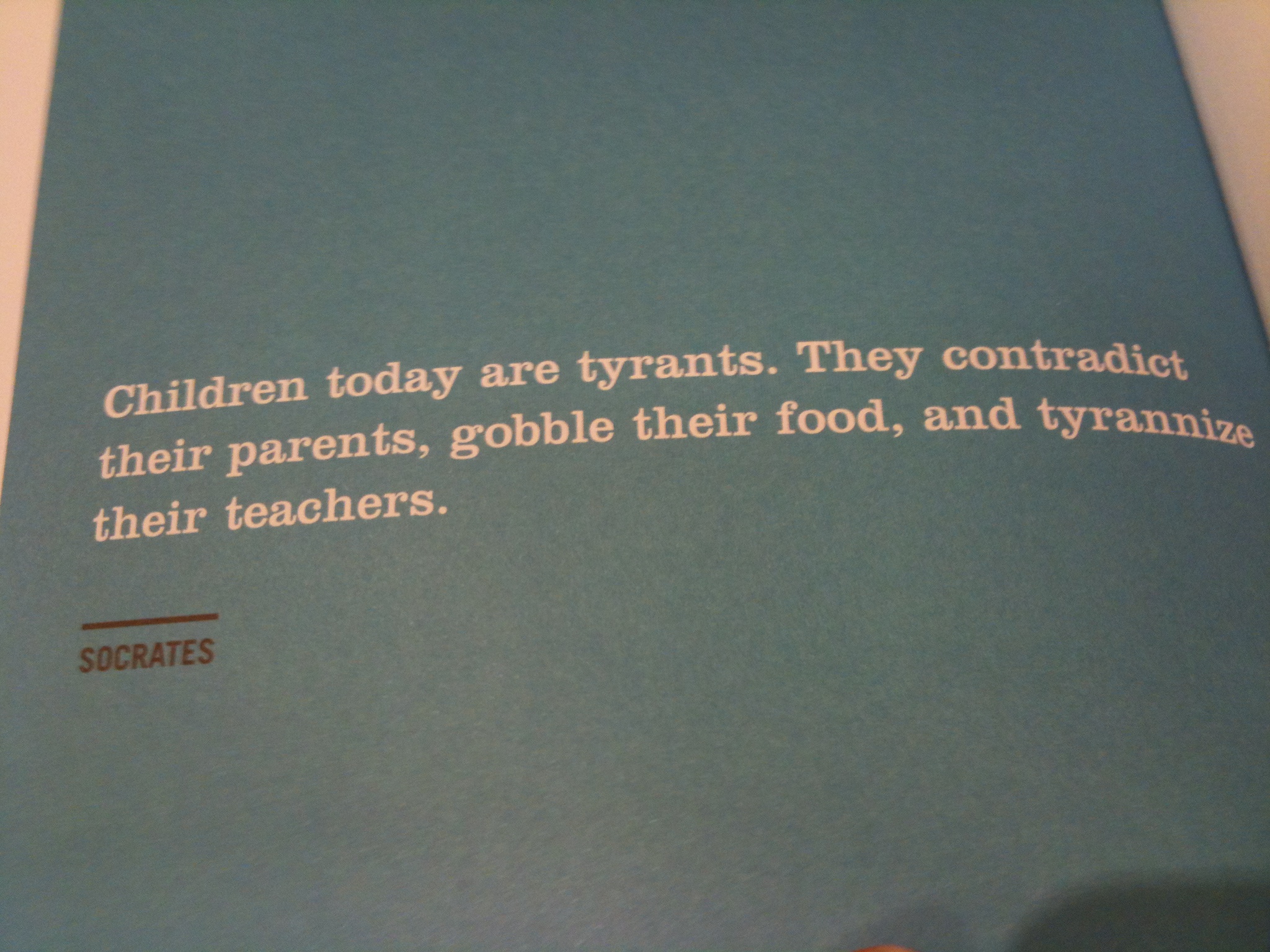
Yes, it is that time of year, when professors are writing students letters of reference for graduate school. Thus, it’s worth my re-post of this Oct 2010 post with some additional comments. Just a few words of advice to students: Be organized. Don’t be a tyrant! My experience is that 99.9% of students are earnest and really want the help. What happens is that poor time management adds stress to an already stressful endeavor.  So, this photo is shared with lots of smiles. And, I realize that college students are not children. The quote was one that made me smile. That is all.

1. Ask professors weeks before the letters are due. And, please don’t be offended if we decline.

2. Provide us all the information we need. Where is the letter going? When is it due? Do we need to complete an applicant assessment form? Can we upload the letter online? Please fill out any forms and try to avoid asking the letter writer to do so (your name and SIN or SSN info)

I ask for a copy of your letter of intent and cv/resume. I might even meet with you and ask what your motivation is for continuing your education.

3. Remind us. Send an email a few days before a due date.

4. Thank us. This can be an email or a note. It’s not necessary to do more. Remember that your tenure line faculty actually get paid to mentor and do things like write letters. Keep in mind that part-time faculty do not get compensated for this extra work. Remember to thank them profusely–a card, bottle of wine or a face to face thank you is nice.

5. Remember that your organization makes this process easier. You will fill less anxiety and provide your reference writer ample time and information.

6. Keep us informed with the good news or what your Plan B or Plan C is.

Good luck with this process!

Fri Fun Facts: Organizing Writing Time

At Word Camp Victoria 2012 ( #wcv12 ) @Miss604 (Rebecca Bolwitt) shared how she manages her time blogging. And, as a a teacher/instructor/professor it made me think not only of my time management, but also my students’ time management with writing. This post is dedicated to organizing writing and thinking time. And, like so many of my posts the targeted reader is students or others who work with students. I look forward to your input.

Bolwitt gave some great advice. She blogs typically in the morning for a few hours and during this time she will compose 3-5 posts. Now, for students I would like them to think about earmarking time for thinking about writing. Yes, it’s part of the process. Thinking about what you want to say and what sort of research you want to engage in for the assignment. Is the paper an investigative piece or argumentative? What does the assignment requirements explain? You need to organize what the requirements are with what you want to do with the assignment.

If you merely think about writing as the actual writing, then you will not have enough time to “marinate” with your topic. I have found that placing “Janni Writing or Thinking Time” in my calendar necessary to successfully work on writing projects. Some of your ideas will undoubtedly hit you when you’re commuting in to campus or perhaps in another class. It is important to jot down these ideas, as you might not remember them later. Likewise, it’s also good to chat with classmates or your professor about the assignment.

Then, set time aside to begin your writing in earnest. You might start with pulling together facts and quotes and what you hope to find. Whatever method you use–make sure that you attempt to organize your thoughts. But, you must set realistic goals with your writing time and set time aside to get your writing completed. Bolwitt noted that the morning is a good time for her to write. When is your most productive time of day?

Academics on Academia: We Belong

I am happy to have ongoing conversations about higher education with my friend and colleague Liana Silva. Our first one is really about that sense of belonging or fitting in academe. Reading Liana’s  piece reminds me of my experience as an undergraduate and then later as a graduate student. I was a first generation college student, who graduated with strong grades from high school. I took the array of Honor’s and Advanced Placement courses during high school and participated in sports and other activities.

But, nothing prepared me for the other side of the university experience–the culture of academe. Everyone assumed that I had money, since I was in university. I don’t know where this came from and I certainly was not going away for Spring Breaks or Summer vacations. Add to this that as a Latina, I noticed that suddenly I represented the “woman of color” in class and the expectations in the classroom varied among my different professors. I was at an institution with a good number of Latinas/os, but not enough to be more than a small minority. When I began to entertain graduate school the process seemed alien. I was fortunate to connect with Graduate Women Scholars of Southern California. It was in Scallops (slip of the tongue by our faculty advisor who hailed from Boston. She meant to say Scholar and Scallops slipped out and it stuck) that I learned about how things worked in academe. This peer mentoring group was one of the best things that happened to me during the last year of my undergrad, as it made the transition into grad school that much easier.

After I earned an MA in Liberal Arts and Sciences and entered grad school in Political Science, I learned that most did not have the strong mentoring that I had and almost no one in the cohort had presented at a conference, had a CV, and were familiar with the vagaries of the tenure track process. Wow. My mind was blown. While I felt like the step-cousin in the department with my areas of research, I was ahead of the curve with my knowledge of academia, which proved useful. I also noticed that Political Science was also very conservative methodologically and politically, and very white. If I thought that Women’s Studies was not that diverse–well, Political Science was a completely different terrain.

Reading Liana’s post really stirred up some memories for me and makes me once again realize how important mentoring (peer and otherwise) is crucial to successful experiences in academe. When you don’t have the mentoring network, it is so easy to feel that you don’t belong…that you are an imposter. Add to this the incredible whiteness of academia and this becomes more complicated for people of color. I will never forget my first experience at the American Political Science Association ( #APSA ). I felt lost and kept on telling myself, “You belong here.” I attended meetings related to Women and Politics and the meetings for the nascent Race, Ethnicity and Politics section. I went outside of my comfort zone and tried to network on my own. It worked. I was emboldened by the good mentoring I had, but at the back of my head occasionally was–do I belong here?

I remember those moments and now make a special point to speak to people new to the conference–especially graduate students. So, Liana, I think we have started an important conversation.

One Take Away from #WCV12

This will be the first of a few blog posts about Word Camp Victoria 2012 ( #wcv12 ). This was my second Word Camp in Victoria and I have to say that I definitely enjoyed this camp more than the last one. And, no, it’s not because #UVIC was a site sponsor! I got more out of the sessions and part of this is that I chose more wisely and frankly that I have fiddled more with Word Press. Yes, Word Camp is a Word Press Blogging conference, er camp for users or those who are interested in the platform.

This post is going to speak to Craig Spence’s presentation, “Why WordPress works so well as a Dynamic Creative Writing Environment.” Spence is a writer and the way he interacts with the Word Press platform is informed by his writing philosophy. I liked that he shared the Cosmic Chicken, his speculative writing series that allows readers to add to the story. And, did I mention that he was such an honest, humble presenter? He hooked me in and made me want to listen to his presentation. Sure, I live tweeted too, but I also have about a page of notes from his presentation.

What really struck me is that he views his writing on line as similar to his offline writing and this is something that I am trying to explain to my students, who are completing blogging assignments. I’ve said that their 1000 word post is like a paper in terms of coherency and organization, but the platform allows them to add images and video and make the post theirs via their analysis and the look of the blog. They have more opportunity for creativity and Spence’s talk reminded me of this point.

Fri Fun Facts: Advising

Today’s Fri Fun Facts is about Advising on college campuses. I want to students to remember that students should look to the various Advising offices on campus as a place to not only get questions answered, but the first step in their success.

1. Good Advising is community building.

2. Seek out advice and advising. The official university policy is on line and usually available as a hard copy. Double check the requirements, but also ask others for advice. It’s good to confer with trusted classmates and then check in with an advisor. Don’t rely merely on students or your peers, as they might not have the most recent information.

3. Check in with your advisor once per year–at the least! It’s like an oil change or bike tune up! This is your education and you need to “own it.”

4. Remember that there is the rule of thumb and the requirements. Distinguish between the two. Don’t always think of the minimum requirements. Also think about what you want to take and how your plans or dreams can change. Here is why taking a minor, honor’s, co-op (internship) or double majoring can be helpful.

These are some quick ideas about best practices or needs for advising.

Difficult Students: Public Court of Opinion

Lots of academics have been immersed in conversation about the NYU student’s outburst against her professor. The student ended up writing letters to the NYU President and went so far to repeatedly threaten her professor and the university. She wanted to take the issue to various papers, where she has family and friend connections and the court of public opinion.

Of course, the university cannot really respond openly, as it is an issue of the student’s privacy. But, what the student did was make her various diatribes public. These letters have been made public and have really made her look terrible–like a petulant, self-entitled young person. I have not used her name and I won’t. But, what I will respond to is the fact that she was unhappy with an assignment and contacted the university president to get her professor terminated! One of her diatribes also accused her professor of being only a “spousal hire.” Obviously this student has no idea about hiring in higher ed. Even if this professor was a spousal hire–she would still have to be qualified and a good fit for the department.

There is even a blog that includes many of the student’s alleged Facebook status updates and they display more of the same sort of outrageous statements. What this makes me think of is the difficult students that instructors have in classes. These students usually make up a small percentage of the student population, but at time they can actually take up more time than all the other students combined.

Some of us on Twitter responded using the hashtag #difficultstudents and my Facebook feed was full with friends in and outside of academe responding to the incident. The discussion that I would like to have is two-fold: acknowledge that some students are difficult and that faculty need to balance protecting student needs, protecting the integrity of the classroom and more so for contingent and pre-tenure faculty protecting your reputation/job.

This is part one of this discussion. What are your thoughts?