
Academics on Academia: Power of Pedagogy

I have read and re-read Liana’s post and realized that this is shared experience for many in higher ed. It also made me realize that one person who can combat this is the professor and the pedagogical tools that s/he employs in the seminar. One of my mentors artfully kept things under control in seminar by assigning weekly writing assignment due a day before seminar met. This made us demonstrate in less than three pages analysis or thoughtful reaction to the reading. He would then refer to our comments without naming us and then we would discuss the readings and the student analysis. His seminars became a mostly bull-shit free zone. I will always thank him for teaching this way and I have shamelessly borrowed from this with some of the seminars that I lead.

There is something about grad school that makes students feel insecure and it causes bad behavior. Part of it is the trickle-down effect of pettiness from more established academics and what they way about colleagues or other fields of study. Grad students see the ways in which certain areas of research are referred to and this influences the climate in the discipline or in the department. From my view point, I saw that each cohort of grad students wanted to differentiate themselves from undergrads and this sometimes translated into mediocre performance as a Teaching Assistant via the constant complaining of how stupid their students were. I’m not exaggerating here. I shared offices with three other grad students for several years and hung out with other grad students. It is one thing to kvetch about a particular student, but some grads loved to loathe their students.

What I am getting at is that pedagogy is an issue. The professor can set the tone for how the grad students think about the class, the materials, and if they are a Teaching assistant—the students. We need to train faculty to be better mentors and this includes how to mentor in the classroom.  Perhaps it is just part of good pedagogy and teaching? I don’t think so. I think that some faculty are just better at teaching, research, or mentoring. So, what do we do?

We need to be help one another. And, I do think that if Liana had a better experience in her seminar she might have stayed in Comparative Literature at the most, but at the least she might have had a better time in graduate school. My fear is that we lose lots of women and people of color due to the alienating environment in graduate schools. Granted the grad school experience can be dehumanizing for all, but I think that some are more vulnerable.

I am thankful that I found some very supportive women and men in cohorts ahead of me. I think that one reason for this is that we were not competing for funding against one another. Years later—these are the same people that I am still in contact with from graduate school. Based on my individual experience, I can attest to how important peer mentoring was in the department, as well as via the women’s graduate peer mentoring group that I was involved with for several years.

What do we do? We have these conversations. And, I have been in contact with the Director of the Learning and Teaching Centre on the campus where I work making suggestions. Most of the time, the Director, Dr. Teresa Dawson, is already ahead of the curve and offering workshops and training for the graduate students. But, as we have chatted about—that doesn’t mean that the graduate students actually attend them! I know in the department where I work one cohort of students complained about the pro-seminar. My sense of their complaints is that some of the students did not understand how priceless the seminar was, but that might be a different post! My point is that I think that grad students in the department I work in have lots of resources—if they seek them out.

Where do we go from here? We need to change the atmosphere of higher ed so that more faculty want to mentor and help their students network. This helps. But, there is more work to be done!
Grad Schol Applications: Revist

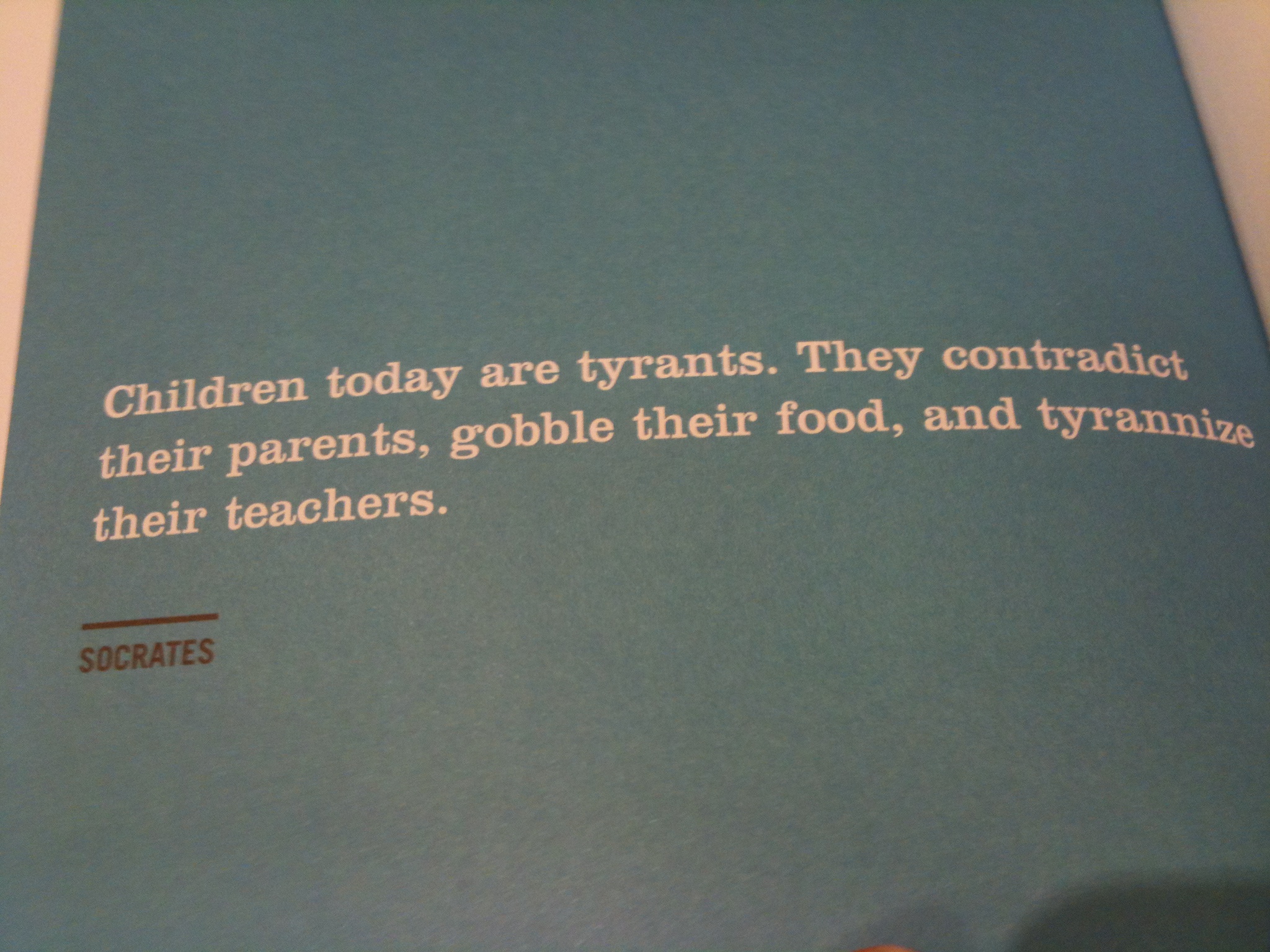
Yes, it is that time of year, when professors are writing students letters of reference for graduate school. Thus, it’s worth my re-post of this Oct 2010 post with some additional comments. Just a few words of advice to students: Be organized. Don’t be a tyrant! My experience is that 99.9% of students are earnest and really want the help. What happens is that poor time management adds stress to an already stressful endeavor.  So, this photo is shared with lots of smiles. And, I realize that college students are not children. The quote was one that made me smile. That is all.

1. Ask professors weeks before the letters are due. And, please don’t be offended if we decline.

2. Provide us all the information we need. Where is the letter going? When is it due? Do we need to complete an applicant assessment form? Can we upload the letter online? Please fill out any forms and try to avoid asking the letter writer to do so (your name and SIN or SSN info)

I ask for a copy of your letter of intent and cv/resume. I might even meet with you and ask what your motivation is for continuing your education.

3. Remind us. Send an email a few days before a due date.

4. Thank us. This can be an email or a note. It’s not necessary to do more. Remember that your tenure line faculty actually get paid to mentor and do things like write letters. Keep in mind that part-time faculty do not get compensated for this extra work. Remember to thank them profusely–a card, bottle of wine or a face to face thank you is nice.

5. Remember that your organization makes this process easier. You will fill less anxiety and provide your reference writer ample time and information.

6. Keep us informed with the good news or what your Plan B or Plan C is.

Good luck with this process!

Fri Fun Facts: Organizing Writing Time

At Word Camp Victoria 2012 ( #wcv12 ) @Miss604 (Rebecca Bolwitt) shared how she manages her time blogging. And, as a a teacher/instructor/professor it made me think not only of my time management, but also my students’ time management with writing. This post is dedicated to organizing writing and thinking time. And, like so many of my posts the targeted reader is students or others who work with students. I look forward to your input.

Bolwitt gave some great advice. She blogs typically in the morning for a few hours and during this time she will compose 3-5 posts. Now, for students I would like them to think about earmarking time for thinking about writing. Yes, it’s part of the process. Thinking about what you want to say and what sort of research you want to engage in for the assignment. Is the paper an investigative piece or argumentative? What does the assignment requirements explain? You need to organize what the requirements are with what you want to do with the assignment.

If you merely think about writing as the actual writing, then you will not have enough time to “marinate” with your topic. I have found that placing “Janni Writing or Thinking Time” in my calendar necessary to successfully work on writing projects. Some of your ideas will undoubtedly hit you when you’re commuting in to campus or perhaps in another class. It is important to jot down these ideas, as you might not remember them later. Likewise, it’s also good to chat with classmates or your professor about the assignment.

Then, set time aside to begin your writing in earnest. You might start with pulling together facts and quotes and what you hope to find. Whatever method you use–make sure that you attempt to organize your thoughts. But, you must set realistic goals with your writing time and set time aside to get your writing completed. Bolwitt noted that the morning is a good time for her to write. When is your most productive time of day?

Academics on Academia: We Belong

I am happy to have ongoing conversations about higher education with my friend and colleague Liana Silva. Our first one is really about that sense of belonging or fitting in academe. Reading Liana’s  piece reminds me of my experience as an undergraduate and then later as a graduate student. I was a first generation college student, who graduated with strong grades from high school. I took the array of Honor’s and Advanced Placement courses during high school and participated in sports and other activities.

But, nothing prepared me for the other side of the university experience–the culture of academe. Everyone assumed that I had money, since I was in university. I don’t know where this came from and I certainly was not going away for Spring Breaks or Summer vacations. Add to this that as a Latina, I noticed that suddenly I represented the “woman of color” in class and the expectations in the classroom varied among my different professors. I was at an institution with a good number of Latinas/os, but not enough to be more than a small minority. When I began to entertain graduate school the process seemed alien. I was fortunate to connect with Graduate Women Scholars of Southern California. It was in Scallops (slip of the tongue by our faculty advisor who hailed from Boston. She meant to say Scholar and Scallops slipped out and it stuck) that I learned about how things worked in academe. This peer mentoring group was one of the best things that happened to me during the last year of my undergrad, as it made the transition into grad school that much easier.

After I earned an MA in Liberal Arts and Sciences and entered grad school in Political Science, I learned that most did not have the strong mentoring that I had and almost no one in the cohort had presented at a conference, had a CV, and were familiar with the vagaries of the tenure track process. Wow. My mind was blown. While I felt like the step-cousin in the department with my areas of research, I was ahead of the curve with my knowledge of academia, which proved useful. I also noticed that Political Science was also very conservative methodologically and politically, and very white. If I thought that Women’s Studies was not that diverse–well, Political Science was a completely different terrain.

Reading Liana’s post really stirred up some memories for me and makes me once again realize how important mentoring (peer and otherwise) is crucial to successful experiences in academe. When you don’t have the mentoring network, it is so easy to feel that you don’t belong…that you are an imposter. Add to this the incredible whiteness of academia and this becomes more complicated for people of color. I will never forget my first experience at the American Political Science Association ( #APSA ). I felt lost and kept on telling myself, “You belong here.” I attended meetings related to Women and Politics and the meetings for the nascent Race, Ethnicity and Politics section. I went outside of my comfort zone and tried to network on my own. It worked. I was emboldened by the good mentoring I had, but at the back of my head occasionally was–do I belong here?

I remember those moments and now make a special point to speak to people new to the conference–especially graduate students. So, Liana, I think we have started an important conversation.

One Take Away from #WCV12

This will be the first of a few blog posts about Word Camp Victoria 2012 ( #wcv12 ). This was my second Word Camp in Victoria and I have to say that I definitely enjoyed this camp more than the last one. And, no, it’s not because #UVIC was a site sponsor! I got more out of the sessions and part of this is that I chose more wisely and frankly that I have fiddled more with Word Press. Yes, Word Camp is a Word Press Blogging conference, er camp for users or those who are interested in the platform.

This post is going to speak to Craig Spence’s presentation, “Why WordPress works so well as a Dynamic Creative Writing Environment.” Spence is a writer and the way he interacts with the Word Press platform is informed by his writing philosophy. I liked that he shared the Cosmic Chicken, his speculative writing series that allows readers to add to the story. And, did I mention that he was such an honest, humble presenter? He hooked me in and made me want to listen to his presentation. Sure, I live tweeted too, but I also have about a page of notes from his presentation.

What really struck me is that he views his writing on line as similar to his offline writing and this is something that I am trying to explain to my students, who are completing blogging assignments. I’ve said that their 1000 word post is like a paper in terms of coherency and organization, but the platform allows them to add images and video and make the post theirs via their analysis and the look of the blog. They have more opportunity for creativity and Spence’s talk reminded me of this point.

Fri Fun Facts: Advising

Today’s Fri Fun Facts is about Advising on college campuses. I want to students to remember that students should look to the various Advising offices on campus as a place to not only get questions answered, but the first step in their success.

1. Good Advising is community building.

2. Seek out advice and advising. The official university policy is on line and usually available as a hard copy. Double check the requirements, but also ask others for advice. It’s good to confer with trusted classmates and then check in with an advisor. Don’t rely merely on students or your peers, as they might not have the most recent information.

3. Check in with your advisor once per year–at the least! It’s like an oil change or bike tune up! This is your education and you need to “own it.”

4. Remember that there is the rule of thumb and the requirements. Distinguish between the two. Don’t always think of the minimum requirements. Also think about what you want to take and how your plans or dreams can change. Here is why taking a minor, honor’s, co-op (internship) or double majoring can be helpful.

These are some quick ideas about best practices or needs for advising.

Difficult Students: Public Court of Opinion

Lots of academics have been immersed in conversation about the NYU student’s outburst against her professor. The student ended up writing letters to the NYU President and went so far to repeatedly threaten her professor and the university. She wanted to take the issue to various papers, where she has family and friend connections and the court of public opinion.

Of course, the university cannot really respond openly, as it is an issue of the student’s privacy. But, what the student did was make her various diatribes public. These letters have been made public and have really made her look terrible–like a petulant, self-entitled young person. I have not used her name and I won’t. But, what I will respond to is the fact that she was unhappy with an assignment and contacted the university president to get her professor terminated! One of her diatribes also accused her professor of being only a “spousal hire.” Obviously this student has no idea about hiring in higher ed. Even if this professor was a spousal hire–she would still have to be qualified and a good fit for the department.

There is even a blog that includes many of the student’s alleged Facebook status updates and they display more of the same sort of outrageous statements. What this makes me think of is the difficult students that instructors have in classes. These students usually make up a small percentage of the student population, but at time they can actually take up more time than all the other students combined.

Some of us on Twitter responded using the hashtag #difficultstudents and my Facebook feed was full with friends in and outside of academe responding to the incident. The discussion that I would like to have is two-fold: acknowledge that some students are difficult and that faculty need to balance protecting student needs, protecting the integrity of the classroom and more so for contingent and pre-tenure faculty protecting your reputation/job.

This is part one of this discussion. What are your thoughts?

Career Advice for Advanced Undergrads

You’re in your last year of university and getting nervous as the school year starts, hits the half way point or is ending. But, for the sake of ease, let’s pretend it’s mid-way through your last year of university. I’m going to make some suggestions for you. And, these are my opinions alone and not endorsed by my employer. This advice comes from my university experience, 14 years of teaching, and years of advising unofficially and officially.

1. Get yourself to the Career Center or the Career offices. Your campus should have an office with extremely competent staff who are there to help you. But, understand that they aren’t there to help you get a job, rather they are there to give you the skills so that you get yourself that job. They will empower you, but it’s all about your own skills and your own file.

2. Speak with your departments Undergraduate Advisor. Believe it or not, s/he might have some good advice to give you. The advisor might know of additional job boards in your area of interest. See if this person is willing to review a cover letter or your resume. If they are not–don’t get offended–go back to number one and ask for help at the Career Services office.

3. Speak to trusted peers who are in your situation or who have recently graduated. Your peers are a useful resource, too.

4. Confer with other faculty or mentors that you have in the campus community or community at large. Now is not the time to feel shy. You have to reach out and make some effort.

5. If it works for your field (and which fields does it not work for?) get on social media. Yes, join Linked in and establish your profile there and meet others on the platform. Ask people questions—especially those in the industry that you’re interested in.

6. Are you blogging or on Twitter? Will these platforms be useful for you? If so, then do it. But, always be very careful with your digital footprint. Google yourself and see what is out there. That photo of you in residence engaging in naked beer sliding—might need to be deleted! OK, you really don’t have compromising photos, but do take a look and see what photos and status updates you’ve had so that you won’t have a future employer “creep” and find something that they don’t like.

Particular to Victoria, I suggest to students that they not only look at the local job boards (BC Public Service, municipality job boards, and UVIC’s U-Hire, but also VIATEC’s. You never know what you might find in many of these. I also explain to students that they most likely won’t get hired right out of their undergrad as a senior policy analyst. The truth is that you’re going to have to work your way up and this might mean that you’re working in a position that requires data entry, filing, and “gofer” work. You have to cut your teeth in a job and be prepared for this.

If you’re interested in working in Victoria, I suggest that you keep abreast of when there are Chamber of Commerce events (Victoria or Westshore) and attend some of the events to network and meet local members. Note that members of this organization aren’t only local business owners, but government types, elected officials, and just regular people who are interested in the community. Also, attend other local events and get to know the community. This might mean registering with Meet Up and looking for events that will allow you to meet other like minded people. The thought of doing this might make you feel uncomfortable, but you need to get out and meet more people and realize that the limited discomfort can pay off with a mentor, community building, contacts, and possibly a job connection.

I have seen students take 4-8 months to find work after they graduate and this is pretty common. The students who are willing to take risks or start at the entry level position are the ones who have been the most successful. What are you doing to do?

Fri Fun Facts: Happy New Year

Today’s Friday Fun Facts is dedicated to something that I’ve said before–advice to undergrads for a successful term. I have to repeat it because each time more of you hear it! No, in all serious these points work for all of us.

1. Sleep. Sleep right! You are better able to deal with the day if you’ve had a good night’s sleep.

2. Eat. Eat right! Refer to the previous point and add eat and you get the point. You need the fuel to run efficiently–to run coherently.

3. Exercise. I love seeing my friends or students at the gym. It’s important to take care of yourself. And, you’ll find that you’re able to get some thinking done, when you’re at the gym.

4. Office hours. Office hours are not only the place to clarify points about a reading or an assignment, but also to chat about how you’re doing in the class. Remember that your instructor might be teaching 50 or 300 other students and one way to get them to know you is to be a great student and/or also be memorable (in a good way). Office hours is a useful time to have one on one interaction with your instructor.

5. Time Management. Keep up with the reading and work in your classes and you’ll have a less stressful term. Seriously.

All of the above will work for me, and I’m not a student anymore. The advice will also work well for those of you not in academe. To everyone, I wish you a successful January through April. Now, I only have to remember to follow my advice!

Rehashing Reverb: 2012

I’m shamelessly borrowing the theme for this post from the University of Venus and the #Reverb11 theme for December 29th that was about Habits and 12 things your life doesn’t need in 2012. I’ll amend it and speak to less than that for the post. At first it seems very easy to think of 10-12 things that you don’t need in your life—bills, debt, and perhaps grumpy people. But, when you sit back and think more thoughtfully, you take stock of what you want and don’t want in your life.

1. I don’t want so many excuses. It gets really frustrating to hear excuses. Own your education, your job, and your life. You do have some control. Particular to students, once you graduate most of you will look back at your 5.1 years as an undergraduate and think about how lucky you were. Yes, you will, and some of you email me or send Facebook messages August- November wishing that you were back in school. You wish that you could go back and try harder or spend more time on that one assignment. To this I say, own it. Own your responsibility. For people who aren’t students this also applies. Before you say, I can’t—think about why you can’t. What is your motivation or lack thereof. What is holding you back?

2. I don’t want to complain about the weather—so I won’t. I spent 2010 and 2011 taking special care to not complain about the weather as much as I used to and I’ve even attempted to embrace it. This is hard, as I fully admit to being a weather princess. I grew up used to Spring and Summer and now in the Pacific Northwest I get four seasons. OK, I don’t get the Winters that Alberta, Manitoba and most other provinces get, but I still get colder weather than I’ll ever become accustomed to. So, I endeavor to complain less!

3. I don’t want negative energy in my life and this includes tightening the inner circle of good friends. I’ve come to realize that I have had a few friends in my life who really thrive on the negative and are passive aggressive. I’ve tried to walk away and limit my time around these people, as I notice that I leave a coffee date thinking about some petty comment. I don’t have time for the negative energy and will protect my time more so in 2012.

4. I don’t want to feel bad about working lots, but need to balance this with more quality time with my family. I need to work smarter and as soon as I figure this out successfully I’ll sell the secret! Seriously, since I live my life term to term, my schedule fluctuates. I need to have better control of the schedule, but also admit that I do need two long days of work or else I have to work on the weekend. Whoever thinks that academics work a 40 hour work week should shadow me or my countless colleagues across campus.

I do think that four things complete my list for now. I’ll keep you posted about how I work on these points. I have control over all of them—my reaction. I’ll have to remember that!