Introspective Exercises

I am co-teaching a new course, Digital Skills for Your Career. Last night my slide deck consisted of a letter  in bullet point form to my 20 year old self. I shared with my students some regrets and points of reflection. It was blunt and at times humorous. My point was to help them with their exercises. Co-op and Career had provided them a venn diagram to fill out and for some of the students the exercise was a tough one. They needed to think about their skills, wants, and competencies. The exercise is all about introspection and self-promotion. It is not as easy as it sounds. 

And, their first assignment was due this week. We had asked them to curate a fulsome About.Me page, and in two weeks their LinkedIn URL is due. They worked away in pods chatting with one another about what is holding them back, and how to overcome self-doubt. 

Mentoring university students has taught me numerous things. One consistent issue is the uncertainty and the way it can stifle creativity, bravery, and happiness. My exercise in self-deprecation and honesty was to remind them that they are going to make mistakes and it is OK. We are three weeks into this course and I hope that they are enjoying it as much as I am. 

My photo of one of Co-op’s Slides. Thanks! 
Girls Learning Code: Scratching at the Surface 

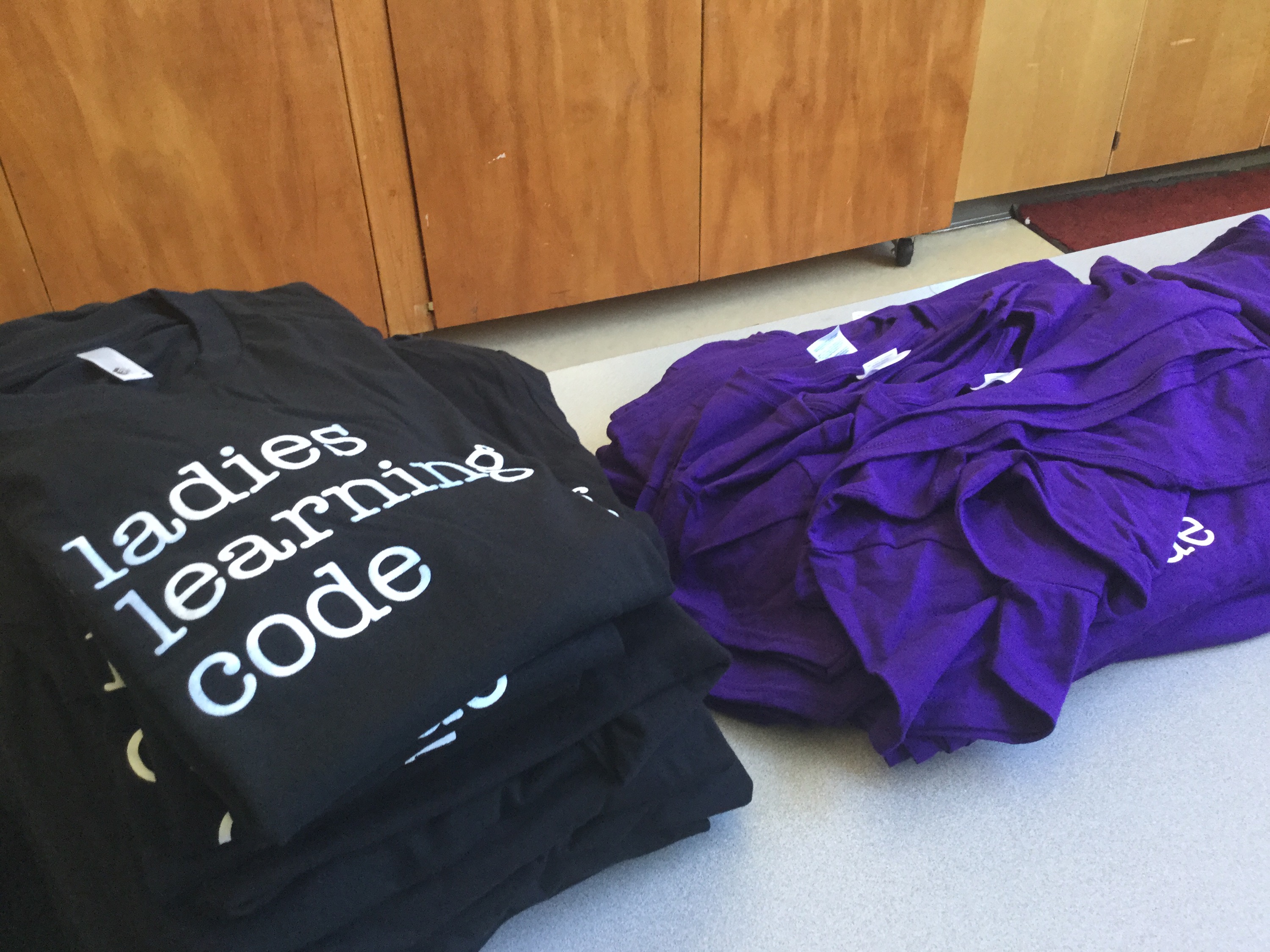
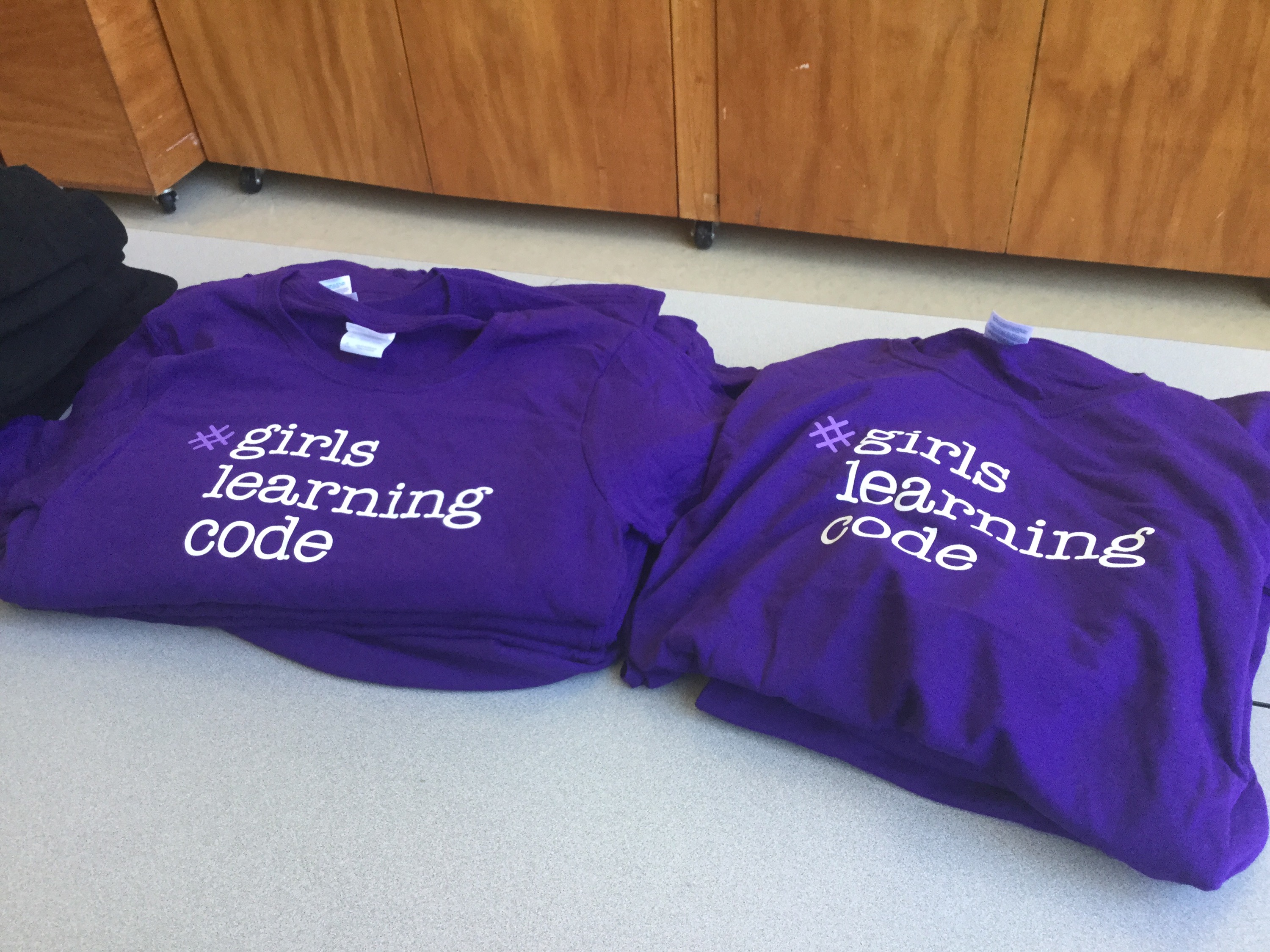
This last weekend I volunteered at one of the local Ladies Learning Code events. I helped by doing social media for the Girls Learning Code event at St. Margaret’s, an all girls school in Victoria, BC. The “code” for the day was learning Scratch, and the girls had fun designing games. The school had donated space including the use of their labs, a large area for the girls to eat their lunches, and then the presentation of the games. We ended up using a computer lab at the Junior School and another lab next door at the Senior School campus. Thank you to the school! 

The day was fun and the girls demonsrated their wicked skills with Scratch. Some of the girls were familiar with Scratch, and others were new to it. Regardless, they had fun. The labs were warm with the hum of the computers and the din of conversation among the girls and the mentors roving around to assist. The mentors donated the bulk of their day to help. And, I want to speak to the mentors. 

The vast bulk of the mentors were women, and virtually all of them shared one message. They wished that Girls Learning Code existed when they were young, and that we need more women in the tech industry. One mentor noted that she has never worked on a project team with another woman. And, another mentor noted that in some of her Computer Science courses she is the only woman or one of three in a class of 50. Yeah, re-read those sentences. It’s 2015. We still have work to do. 

A few of the mentors were men and they echoed the comment. “We need more women and girls coding.” The mentors were great and coached the girls through the day. But, I really hope that the girls were left with the messages that it’s cool to like Math, Games, Computers, and Science. The mentors were introduced to the parents, and again the mentors shared their stories. I am sure that some of the girls and parents left the event with a sense of optimism. I hope to see these girls at more of the Girls Learning Code events. 

I used #llcyyj on Instagram, Vine, and Periscope. The Twitter handle is @llcvictoria. 


Things College Professors Like

Let me start by saying that this is not an exhaustive list. And, this list is based on my experiences as a college professor, teaching assistant, and life-long learner. I also talk to other instructors in the college environment, as well as teachers in the primary and secondary schools.

1. Show up to class

2. Read the syllabus or course outline

3. Come prepared

4. Talk to us after class or in office hours. You are never bugging us when you want to chat about the course or materials. If you need another copy of the syllabus, ask for it. 

5. Plan your time accordingly for the assignments. We realize that you have other courses 

6. When you email us, please use complete sentences and the usual rules of writing. And, start of formal and use Prof. A or Professor. Some profs prefer the title and others will say it’s fine to use their first name.

7. Be open to the materials and course content. 

8. Get involved

9. Come to office hours

10. Review graded work with the prof to see what you can do better next time. <This is different than asking for more points>.

11. Have fun

Number 11 is about making connections between the materials and your other courses or events in the news. Overall, I want to see you engaged and it is a give and take situation. I cannot expect students to magically engage–part of it is my work. I need to make you want to come to class. I will do my part.  


Popular Instructors

I cannot believe that I am starting my 18th teaching year. I always start counting the years in September and this is 18. One of the things that I am mulling is what a popular instructor or popular prof means in academe. Does this reflect your enrollments? Is this term cast as a negative assuming that your course content is easy? I think the context mattters.

1. Hearing it from some colleagues it is clear that it cheapens your pedagogy and the depth of what you teach. 

2. Hearing it from students varies, but it is mostly meant as a compliment. 

3. Some colleagues clearly mean it as a compliment. 

Overall, my sense is that the so-called popular instructors generally enjoy teaching. I think that is the difference.  


Participation Ribbons: Show Up

At some point in the last decade or two participation ribbons became common at sports events. I have mixed feelings about this. While I understand the need to make every kid feel good about her or his participation in a cross country meet, there is another part of me that cringes with this practice. My mixed feelings stems from not wanting my kids to think that they have to win to be their best. Perhaps this is why they both like competitive swimming? While they swim against others, ultimately they are trying to lower their swim times and it becomes self-focused. 

I know that when I watch competitve sports events I am the one in our household who always comments that it is an honor for the athletes to compete. And, I think it is. Participation ribbons, though, have another part to them. Things get more complicated when I am in the classroom. Somehow this culture of rewarding people for showing up has bled into school work. There is this equation in some students’ minds: effort = A. And, this equation is a problem. 

Yes, it is important to participate. You need to show up to class. However, that is only one part of it. There are terabytes worth of research about the correlation between student attendance and success. Part of it is that students who attend class are more likely to be prepared and feel accountable, but the other part of it is that this same group is also likely to hear annoucements, do the reading, and possibly attend office hours for clarification about assignments. My issue is that I often have to explain to a student that their gauge for effort will vary, and that some students can whip an assignment together fast and do well and others will not. 

I do not believe in participation ribbons in the classroom. A solid blog post, research design, paper or vlog is going to take some effort, and merely doing the assignment is not enough. A stronger assignment is going to have to make me pause. The pause is one of excitement–this is great work. However, most of the students will do good to fair work and this is in the B to C range. And, nothing is wrong with this. What is the saying, “Bs and Cs earn degrees.” It’s true, but the learning experience is more than grades. A new term is right around the corner for our college students. My advice: show up. I hope that your instructors entice you to learn, think, and try. You do not have to do your best, but note that you’ll benefit based on the effort you put into the class. The benefits, though, are more tangible than a grade, and you might end up taking away more than the the ability to write better and think critically. You might be moved to change your major or take more classes with that instructor.


Networking at Work

I am an administrator with teaching responsibilites, and at the same time I am a unionized faculty member. This role gives me the opportunity to lead a service department, and continue to teach and mentor. The department I run held our annual retreat this year and a colleague from Human Resources facilitated the event. Based on the response at the retreat and the ensuing days, I feel comfortable stating that it was a success. We did some team building and got to know one another better and this was fun. The manager and I also had a chance to speak to what is next and what our roles are in the unit. I am glad that I have taken the time to get out of my home department, Political Science, and know people throughout campus. 

Almost monthly I meet with my Human Resources consultant to chat about the unit, my team, and other issues as needed. These meetings provide me leadership coaching and human resources training. I have my advanced degrees, but none of them are in managing people or campus wide projects. The Human Resources team have been crucial to my leadership success. And, thinking back to the last year, establishing good, work relationships with others across campus has also served me well. Of course, it is not about me, but here I am thinking about the importance of face to face meetings and casual coffees to chat with people who I work with or need to work with on projects. I also have monthly meetings with others across campus, who I regularly work with and these meetings are coffees where we update one another about our projects. 

People always use the metaphor of silos for university campuses and it fits. Most tend to stick to their building or their side of campus. A new school year is upon on and I encourage academics and alt-academic types to venture out of their usual haunts on campus. Make a coffee date with a colleague who you have always wanted to collaborate with or who you know also teaches large first year courses. My point is to network with others who you might normally not take the time to get to know. 

This suggestion includes staff. It is my experience that academics tend to spend time with other academics. The campus is filled with people. Get to know others across campus in different roles. Before you know it, you have established more meaningful relationships around your campus. I realize that networking turns some people off, so think about expaning your circle at work. The photo below is one that I took at a conference where academics were the minority, but the goal was to move major projects across campus in a collaborative manner. It was a great exercise to see the numbers of staff involved in raising funds and planning for a new building or thinking about active learning environments for students. 


Post for My Students: Looking For Work

I have some points of advice for my current and former students looking for work. I was counting back and realize that I have sat on more than 3 dozen hiring committees in the last 15 years. In that time I have reviewed cover letters, resumes, CVs, and sat in on the interviews. I have also served as a job reference for countless people, and am a MBA Leadership Coach.

1. Proofread your resume or CV

2. Have someone else review your resume or CV. Chances are you are forgetting something about some of your skills or have missed an error with formatting or a typo.

3. Prepare for your interview. Find out information about the employer and the position that you have applied for. You can Google common interview questions and practice formulating your answers.

4. Send an email thank you to the interviewer after the interview. Be concise: thank you for the opportunity, I look forward to hearing from you.

5. If you do not get the job, it is acceptable to contact the interviewer and ask if they can offer feedback. They may respond with some, but do not expect that they will.

6. When you are in the interview, never speak ill of your current employer or any past employers.

7. Do not under any circumstance lie or inflate on your resume.

8. Be prepared for your interview and gracious to the interviewer or interview panel.

9. Be on time to your interview.

10. Dress appropriately for your interview. It is better that you are a bit overdressed, then not dressed up enough.

11. Try to relax and think positively before your interview. You do not want to be that candidate who was extremely nervous and could not answer questions.

12. Review your digital footprint. Update your LinkedIn account and make sure that you have your LinkedIn account information on your resume. 

Do not burn a bridge. If somehow you are not happy with the process, never send an email or make a phone call when frustrated. 

Overall, good luck with your job search! The Spring is busy with students looking for jobs, co-ops, and volunteer opportunities.

Leaning In

This post first ran on Inside Higher Education as part of the University of Venus blogs. I’m sharing it here on my blog.

I’m going to offer a few reviews of Sheryl Sandberg’s Lean In and this first one is going to be a sweeping overview of the entire book. There are specific chapters that I want to speak to as well, but first I’ll do a review of the book and the Lean In movement. In order to get access to the Lean In circles, er… movement, you have to join the site via Facebook, which is of no surprise given that Sandberg is the Chief Operating Officer of Facebook. I say this in both an honest and tongue in cheek way, as I know that the Facebook metrics are working away analyzing users use of the Facebook platforms and various add ons.

The Lean In site offers anecdotes from different women who are members of Lean In and they each share their stories of times in their life when they leaned in. The members are mostly women and some men from different backgrounds (race, class, and work sector). What they share is an inspiring story about a learning experience or successful moment in their lives—either at work or in their personal lives. The anecdotes are concise. There are also videos that vary in time and some are quite lengthy (40 minutes long). I’ve enjoyed poring through the site and reading and watching the different stories. Some feel like testimonies and are quite personal, whereas others read like a motivational speech.

Getting back to the book, Sandberg is asking that women own their skills and success. Try to sit at the table; overcome the imposter syndrome. But, she also warns that we will have moments when we must work together and help others. This isn’t a book about selfishly helping yourself or being selfless. This book offers her personal story about when she had to lean out and focus on family or other issues in her life, or moments when she leaned in to get to the next stage in her career. She refers to statistics, feminism, and important stories as she shares her truth. She also acknowledges that some women (and men) will stay at home and do the important work of raising children, so she gives a nod to the parents who choose to stay at home and does refer to this opportunity as a privilege. I was glad to see this reference, as it is a privilege to stay home. Of course, some women are indigent and at home, but the opt out conversation is often lacking any discussion of class privilege or mention that women of color have been leaning in for years, if not decades and that their leaning in is complicated by racialized sexism.

On a side note, I’m really tired of the reviews and commentaries that are published by a commentator who has not opened the book. Not cool. And I am not keen with the haterade against the book based on the fact that Sandberg is a wealthy, Jewish woman. The review needs to say more than simply attacking the messenger. The book is not perfect, but Sandberg offers some great points that many of us need to hear again and again. I cannot represent all Latinas and know that I have class and heterosexual privilege, but I will say this: there are many takeaways from this book. It is important to believe in yourself, network, make smart decisions, invest in yourself, and help others. Mentor, coach, sponsor. Get mentored, sponsored, and coached. There is more to this book and so-called movement.

Now, I have heard lots of commentary about how this book does not help all women or is myopic in its view. These comments are interesting to me. No book will speak to everyone. This book and its message, though, might help some women realize that they deserve to be at the damn table. The book and its anecdotes might squelch feelings of impostor syndrome. The videos on the Lean In site might also make some women and men realize that they need to serve as a better mentor or coach to those around them. My suggestion to my current students or students who just graduated–Lean In.

Peer to Peer Mentoring: Leaning In

This is a good post to share for my March Month of Mentoring. I will post another about the book, since I have read it!

Now, I haven’t read Sheryl Sandberg’s Lean In yet, but I’m going to weigh in based on the reviews offline, online, her 60 Minutes interview, as well as based on joining Lean In’s site last week. The conversations about the book and the phenomena of Lean In as a movement reminds me of Graduate Women Scholars of Southern California. This was a peer-mentoring women’s group facilitated by one of the Women’s Studies faculty members at San Diego State University. Dr. Susan Cayleff saw that her office hours were busy with women graduate students asking the same questions. In 1991 she decided to try hosting once per month meetings at her house related around a particular topic.

These monthly meetings were workshop-like and typically led by one of the members and the Cayleff. The topics covered varied from how to put together your CV, prepping for a conference presentation, working on your thesis/dissertation, dealing with your committee, and more. These meetings provided a safe place of support for women students. We were Leaning In. We were learning from one another and sharing strategies. It was a bullshit free zone for the most part and we were allowed to admit that we were second guessing our choices or having a hard time finishing projects. The women involved were primarily from the Art (Humanities) and Social Sciences from the local universities in San Diego; however, there were several from Los Angeles and even one or two who were from the Bay Area, but living in San Diego.

Thanks to this peer-mentoring group I was better prepared for grad school. Sure, I occasionally felt like I was faking it or didn’t belong, but overall the mentoring sessions reminded me that I had to make academe my own (or attempt to do so). I think that Lean In is on to something and that peer to peer mentoring is important. If Sandberg’s book and the site get more women to connect–great! I have benefited from strong mentors throughout my academic career and to this day have some great peer mentors and coaches. I have blogged before about how mentoring is my mandate. It is. Part of my mentoring is getting my students or peers to Lean In.

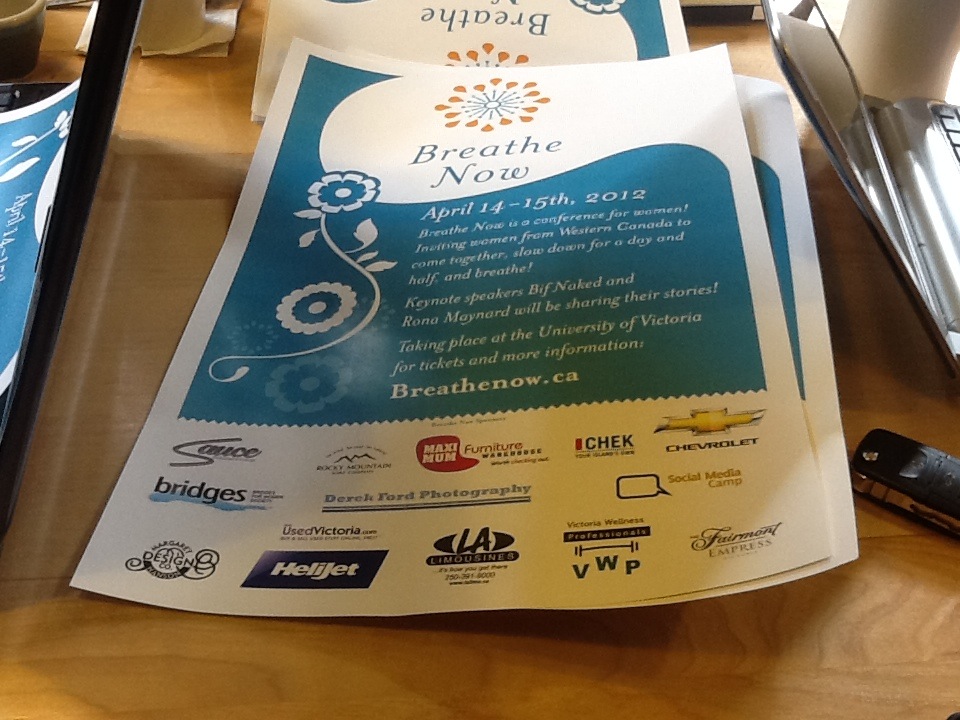
I need to read Sandberg’s book. And, yes, I know that she’s Harvard educated and part of the elite. I know that she’s wealthy–Google, then moved to Facebook as their Chief Operating Officer. But, from perusing different bios and videos, I can see that there is lots to gain from Lean In. And, I also know that we can be are worst enemies in our work lives, as well as our personal lives. Self-doubt, not negotiating, and making poor decisions hurts us all, but women more so at work. I am not an acolyte with rose-colored glasses. I think my main point is that I know how to Lean In and the Breathe Now is yet another example—a conference that I co-planned. Many of us have been networking, strategizing, and organizing. We know this work well. But, I’ll speak more to Sandberg’s book and movement after I read the book and pore through more of the blog.

496

Sharing is Caring: Social Media Gone Mad

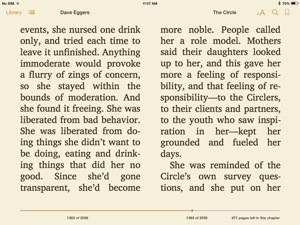
I finished The Circle by Dave Eggers and had a varied reaction to it. It was part genius, mirror, and possible futurist examination. Attentions spoilers are ahead. The book opens with the protagonist, Mae, getting a dream job at a tech company that is Google, Facebook, and Cisco rolled into one. Soon Mae immerses herself in the culture of the Circle. She becomes an extremely productive employee of the Circle and embraces the cult-like philosophy of the company. Mae is an ambassador to the brand of the company. She comes to learn that above all everything must be shared. “Privacy is theft.” The book reads like many dystopian novels, but resonates with some familiarity given our plugged in society.

Some of us were outraged when we found out the depth of surveillance by arms of the government, yet at the same time many of us share intimate details of our lives on blogs, tweets, and status updates on social networking sites. Where is the happy medium? That medium ultimately is what we are comfortable with our particular digital footprints. However, Eggers gets on to something more insidious with the absolute need to share. Sharing is caring and consequently this also means that privacy is selfish. Transparency becomes the norm and this requires completely embracing the panoptican. Jeremy Bentham would be so proud or perhaps horrified. Would it be democratic, though, to make everyone vote? Mandatory voting does exist, but as of right now it is not facilitated by a social networking site.

Dave Eggers is on to something with the book, though. The want to share everything and also feel accountable to your community of watchers is problematic at times. Here, Mae’s thoughts reminds me of disordered eating and people who report their food intake on Mia and Ana sites. How would you act if you were constantly surveilled? The idea is that with an audience one would be on their best behavior–eat right, exercise, and say the right things. But, being on all the time is exhausting and some of Mae’s friends realize this.

20131230-135543.jpg

20131230-135645.jpg


The book might give you pause as you think about your own connectedness. I know that I walked around campus more cognizant of needing to be unplugged.


Eggers, Dave. 2013, The Circle. NY: Vintage Books.