Epiphanies

Most instructors have likely experienced this. You get your mail in the department and you have a card from a former student that essentially says the following: I took your class a number of years ago and wanted to say thank you. I thought you were crazy, but now that I’ve been working I find that I think of you and the class fondly. I am sorry for being a jerk. Your class was important. Thank you. I appreciate the thanks, and I also appreciate the apologies for sarcasm or making the class discussion more difficult. These notes are quite meaningful.

Approximately ten times per year, I get emails, cards or Facebook messages like the above from my former students. Funny enough the cards are from an array of students and it is sloppy to say it is from the haters. The cards come from former students who are being honest. Some might think  that they were difficult, but I find that their memory and my memory vary. I can think of two very difficult groups over the years, and I have heard from one person out of that group, and the apology appeared honest at first. I say that, as that former student appeared lots in my social media being rather antagonistic. I wish I could say that the above is pure hyperbole. It is not.

Lately, this has happened more than most years. I think it’s the fact that the numbers of students that I have taught has increased or maybe it is the fact that I just finished my tenth year at the fourth university. They know how to contact me via snail mail, email or social media.

My point here is I have found that the students who send these notes surprise me. I am happily surprised that they contacted me. I am happily surprised with the thanks, and reminded about the privilege that I have working with them in the classroom. But, each card notes that I was approachable, enthusiastic or that my playing devil’s advocate made a difference. My students are not jerks. They are diligent, hard-working, exhausted, balancing lots, and do what they can. They are imperfect. And, so am I.

Great caption, excuse the f bomb

 

What My Students Have Taught Me

I submitted my students’ grades and I have now completed my 18th year of teaching. I want to reflect on this year, but also begin to think about the next school term. This post offers some thoughts about what my students have taught me.

What have I learned from my students?

  1. Some of them are at university as a placeholder. Everyone tells them it was next for them. For many of them they are in the right place, but for some they will need some time off or to do other things, and this is fine. We have to support them.
  2. Their first year is hard. They are acculturating to university life and possibly living away from their parents. You have to treat the students with extra patience during the first term. Be firm, but patient.
  3. They are excited. You really want to keep that enthusiasm up, as it will for them when they are exhausted, homesick or second guessing themselves.
  4. You are part of their university experience.
  5. Working with first years for the bulk of my years, you are one of many who have impact on their ability to get through the first year. It is important to set guidelines, but be kind.

Overall, my first years have taught me humility. They are the hardest students to work with, as they demand the most of me. They also offer the most harsh quantitative and qualitative assessment of my teaching. It is ironic that a class full of people who are for the most part new to university are assessing my ability to teach. Who are they comparing me to? But it is important to hear from all my students, and learn from them. They make me smile with their compliments and criticism. It’s interesting to see that three students might like my use of “keener,” but one thinks that it is offensive. Yes, offensive. I cannot please everyone, and I do not try to do so. It is impossible!

I really look forward to year 19, which starts next month with the new term. I include a photo of my favorite Supreme Court Justice, Ruth Bader Ginsburg, who is also known as the Notorious RBG.

notorious rbg


Don’t Blame Technology

The acceptance letters are going out to all the Grade 12 students. I am reading lots of books about teaching and technology, and reflecting on the ways in which we talk about first year students and technology. I felt it was worth continuing this conversation.

The New York Times article “Growing Up Digital, Wired for Distraction” made the rounds, but since there have been other similar articles. It is to easy to blame technology on the disconnect that educators find with the current cohort of students in our first year courses. I am going to speak to this notion that the Net Gen are artful multi-taskers and think differently. Instead, what we really have is a cohort of young people who are used to using technology all of the time for gaming, fun, communicating, research, school work, and for making connections with others. Of course, some are using technology merely for gaming or social networking, but you get my point.

Part of my job is to acculturate students to the environment of higher education. This is why my course syllabus states that students should be taking notes or checking the course Moodle site, but not gaming during lecture. It’s distracting to those around them and frankly, if you want to game, download music–do that outside of the classroom. This notion of the Net Gen being better at multi-tasking has been disputed on several occasions this year with new research that states that the Net Gen are no better at multi-tasking than previous generations.

I am not a tech Luddite. I have an iPhone and have often been an early adopter of different technology or applications. However, I tire at the sheer number of articles that extol only the virtues of technology in reference to youth. This New York Times article doesn’t do this, but it opens up the door to excuse making for rude behavior in the classroom and in communication. If the Net Gen wasn’t spending hours online gaming or connected to Facebook, they most likely would be on the phone for hours with friends. Technology has replaced other great time vacuums that previous generations used. Here, all of this conversation is directed toward youth who have access to technology. These are really first world concerns and conversations.

We need to remember that ultimately lots of business and human interaction takes place face to face. This is where we need to remind the Net Gen about classroom etiquette and communication etiquette online and offline. In much the same way, though, educators need to be realistic about their teaching and make sure that the material and means of presentation of the information is engaging. And, we need to equip are students with skills to use the technology well. We are all in this together.

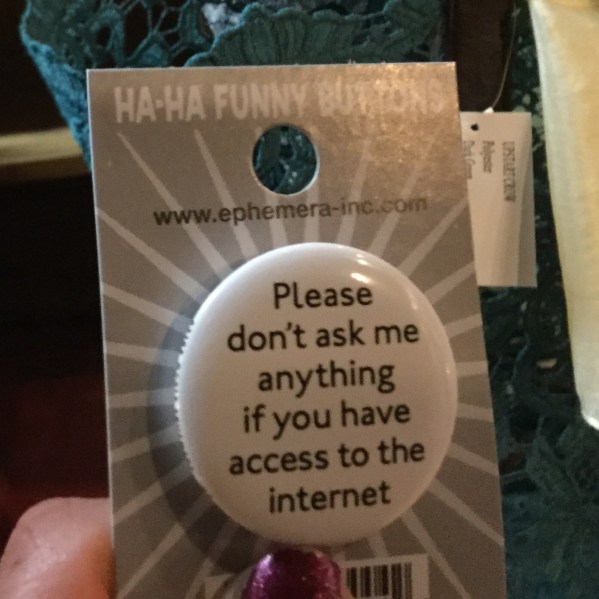
internet button

Sassy Button

Friday Fun Facts

I am trying to get back on the Friday Fun Facts bike. My Fun Facts will be about conferencing.

  1. I started attending academic conferences when I was an undergrad. One of my mentors was supportive and shared that I  needed to get used to presenting  my work and the entire conference experience.
  2. My first terrible conference experience was at an APSA. I was a grad student and the discussant was unpleasant to the entire panel. I listened and learned and have taken my discussant role seriously. I am thoughtful and supportive.
  3. Once I earned my PhD, I always made sure that I took a grad student out to breakfast or dinner at a conference. And, I always introduce grad students to my network. I know what it is like to feel like an outsider in the at times clique-ish academic environment.
  4. If I see poor behavior by a discussant at a conference, I contact the conference organizers. I will not be a bystander to someone needlessly being an ass to people. See number 2. I will usually respond to the colleague who is not using a filter.
  5. I have multiple copies of my presentation and travel with my own dongles/connectors. I learned the hard way and have become very agile and ready to present my talk.
  6. I often invite a student or more junior colleague to present with me on a panel or round-table.

Hope these six, fast facts are useful. Share your conference facts! Sharing an image from Twitter. I love this mug.

img_2755

Whine Weds

I’ve seen the #wineWeds and #whineWed tags on Twitter and both have made me smile. Although I do prefer the sarcastic #whineWeds tag. Lately, I have followed the #wellnessWeds tag on Twitter and other social networking sites. I am trying to spend any extra time thinking about the positive and surrounding myself with people who really bring me joy. Yes, I have read Marie Kondo’s books and I have decluttered lots in my house, and other parts of my life. There is something truly liberating for me to be able to protect my time.

Recently I was at a regional conference in my home discipline and I took special care to protect to my schedule, and outside of conference commitments I was very careful with any extra time that I had. I brought along some work and I needed to take care of it. I read reports, and graded in the sun, and kept up with my email. I also attended fewer obligatory receptions, and I am fine with that. I was in charge of my time. I did get some networking in, but it’s not the feverish networking of someone who is looking for work and trying to make all the connections. I’ve been there.

I am hearing from vendors or other partners about the need for a conference call and the one to three day warning for the meetings is not enough. The emails that note ASAP are not a priority for me and my time. The people who I work with regularly and have access to me and my time do not need to flag the message as important. It is often the vendor or someone who has not planned their time well, who uses that flag or note.

I need to balance my work and it is getting easier for me to offer a polite no and suggest the call or meeting for next week or the week after. So, on this #wellnessWeds I lift up my coffee and say, “Protecting your time, protects you.” It is perfectly acceptable to say, No. No, I am not available. No, I will not engage with you. No, I will not respond to your passive aggressive email with a passive aggressive response. No. But, always say yes to Tacos.

image

Dear Professor: My Parents are Lost at Sea and I Need an Extension

I have revised this post. Today’s Fri Fun Facts is about keeping it real. I give lots of advice on the Fri Fun facts and today it’s about not crafting elaborate stories in order to get an extension on work. During the last several school years I am seeing that the grandparents are safe and not dying at the high rates that they used to and this might be related to how clear my syllabus is about providing proof. And, the proof about a death in the family usually is from the service—the funeral home or church typically puts together a program for the service. This might seem like an onerous request, but I find that it has kept many grandparents safe! In the last three years, I have stopped asking for this and have met one on one with the student who needs an extension. I just do not have enough mental capacity to ask for the proof. I need to come from a place of trust, and take my student’s word.

I am giving some quick advice about due dates and managing your time. In case you’re wondering, I did get a student email about parents lost at sea. I contacted tthe Coast Guard. The student was embellishing and did not get an extension. Today, I likely would not contact the Coast Guard–who has the time? I offer some advice, though.

1. Manage your time well. In my courses the paper assignments are included in the syllabus, so from day one the students know what the assignments are and when they are due.

2. If you’re in over your head, make an appointment or come to your instructor’s office hours. I’ll be honest, I do think that I am more likely to be more flexible when a student “owns” their education and sense of overwhelm and talks to me face to face and asks for an extension. I do not always give the extension, but I think I am more apt to weigh the request differently than a last minute email.

3. Rely on resources around campus. At UVIC the library has an assignment calculator and students can type in the due date and a schedule is calculated that helps students organize their time. Attend class, go to tutorial, office hours, and schedule the time to conduct research and writing time.

4. Re-read points 1-3. I cannot emphasize how much guidance you will get from your professor if you ask for it. There is a reason why I had 8 hours of office hours this last week and that there was a line up–I care and I’m here to help. The only way that you’ll get guidance from your professor is if you talk to her/him.

With this—I ask that you finish your term on a high note and organize your time before the final exams begin. Good luck!

Disclaimer: This post has nothing to do with any of my current courses or students. It is merely the time of year when a post of this nature is appropriate. Again, this is not about my current class! You are rocking it.

Six Fun Facts

I am a pretty red extrovert, and I have taken special care in the last three years to be more mindful about my extroverted ways. I have learned to modulate my speech, and move my hands less, when engaging an introvert. It’s taken me years to work on this, but I think I have gotten better. I have a few fun facts to share. These are truisms for me, and might not hold water for you. 

1. Thinking about communication is work. 

2. You do not have to respond. 

3. Pause, and then reposed. (If you are going to do so). 

4. Use delay delivery with your email. It also gives you some time to go back and review

5. Enthusiasm can go a long way. 

6. A meaningful thank you or sorry is worth its price in rubies. 

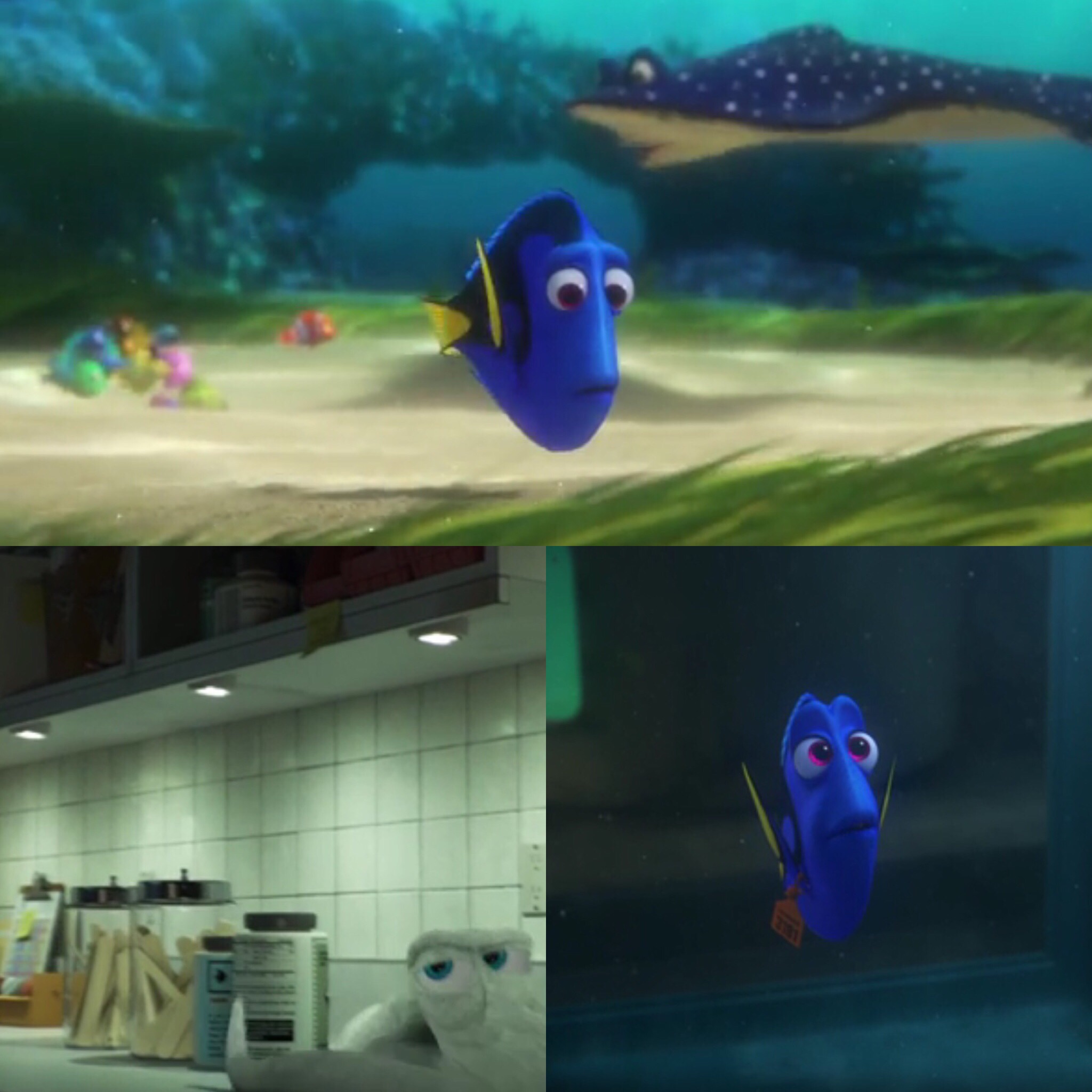
That is all! Here are some screen caps from “Finding Dory.” 


Do Not Glorify Busy: Friends

This post is revised, but provides a timely reminder. Our lives are not about competing with one another about how busy we are. No one wins the busy olympics. Do not glorify busy. Do not proudly say, “I am triple booked.” One-upping does not make you more important. We are all busy.

My mantra for 2013 was: I will not glorify busy. This mantra deserves its own post, but I will speak to something more specific here. I continue to not glorify busy, since I know that everyone is busy and it’s relative to our lives. I will not make myself more busy than I need to and pass on social situations that I have to “phone in.”  This does not include work meetings or commitments, as that is different since I have to attend these meetings. I had a loved one in my family go through a major health crisis a few years ago and it was a wake-up call for better life balance and here I am thinking about things. I am better at taking time off. I have not perfected it, but I am getting better. One of the things that I am more cognizant of that is extremely important that I take care of myself. I am not talking about the basics: food and shelter. No, I’m referring to a more nuanced way of taking care of myself. If I have better balance in my life, my family benefits. If my family benefits, so do my friends, and then my co-workers and students. When my family was in crisis, I saw which friends were available and offered help and more importantly I also saw who I wanted to spend time with during my down time or me time.

I want to surround myself with people who are good friends. I want to spend time with people who are not vampires–you know the ones. You might refer to them as emotional vampires. Now, that I am trying to take better care of myself, I am more careful with my free time. Friendships are important and I am surrounded by some wonderful people in my life. But, I took stock during the last nine months and have forged some stronger friendships with some friends and have walked away from some other more shallow friendships. Surround yourself with people who have your back! This post is germane given that I am off to BlogHer and will surround myself with like-minded people. My hope it to make some new friends and finally meet some “old” ones in real life.

This post is reposted with a few things added. Overall, the sentiment is germane. Do not glorify busy. You will not get a gold medal or cookie for being busy. Take care of yourself!

627

Do Not Burn that Bridge: Collegiality

get hired

I am in the throes of letter writing and giving job references for former students and staff. This post is not a book review of the book in the photograph. I took the screen shot and of the book and add my post as a suggestion for a job applicant or new employee. One of the things that I have heard from prospective employers is the ways in which a candidate or hired employee fails miserably and burns a bridge. In my line of work as an instructor, advisor, mentor, coach or supervisor, I also occasionally see a student or staff member burn a bridge. Occasionally this is done with a positive attitude or the expectation that rewards are instantaneous upon merely doing the job.

I have heard repeatedly that a good attitude can help a new employee. If you are new to a job that you are not sure about make sure that during your shift you act like you care. This job could turn into something else for you and it is hard to shake off a bad impression. Be careful with social media. Do not post negative statements about your employer or co-workers. Nothing is private online and the worst thing that you can do is make you or your employer look bad. Likewise, if you have some terrible customers you also do not want to post information about them. Be careful and smart.

Make sure that you are dressing in a way that fits the environment. If there is a dress code, follow it. If there is not a dress code, ask your immediate manager what she or he suggests. There is nothing more embarrassing than having a manager speak to you about your clothing. In my early twenties, this happened to me twice and I never wore that blouse or the skirt again. Both seemed fine with the ensemble, but giving further thought I realized that they did not meet the conservative norms of that work place. I always suggest to my students who have job interviews to think about the dropped pen exercise. If you have to pick up a pen, will you feel comfortable as you lean in to grab the pen. Bend with your knees–not your back!

Other hints for looking for work–keep in contact with people who are well-connected or who you might want a reference from at a later date. This might be a bi-annual email that updates or an occasional hand written note. Make sure that you keep your circle of references up to date with all the wonderful things that you are doing. Related to this, be careful on social media. There are numerous examples of poor use of social media. I imagine that the communications staff at one East Coast university spent part of this last Monday chatting about a student’s racist post and the follow up posts that only made his original tweet worse. While his Twitter account is now deleted, many screen-shotted the tweet. Plus, the response against his racism was swift. That original tweet could haunt him.

Overall, be smart while you are looking for work and new on the job. Even if you do not have a probationary period, your first few days, weeks, and months are scrutinized. Check in with your co-workers and manager. If you do not have regular performance reviews, ask if you could have some assessment. Think of it as a work tune up. Reflect and learn. And, if you have questions–ask them.

Review: danah boyd’s Work

Read More Books

First of all, author danah boyd does not capitalize her name, so this is not a typographical error. I have read her book It’s Complicated: The Social Lives of Networked Teens (2014) a few times and I’m now teaching it in my Technology and Society 400: Technologies of the Future seminar. She does a great job of offering a thoughtful and respectful examination of teens use of social media. The big takeaway is that today teens use social media to socialize with one another. It is their social space.

She is not offering a wagging finger at youth about narcissism or technology addiction. Sure, she covers cyber-bullying and cyber predators, but overall she treats teens with socio-political agency and not as mindless victims to technology. She also speaks to the digital divide and the ways that youth use technology for important personal connection, and establishing their identities.

My students talked about technology use and addiction and one student noted that addiction is serious term and that we should be mindful of the use of the term. The student was correct, and we chatted about technology addiction. When I queried the class about how many sleep with their phones near their pillow, I saw many sheepish smiles.

This book provides a good opener to the seminar. I find it better to start off on a good foot and not jump right into doom and gloom about data mining, terms of service, and surveillance. That is for next week! Seriously, we are going to cover lots of material about technology and culture and very little condemns it. The class has a major project developing a mock up for an app that is needed on campus or in the greater community. Right now some students want to add to the current mobile app and others want to enhance Fitbits or other wearables for students. From my point–the future is bright.

boyd, danah. 2014. It’s Complicated: The Social Lives of Networked Teens. New Have: Yale U P.