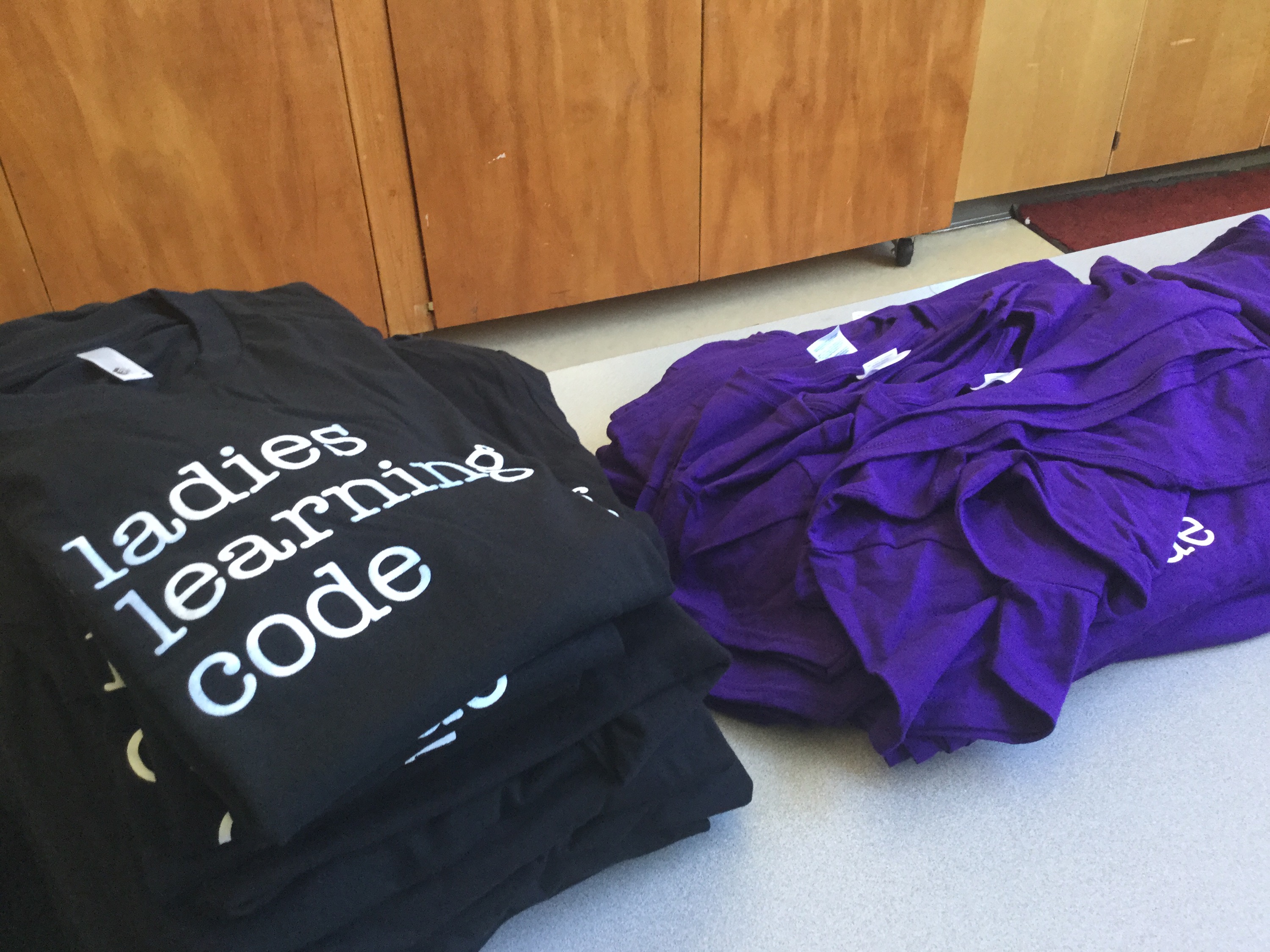
Ladies Learning Code: Why the #YYJ Chapter is Great

I am lucky to live in Victoria, BC and work at UVIC. I have met some wonderful people on and off campus. I have been involved with Ladies Learning Code Victoria (#yyj) Chapter as a volunteer, learner, and sponsor. And, here I am again at an event. This weekend’s event is a Python session. We have approximately 40 learners here and a mentor at each pod.

The energy in the room is amazing. My favorite part, though, is the introduction of the mentors. Every mentor is either affiliated with UVIC or is a local business worker/owner who wants to see more women working as a programmer or developer. It’s quite breathtaking to meet the students involved with the Women in Computer Science and Engineering members. The learners vary in age from 15 – retired.

This time the session was held in one of our Active Learning Classrooms. The room is set up with the instructor in the center, and the students in pods. The set up requires lots of interaction between the students, and the instructor. I am happy to share that the attendees were blown away with the room. I do not feel smug, but rather like I am seeing the consequences of months of hard work by the leadership of the local Ladies Learning Code chapter, and the Classroom Infrastructure Committee at UVIC. OK, I take it back, maybe I feel just a little smug. Smug, and very happy.

Whenever I can see some active learning taking place, I feel a sense of pride. And, here I am witnessing the magic take place, as one of our undergrads leads the session. Yes, she’s teaching the session and doing an amazing job. Ladies Learning Code does a great job connecting our students and the local community.
 

Reflections: No Glares

Now that another term has almost ended, I can look over my shoulder at the previous school year and think reflect. Each year I reflect and try to learn from the previous year and then resolve to make some changes in the next year in the classroom, for my professional development or my ongoing efforts to mentor/coach students and peers. What did I do differently last year in the classroom, office hours or other interactions with my students? I resolved for more honesty. I was blunt. I was diplomatic, but more so, I was blunt. I am helpful and professional; however, I refuse to waste my students’ time with circular conversations. I do them no favors if I try to sugar-coat conversations.

What were the repercussions for me, if any? I heard more of these comments:
Thank you for being honest. I’ve never heard this before. Why am I almost done and no one has told me this? I didn’t know that this was plagiarism. Thank you for your time.

I did not have any incidents where someone stormed out of my office or a conversation escalated. If anything, I had meaningful conversations about assignments, interactions, writing, grad school, and other issues. As I have noted on numerous occasions, part of my job means that I have the good fortune to work with young people in the classroom or in my office. I love it. I would not trade this job for another as I get to teach, mentor, coach, and lead.

This last year I also thought more about my time. I strategically chose to focus my time differently. Part of it is that I had to, given a job change, but that is cause for a different post. I was not as available for extended office hours and the world did not fall apart. I expected a few day’s notice for extra appointments. What I am saying is that I established better boundaries for office houring and mentoring students. I had to protect my time thanks to the job change and I was working more. I managed my time effectively and accomplished more. And, at the same time I did not field complaints from my students. If anything, the change was better, as they commanded my full attention at times that were not pressed between meetings and I could listen.

My writing prompt for this post comes from a Swedish Proverb, “Fear less, hope more; whine less, breathe more; talk less, say more; hate less love more; and all good things are yours.” This last school year was filled with so much good and change. I welcome the change with a big smile and an open mind. The 2015-16 school year is half way through and I am in a great place. And, I’ll add that my little Grumpy Cat agrees and has her head on the desk!

Manager: The Art of Watching & Listening

I know that my official title is Director; however, I do lots of managing. Managing of people, expectations, small to large projects, and managing my performance. Part of managing is not talking, but watching and mindfully listening. My issue is that I have to be present in the office to interact with staff, and some weeks I live meeting to meeting. The way I manage my time is with Outlook and I plan my meetings weeks in advance to carve out time to meet with my staff.

I have given everyone a copy of Thanks for the Feedback. This is for me, and for my staff. I have found that giving my staff tools to communicate with one another and me is is important. We had our annual retreat and what a difference a year makes. This retreat was important to establish the team mission, communicate, and also look forward to what is next for the team.

A good manager or leader needs to plan, watch, listen, and lead.

Hacking the Classroom

Every instructor has likely walked into a room and thought, “Oh, no. How am I going to teach in this room?” The classroom might be in the basement and have no light or have more chairs shoved into it than it truly fits. I am used to hacking the classrooom and making it work. This might mean working with what I have and making the best of it. I have to walk and work the classroom and it is imperative that I have a place to move–to pace. 

I also need to see students’ faces. I am pretty good at reading a room and I need to see the ephiphanies or looks of boredom so that I can respond. I will ask students to not sit in the very back or if they must multi-task to do so in the back of the classroom. I try to set up the etiquette guidelines during the first week. I explain my expectations, then what they can expect from me. I have moved our classroom furniture, booked lab space for one day, and booked a different classroom for group exercises. I will do what it takes to the make the classroom ours, and make it work.  

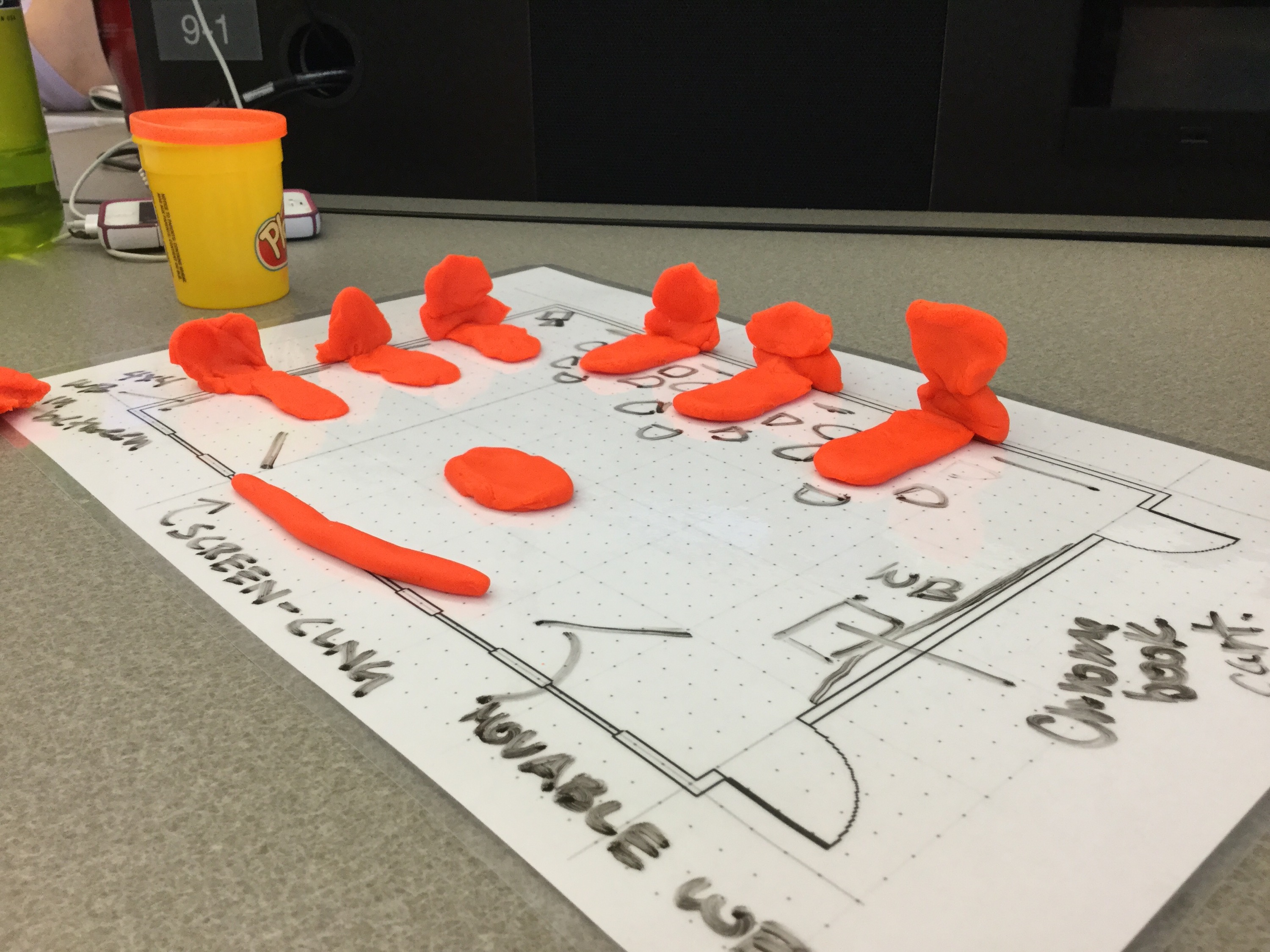
The image below is from the National Forum on Active Learning Classrooms. We were using playdough to make our ideal learning space. 


Introspective Exercises

I am co-teaching a new course, Digital Skills for Your Career. Last night my slide deck consisted of a letter  in bullet point form to my 20 year old self. I shared with my students some regrets and points of reflection. It was blunt and at times humorous. My point was to help them with their exercises. Co-op and Career had provided them a venn diagram to fill out and for some of the students the exercise was a tough one. They needed to think about their skills, wants, and competencies. The exercise is all about introspection and self-promotion. It is not as easy as it sounds. 

And, their first assignment was due this week. We had asked them to curate a fulsome About.Me page, and in two weeks their LinkedIn URL is due. They worked away in pods chatting with one another about what is holding them back, and how to overcome self-doubt. 

Mentoring university students has taught me numerous things. One consistent issue is the uncertainty and the way it can stifle creativity, bravery, and happiness. My exercise in self-deprecation and honesty was to remind them that they are going to make mistakes and it is OK. We are three weeks into this course and I hope that they are enjoying it as much as I am. 

My photo of one of Co-op’s Slides. Thanks! 

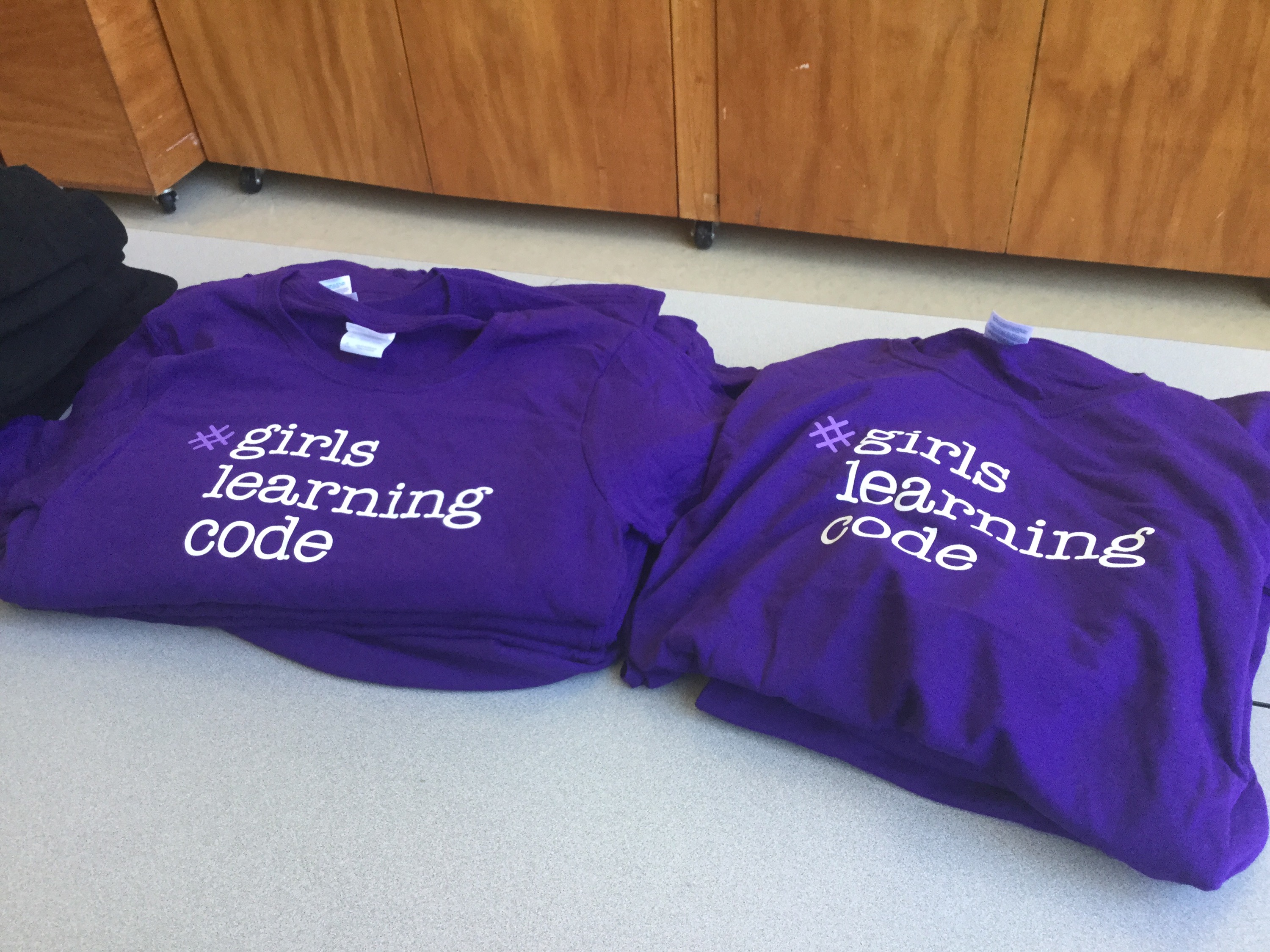
Girls Learning Code: Scratching at the Surface 

This last weekend I volunteered at one of the local Ladies Learning Code events. I helped by doing social media for the Girls Learning Code event at St. Margaret’s, an all girls school in Victoria, BC. The “code” for the day was learning Scratch, and the girls had fun designing games. The school had donated space including the use of their labs, a large area for the girls to eat their lunches, and then the presentation of the games. We ended up using a computer lab at the Junior School and another lab next door at the Senior School campus. Thank you to the school! 

The day was fun and the girls demonsrated their wicked skills with Scratch. Some of the girls were familiar with Scratch, and others were new to it. Regardless, they had fun. The labs were warm with the hum of the computers and the din of conversation among the girls and the mentors roving around to assist. The mentors donated the bulk of their day to help. And, I want to speak to the mentors. 

The vast bulk of the mentors were women, and virtually all of them shared one message. They wished that Girls Learning Code existed when they were young, and that we need more women in the tech industry. One mentor noted that she has never worked on a project team with another woman. And, another mentor noted that in some of her Computer Science courses she is the only woman or one of three in a class of 50. Yeah, re-read those sentences. It’s 2015. We still have work to do. 

A few of the mentors were men and they echoed the comment. “We need more women and girls coding.” The mentors were great and coached the girls through the day. But, I really hope that the girls were left with the messages that it’s cool to like Math, Games, Computers, and Science. The mentors were introduced to the parents, and again the mentors shared their stories. I am sure that some of the girls and parents left the event with a sense of optimism. I hope to see these girls at more of the Girls Learning Code events. 

I used #llcyyj on Instagram, Vine, and Periscope. The Twitter handle is @llcvictoria. 


Things College Professors Like

Let me start by saying that this is not an exhaustive list. And, this list is based on my experiences as a college professor, teaching assistant, and life-long learner. I also talk to other instructors in the college environment, as well as teachers in the primary and secondary schools.

1. Show up to class

2. Read the syllabus or course outline

3. Come prepared

4. Talk to us after class or in office hours. You are never bugging us when you want to chat about the course or materials. If you need another copy of the syllabus, ask for it. 

5. Plan your time accordingly for the assignments. We realize that you have other courses 

6. When you email us, please use complete sentences and the usual rules of writing. And, start of formal and use Prof. A or Professor. Some profs prefer the title and others will say it’s fine to use their first name.

7. Be open to the materials and course content. 

8. Get involved

9. Come to office hours

10. Review graded work with the prof to see what you can do better next time. <This is different than asking for more points>.

11. Have fun

Number 11 is about making connections between the materials and your other courses or events in the news. Overall, I want to see you engaged and it is a give and take situation. I cannot expect students to magically engage–part of it is my work. I need to make you want to come to class. I will do my part.  


Popular Instructors

I cannot believe that I am starting my 18th teaching year. I always start counting the years in September and this is 18. One of the things that I am mulling is what a popular instructor or popular prof means in academe. Does this reflect your enrollments? Is this term cast as a negative assuming that your course content is easy? I think the context mattters.

1. Hearing it from some colleagues it is clear that it cheapens your pedagogy and the depth of what you teach. 

2. Hearing it from students varies, but it is mostly meant as a compliment. 

3. Some colleagues clearly mean it as a compliment. 

Overall, my sense is that the so-called popular instructors generally enjoy teaching. I think that is the difference.  


Participation Ribbons: Show Up

At some point in the last decade or two participation ribbons became common at sports events. I have mixed feelings about this. While I understand the need to make every kid feel good about her or his participation in a cross country meet, there is another part of me that cringes with this practice. My mixed feelings stems from not wanting my kids to think that they have to win to be their best. Perhaps this is why they both like competitive swimming? While they swim against others, ultimately they are trying to lower their swim times and it becomes self-focused. 

I know that when I watch competitve sports events I am the one in our household who always comments that it is an honor for the athletes to compete. And, I think it is. Participation ribbons, though, have another part to them. Things get more complicated when I am in the classroom. Somehow this culture of rewarding people for showing up has bled into school work. There is this equation in some students’ minds: effort = A. And, this equation is a problem. 

Yes, it is important to participate. You need to show up to class. However, that is only one part of it. There are terabytes worth of research about the correlation between student attendance and success. Part of it is that students who attend class are more likely to be prepared and feel accountable, but the other part of it is that this same group is also likely to hear annoucements, do the reading, and possibly attend office hours for clarification about assignments. My issue is that I often have to explain to a student that their gauge for effort will vary, and that some students can whip an assignment together fast and do well and others will not. 

I do not believe in participation ribbons in the classroom. A solid blog post, research design, paper or vlog is going to take some effort, and merely doing the assignment is not enough. A stronger assignment is going to have to make me pause. The pause is one of excitement–this is great work. However, most of the students will do good to fair work and this is in the B to C range. And, nothing is wrong with this. What is the saying, “Bs and Cs earn degrees.” It’s true, but the learning experience is more than grades. A new term is right around the corner for our college students. My advice: show up. I hope that your instructors entice you to learn, think, and try. You do not have to do your best, but note that you’ll benefit based on the effort you put into the class. The benefits, though, are more tangible than a grade, and you might end up taking away more than the the ability to write better and think critically. You might be moved to change your major or take more classes with that instructor.