11 Months Later: Revisiting the Life List

I decided to revisit this great exercise from one of the BlogHer 2011 pre-sessions.What do I think differently after this last year. I was reappointed unanimously by my colleagues, applied for an Associate Deanship and was shortlisted, didn’t get the job, had surgery, and then had a pretty rough term. The second term caused me to re-evaluate my priorities. Numbers 16-19 are new and I used a / to add to an original thought.

Life List exercise at the afternoon session for “My Blog as a Life Changer” was hard to do. Here is my first stab and again, unedited.  Try out the exercise. It’s fun.

  1. Go to Hawaii with Jason and both girls / See my family more. More quality time with them at home.
  2. See my family of origin more than one time per year. / Yes, see them more.
  3. Publish my books / I’m working on this and progress has been made.
  4. Get tenure / I was re-appointed, so step one is confirmed.
  5. Continue to Mentor / Ongoing
  6. Continue to Teach / Ongoing
  7. Learn French / I’ve heard more and have attempted to speak some. Does that count?
  8. Start a Women and Politics Center on campus / Oh, long term goal.
  9. Take kids to Grand Canyon and DC / Long term
  10. Work on either a Congressional , Senatorial or Presidential campaign / Long term
  11. Learn how to golf / Started learning in May!
  12. Spend time with friends in the US and elsewhere / Did some in March–ongoing want.
  13. Take kids to Europe / Long term goal
  14. Go to Harry Potter Theme Park / Long term goal
  15. Use sabbatical to attend conferences / To write book and to visit teen in university
  16. New to the list–take better care to relax. I am powering off my phone more and trying to not work for an hour or more every night. Balance
  17. Remember to schedule time for me and Jason
  18. Exercise as part of my daily routine
  19. Return to the life list once a year!

Post-Conference Thoughts

Last week I attended a national conference and had a great conference experience. This post will speak to things that we junior to mid-career faculty can do better. And, I’ll also have some advice for the advanced graduate students.

1. Walk around ready to engage in small talk with people you don’t know or want to meet. Try to avoid only chatting with your friends and colleagues. While picking up with them is important, you also can serve as a bridge to someone new at that meeting or new to the discipline.

2. Smile and say hello. It sounds simple, but it doesn’t come naturally for everyone. Ask people about their project. Try to be friendly. When Rita Mae Kelly died some years ago, I was quite upset. I didn’t know her well, but I recalled on numerous occasions she approached me and chatted with me for 5-15 minutes asking me about my grad school experience. She went out of her way to make me feel comfortable at the Political Science Meetings. When a session was held for her, I was in the audience crying. I looked forward to her chats. We never exchanged an email, but I was familiar with her work and I have all those memories of our chats that can’t count up to more than 5.

3. Go to the receptions and some of the dinners. It’s good be seen, but also it’s another opportunity for you to meet new people or strengthen old networks. When I walked into the banquet room with 270+ people I made the immediate decision to not look for friends. Instead I walked up to a half filled table and sat down there. As luck would have it, sitting across from me was someone I “met” via Twitter! I ended up having interesting conversations with a retired colleague and an advanced grad student from a UK program.

4. I was glad that I was active on the Twitter tag for the conference. The first morning I had breakfast with an undergrad from another province. We chatted and walked back to the conference site. I was also able to meet some others in real life, who I had previously known on Twitter. Social Media can be useful for the conference. I took notes at the Women’s’ Caucus Luncheon’s Mentoring Session and posted them immediately on Tumbler.

5. I attended lots of wonderful sessions and made a point to speak to one of the presenters. And, I also thanked the chair or discussant for their helpful comments. I paid attention. The panelists in some cases were senior people across the discipline, and in other instances are future colleagues. One of these conversations once led to a publication opportunity.

6. Take business cards. You might meet new people who want to contact you or vice versa. It’s good to have the cards at the ready. I find that I am apt to pass them out more so to advanced graduate students and let them know that I’m just an email or tweet away!

Overall, the conference was a success and from my comments you can glean: be out there!

Before You Send an Email to Your Professor

I haven’t taken a Netiquette 101 course recently, so I think it’s time to give some tips about sending emails to your instructors.

1. Always assume that you should be more formal.

2. Address the person in the email with a hello or even a “dear.” Avoid, “hey. And, use your full name, as your instructor might have many students who share your first name.

Sample~

Dear Instructor: I am emailing to find out information about your Fall class. Do you suggest any prerequisites for the class? I’d also like to talk with you about a paper topic that I have. Do you have any time to meet this Summer?

Thank you,

Student X

Avoid:

Hey, I’m going to enroll in you class. Should I be worried about your feminist bias?

Smitty

3. Never send an email that is incoherent. This is email and not a text to your best-friend. Type out all words, use punctuation, and proper spelling.

4. Never send an email when you are mad. This goes for all emails. Send yourself the email and then wait a few hours or overnight, and then send the email that you won’t later regret.

5. Be honest. Understand that your instructor might say that this conversation needs to take place face to face. Some conversations really need that human interaction.

6. Do not be offended if the instructor corrects your use of their first name or some policy. Most of us will be kind and say–we have a 24 hour policy with emails after work is handed back and it’s in the syllabus or I expect students to call me Prof. Schmitdkins.

7. Read the syllabus before sending the email. Perhaps the syll answers your question or notes that you should take the time to write a coherent email noting who you are and why you are emailing.

Overall, treat email with the same integrity that you would treat an office hour visit. And, yes, I do get lots of emails that start off with “hey” and have been asked about my feminist bias…

Tips for the #CPSA

These tips are good for most academic conferences and probably even for non-academic conferences. I know that I’ve used these tips at Social Media Conferences, women’s conferences, and other work related conferences. The Canadian Political Science Conference begins tomorrow night at the University of Alberta in Edmonton, Alberta. And, these comments are good for graduate students, people on the market, and probably for some junior faculty.

My major point of advice is to first ascertain what sort of conference participation do you want. Do you want to attend, see your friends, and leave? Perhaps you are on the job market and you want to network and help raise your profile. If you’re on the job market, I suggest that you focus on your presentation or attending the presentations of people in your sub-field, and prepare for networking. What does this mean? Have conversations with people–communicate. Ask them if they are enjoying the conference, and which panels did they like best. Yes, this is small talk, but you might be getting to know someone for the first time and then the conversation can hopefully continue.

How do you do this? Smile. Be ready to have conversation with people at the conference meetings. Ask questions during the question and answer period after a presentation. When you’re at a reception (yes, attend some of them), walk around and talk to people. This might be small talk about the food or notice their name tag. You might know someone at their institution. Do you have business cards? If so, prepare to pass them out, when you’ve chatted with someone. You might want more comments from them on a chapter of your thesis or an article that you’re working on.

Likewise, if you’re giving a presentation, talk to the people on the panel and in the room afterward. You might find that someone there wants to chat more with you. Be bold and encourage the group to continue the conversation over coffee, drinks later or to meet at a reception. The only way that you’ll meet new people is if you make an effort. If you really want to meet a particular person, see if any of your mentors know this person and can introduce you.

Go to receptions! Be seen. Talk to people. Wear your name tag. Plan your conference itinerary. Spend pockets doing the networking thing and others attending the conference or seeing the conference city.The organization will help you avoid exhaustion of being “on” during the entire conference. This means that you need to take time to recharge, but be careful to not drink too much at any official conference events. It doesn’t look too professional and you don’t need a hangover. If you’re looking for work and there are certain people you want to meet–attend their talks or attend their campus reception. This is easier if the host site is the department in question. Overall, enjoy the conference and go there with an open mind and positive attitude.

Interactions with Students~

I’m taking a break from the Fri Fun Facts. Instead, Friday will offer short posts about something that is on  my mind.

Working with young people there are many different opportunities to mentor or coach undergraduates. I find that some of these moments present themselves when you aren’t really expecting it. Each year I get cards or emails from students who have taken one class from me or have seen me in office hours and are graduating or transferring to another university closer to home. And, I’m always a little bit surprised to get the note or email that thanks me for a good class or for some help.

The reason why I’m surprised is that these particular students did not see me lots and only took one class from me. Given that I teach several classes most are apt to have had at least one class with me. My point here is that at times you can make a difference in a student’s experience in a class or in the office and not realize it. I always follow up the contact with an email or face to face chat if I can.

After I started the post, I cleaned up my home office and found a stack of emails or notes from students from 2002-2009! I read each one and remembered the students. I’m thankful that they took the time to contact me. What all of this reminds me is that we have moments in our offices or classroom, when we make a connection with a student. And, sometimes we are not even aware of it.

I Broke Up with Four Square: Don’t Judge

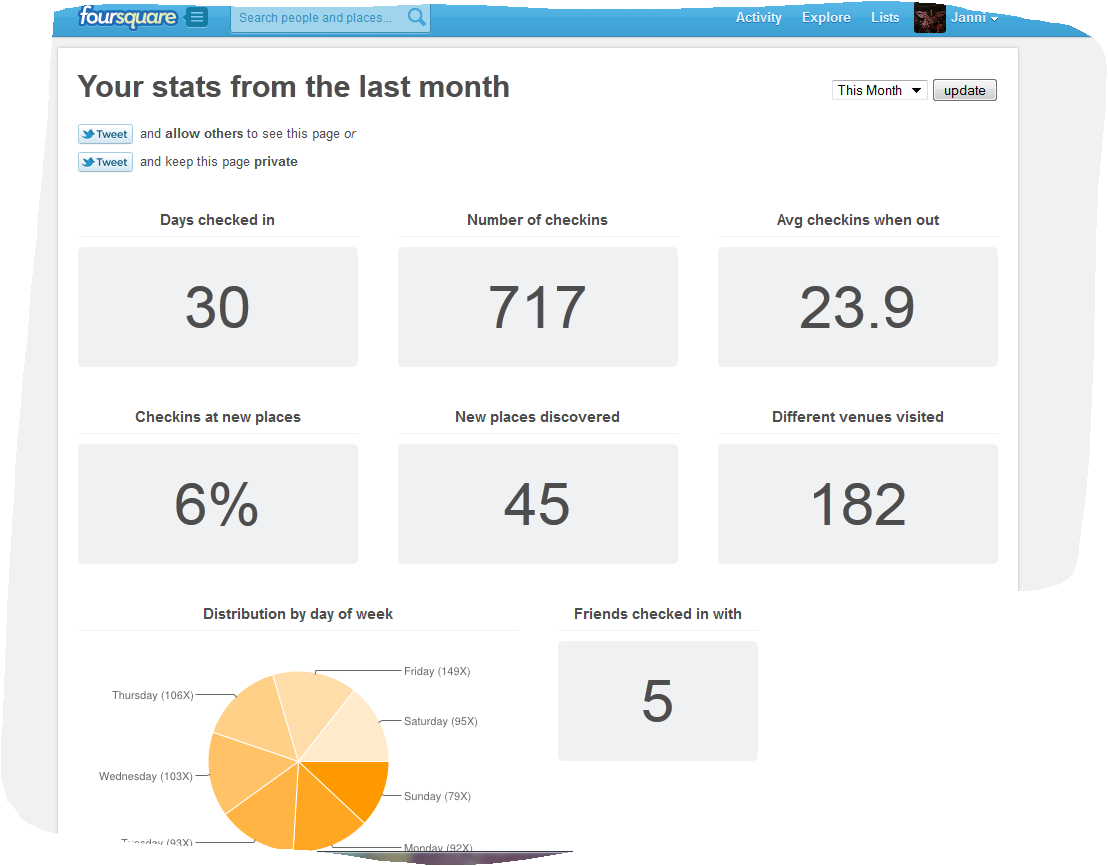
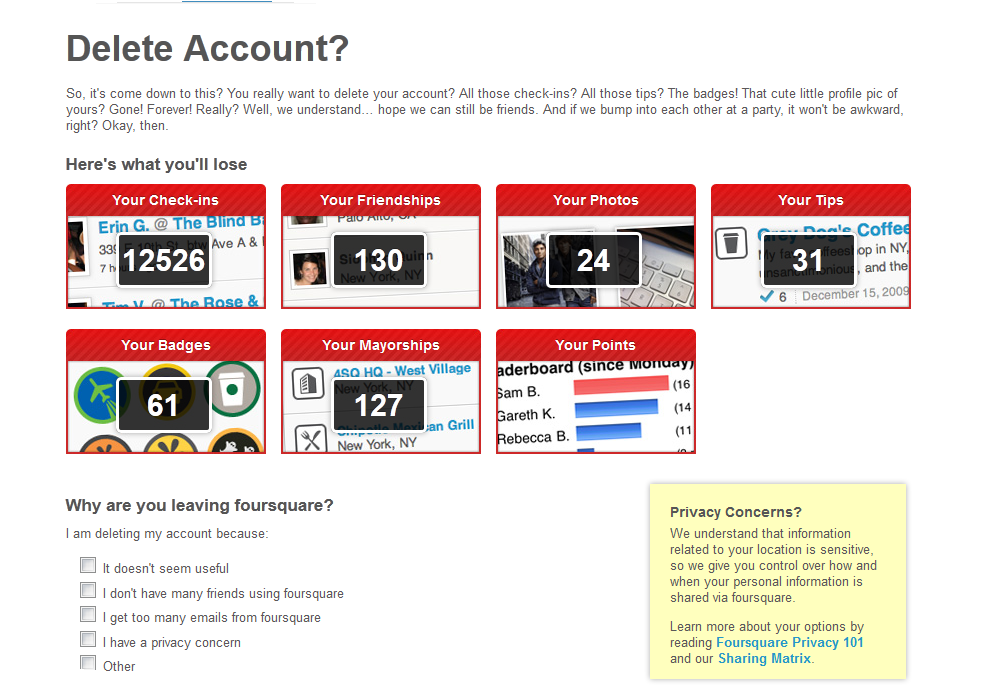
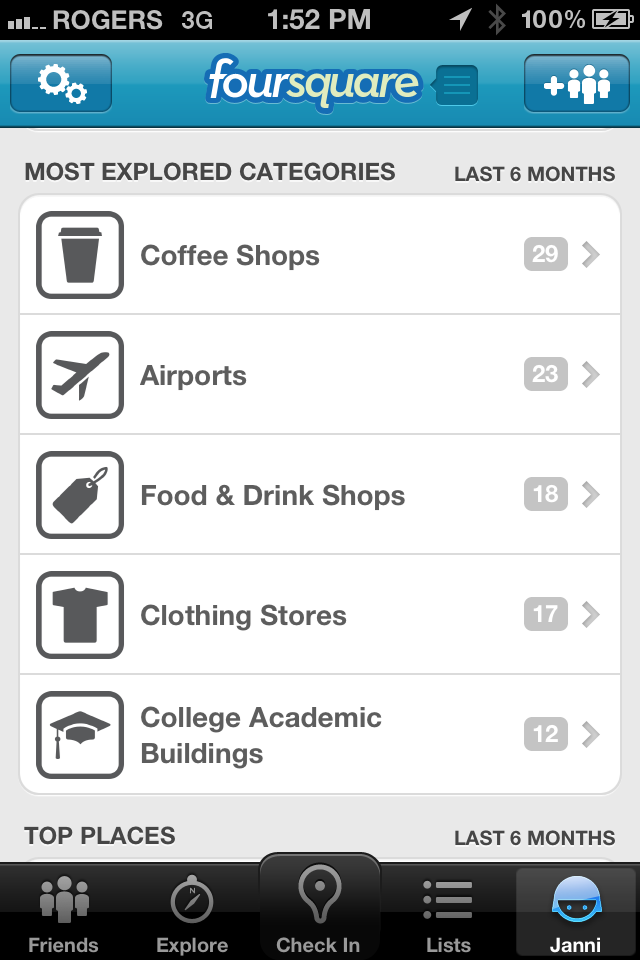
I was an avid FourSquare user. The platform or app is a location based and you would “check in” to different places. The goal was to become the Mayor and get free coffee, discounts, and the like.  I had free coffee at certain places, free appies or my bill was discounted. Likewise, during the holidays I would get badges for saying, “Happy Fourth of July” when I checked in somewhere. I know to those unfamiliar with FourSquare or people who hate location-based apps/games, this might seem like an utter waste of time. I began to peel the band-aid off a few weeks ago deleting certain contacts from my account. I went from some 200 to just around 130 or perhaps under. I also wondered–what was I benefiting from this? Bragging Rights to the Munchie Bar as its esteemed Mayor?! But, the app had lots of my data.

My goal then became to get to 5, 000 points and I did. Then, I thought 10,000 points and I did. I was used to the check in and frankly a part of me hoped that more establishments would use FourSquare and offer deals. That really never happened to the extent that I hoped for, but some places do offer customer benefits. I just am not at those hotels or coffee shops enough. I cracked 12,000 points and thought that maybe it was time to stop. So, on Saturday, May 26th around 2pm I deleted my account. FourSquare wanted me to really think about this, though.

Well, FourSquare, it’s you. I think I might save a few minutes or possibly 20 minutes each day from here on out. And, you won’t get to document that I’m on 12 weeks running going to libraries or on fire with my 17 days in a row at coffee shops. I will admit that some of the badges were hilarious and maybe I should have taken some screen shots, but you know it was time to say bye. I also think that my girls and partner will smile when they hear that I deleted you. I guess I can be a little obsessive…

It’s been 24 hours and I am embarrassed to say that several times since I wrote this post I grabbed for my phone to check in. I definitely was power user. Now, I’ll do better things with my time. Bye Bye FourSquare–it’s me. It’s definitely me.

Today’s Fri Fun Facts is dedicated to thinking about what you do well and life planning. This is really for all of us, but I’m thinking of my college students who are on “break” working or taking Summer courses. It gets so easy to think about what needs to be done or what you haven’t scratched off on the “to do” list.During my office hours, I’ve also noticed a real apprehension with what is next and lots of self-doubt. So, let’s think about what you do well.

1. Get out a piece of paper. Oh, wait, open a new document or text yourself…

2. What do you do well? What are you known for among your friends or family?

3. The last time you were complimented–what was it for?

4. What do you want to known for at work or home? Remember to take care of yourself.

5. Think about your positive traits and what you have to give the world.

Now, think about what is next for you. You do not have to solve everything today, but just think about what is next. And, make this list realistic. Then, go chat with other mentors/coaches in your life and ask them for any guidance they might have as you embark on the next chapter in our life.

Student Protests

People who follow me on Twitter know that I don’t have a special place in my heart for many of the op-ed columnists in the Globe and Mail. Both Margaret Wente and Jeffrey Simpson have weighed in regarding the student protests in Quebec. Students that I work with on the campus where I teach have asked me about my opinion and I haven’t really commented. But, as the multiple sides discuss options and a hopeful resolution, I’ve come to several opinions.

My first opinion is that the students do have a right to protest the fee hike. They have a right to feel angry. They may not like hearing that their fees are small in comparison to ROC, but it’s true—their fees are relatively low. Simpson can cite all the data he wants about which universities are the most prestigious, but he is forgetting that Francophone nationalism is at play here. This is about keeping education affordable in Quebec for  students from Quebec. One cost of the maintaining a strong Francophone culture is subsidizing education. Whether the ROC wants to subsidize this education is another discussion. And, I say this knowing that I am merely a permanent resident and a visitor on these lands in the greater Victoria, BC area.

My second opinion is that the students reviewing the university budget and asking that advertising and administrative travel be slashed is completely unrealistic. This is an unfortunate example of sheer naiveté. I’m sorry, I said it. Most major universities and colleges will get some free advertising via their local newspaper and news affiliates and this free advertising will be worth tens of thousands of dollars and possibly more. But, there are other advertising costs that the university makes in order to recruit more students, staff, and world-class faculty. It costs money to put together recruitment materials. When the recruitment teams go to high schools those tri-fold brochures or larger paper matter costs money. The team of students and staff who take families on tours cost money.

Here is just one display of advertising materials:
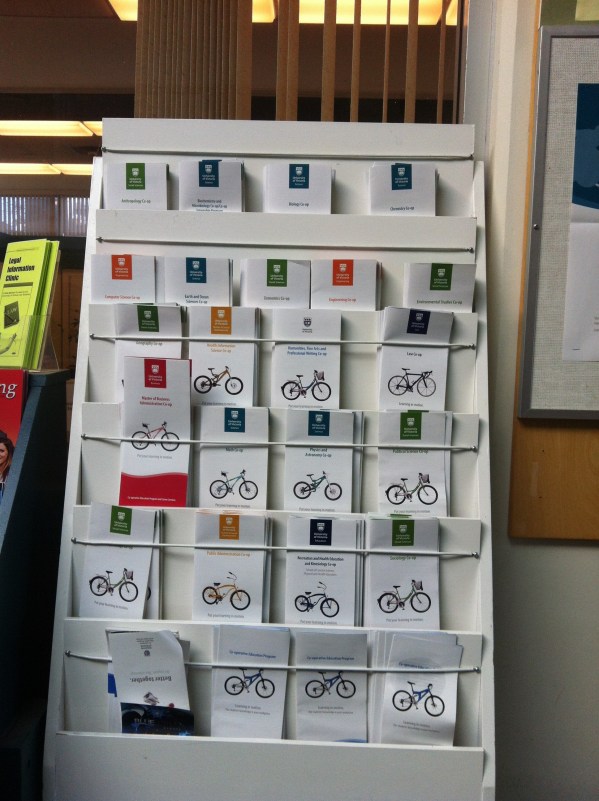
I only noted one part of the advertising. There is also advertising in international venues.  Cutting advertising costs can also influence retention of current students, staff, and faculty. Advertising current initiatives costs money and this varies from the reports, advertisements about homecoming events, and more. If we break it down by faculty and department, money is often spent to showcase the great work that is taking place on the campus. It’s important to promote staff, student and faculty work. Slashing the advertising costs doesn’t just influence potential students, but also current students, staff, and faculty. I am sure that my colleagues in communications can weigh in and say more. Likewise, all the advertising that Career Services offices do is important.

Now, the upper administration travel costs is a sore spot at most universities. I think that the we could probably review some of this and see if more conference calls, webinars, Skyping or other technological use could defray costs. However, this is not always easy to do. Students might not realize that on top of running the respective units the upper admin also attend local, regional, and national deans meetings, provost, college presidents meetings, and then there are articulation and planning meetings. Add to this possible recruitment meetings and you can see how many of these upper admin types do have to travel lots. But, perhaps they don’t have to travel not as much as they currently do. I’m a bit more realistic with this point—even if I don’t completely agree

Funny enough I was reminded of this the other day when I was booking my accommodations for the Canadian Political Science Association meeting in Edmonton, AB. I was thinking about the protests and I booked the second most inexpensive arrangements. I’m not paying for this trip, but the Provost’s office is and in some way I was thinking that students are paying for this. (They are not). But, I’ll be in the dorms in my single room—with my own bathroom.

Fri Fun Facts: Gay Marriage/Same Sex Marriage

Today’s Fri Fun Facts is dedicated to thinking about the continued fight for human rights in the US. Yes, I’m weighing in on Gay Marriage or Same Sex Marriage. I have to share that this issue is such a no brainer here in Victoria, BC Canada. Same Sex Marriage is legal in Canada since the Civil Marriage Act was passed in 2005. Wait, yes, just 7 years ago. Canada joins nine other countries:

Argentina, Belgium, Iceland, Netherlands, Norway, Portugal, South Africa, Spain and Sweden. There are other countries that allow same-sex marriages to be performed and then another group of countries that recognize same-sex marriages, but do not allow them to be performed. Let’s think about what is so problematic to 30 of the states in the US, which have taken special care to ban same-sex marriages.

1. “50% percent of first marriages, 67% of second and 74% of third marriages end in divorce, according to Jennifer Baker of the Forest Institute of Professional Psychology in Springfield, Missouri.” via DivorceRate.org. This does not say much to the whole “sanctity of marriage” line of argument. Looking for divorce statistic is interesting, as the data varies depending on the source that you examine and the government records them according to the number of divorces within the population: Divorce rate: 3.4 per 1,000 population (44 reporting States and D.C.) via http://www.cdc.gov/nchs/fastats/divorce.htm 2009 data.

2. Many supporters of the ban refer to the Bible. The most commonly quoted saying that I’ve heard, “The Bible refers to Adam and Eve and not Adam and Steve.” Fair enough, but I we don’t have everything in the Bible literally. And, not everyone subscribes to the teachings in the Bible. Using the Bible as the guide to politics might offer a short-sighted means of thought and practice.

3. We need to think about how the 14th Amendment offers equality under the law. The bans do anything but this and actually discriminate against unmarried partnerships (heterosexual) and against the LGBTQ community. Why are we allowing hate legislation? This is a human rights issue or a civil rights issue at the very least.

4. Bans against Same Sex Marriage are draconian at best. What they really demonstrate is that bigotry is alive and well and seeping into the law. We need to re-think the motivation for these sorts of laws and respond.

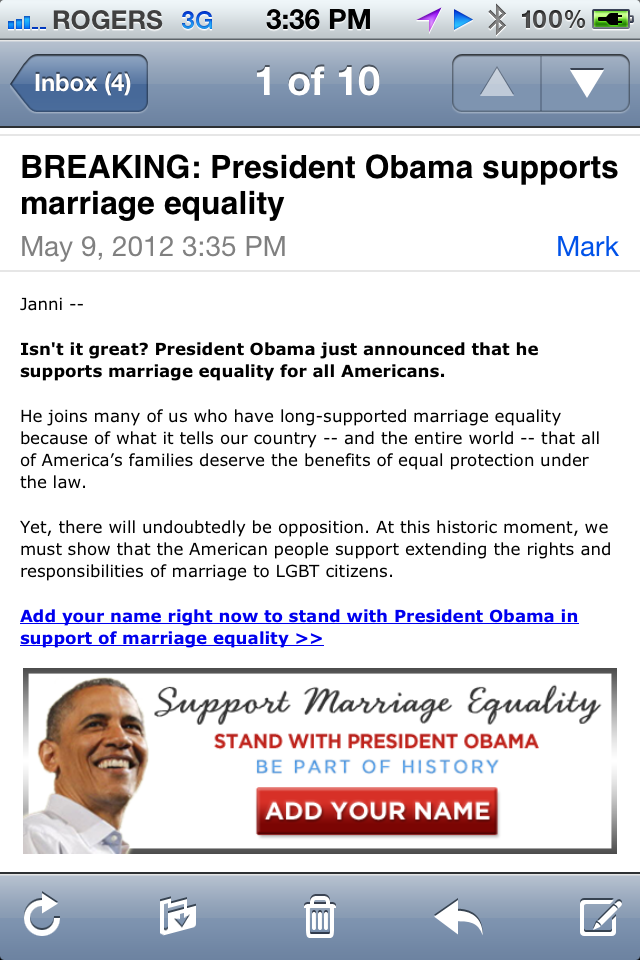
I support same sex marriage. And, unfortunately the Congressional Representative who does not represent me is in support of banning same sex marriage. Thankfully President Obama noted on May 9th that he is now in support of same sex marriage. With today’s Fri Fun Facts I am sending supportive energy to my sisters and brothers who demand that their families are protected by the states they live in or visit.

This was one of two emails that I received within hours of Obama’s interview.

Working in Man’s World: #Breatheyyj

It’s OK to be a Woman in a Man’s World! #Breatheyyj Really looking forward to this preso! Participants are: Marisa Goodwin @organicfoodme Anya Sereda @tinybean and Katie McDonald. What a great panel of woman who are working in male dominated fields. I just want to add that a great majority of the #BreatheNow meetings were held at Discovery Coffee, which Anya Sereda works for as their Green Bean Sourceress!

Sereda speaks to the coffee industry and refers to the baristas–the boys–as the show ponies, while the women are more apt to manage! It’s really interesting to hear about how so many coffee farms owned by women in the countries that she’s visited, but men run the farms. Interesting. I love that she admits to looking young. She’s 26 and looks like she’s 20. (Her words). She has a passion for beans, for coffee. And, after listening to her preso, she really knows coffee!

“Coffee has really taken me on a trip all around the world.” Anya Sereda

Her job sounds amazing. Out in the field doing her work… She noticed the ways that some people have treated her due to the issue of her youth and gender. She acknowledges her strengths and knowledge in the field and how it can at times be difficult for people to take her seriously. Happy sigh that my teen is here listening to this and hope it’s insightful to her and the rest of us in the audience.

The next speaker, Marissa Goodwin, reflected on her experience with her business Organicfair and the farm that she and her family run! She shared compelling stories about the level of sexism within the industry. We have more work to do! Looking at her bio it’s nice to see that their company includes 99% women employees. They are making change day to day in their work and their philosophy. Organicfair is based in Cobble Hill not too far from the Greater Victoria Region. Overall, Goodwin is another trailblazer! You, go!

The last speaker Katie McDonald is a mixologist who works at Veneto Tapa Lounge in Hotel Rialto. She has avoided thinking about being female in her career. She knows it’s there. “This elephant in the room.” I have to say that this is really common with lots of women—ignoring gender. But, she notes that we do need to think about gender. I like that she brought up equality and difference. Oh, those debates have not been resolved years later. Really? Some men call themselves, “Cocktailologist.” OK. She says that she’s a Mixologist or Bartender.

“It’s a dirty job. Lots of heavy lifting.” Katie McDonald

Interesting that for every one resume from a woman they field twenty resumes from men. And, this quote below also speaks to another binary in the job or industry. These quotes are telling. I’ll say it again and again: we have more work to do.

“If I’m the best female bartender on the line…you don’t have to compete with me.” Katie McDonald

She’s right, it’s an idealist view if we insist on saying that we’re all just people. This erases different components of identity. I do think that at times when people say this they are coming from a place of privilege and do not think that any difference exist at all. Again, this is in some instances and not meant as a sweeping generalization. And, McDonald notes that she wants to be just another Bartender and not the fact that she’s the “best woman bartender on the island.” On the flip side, she likes seeing women at competitions so that more women can/will attend these competitions. She’s sharing some honest, good points in her preso. I’m really enjoying the frank anecdotes.

“I do notice my gender.” Katie McDonald