Peer Mentoring: Graduate Women Scholars

I often tell my students that my mentoring does not have an expiration date. It does not. I benefited from some wonderful mentors and I feel indebted to them. I was lucky enough to have a mentor who had the foresight to organize all the women students who knocked on her door. I won’t get the history right here, but essentially she saw that women students wanted similar things from her. So, she decided to get them all together monthly and the group was borne.

I first started attending the mentoring group when I was an advanced undergraduate and continued throughout most of my graduate degrees (two MAs and the PhD). We would meet monthly and discuss issues like: how to put your curriculum vitae together, how to communicate effectively, how to write an abstract for a conference, how to have balance in your life, and so many other germane topics. What worked so well with the group is that it was a conversation. While the sponsoring faculty member had her degrees and experience to share with us, we also had graduate students at all stages of their education participating in the group. We learned from one another.

The rules were simple—we brought food to share and we made sure that when we left there were no dirty dishes or mess in her house. While there we sat around in a circle on the floor or bit of furniture and introduced ourselves and then the topic. We would take a break to eat and then resume the meeting. Continue reading

Due Dates

I’ve been a college instructor for some 17  wonderful years. In this time one thing has changed some. I am witnessing more students assume that due dates are a guideline. This is a problem. A due date is set with good reason by most of us. When I am managing a few courses and try to stagger my marking and if 10-30% of the class turns in late work, it really throws things off kilter.

Not only this, but due dates matter. I penalize students 5-10 points per day with late work and this penalty includes the weekends. My philosophy is that the coursework is a job and we don’t normally submit late work to our job. Of course, there will be family deaths, illnesses, accidents and other unforseen situations, but these are quite rare.

This is a post that I have revised. It was four years old and I am re-reading it thinking about how in the last four years I am not quite as agitated about the late work. I have instituted a new policy–I do not accept late work. At first I thought this would cause me problems–it did not. Yes, I am occasionally flexible when a student contacts me about extenuating circumstances, but my newish policy has worked. Minions make me smile and I hope that they do the same for you.

minion

2014: Retrospect

I am thinking about the last year and I have more than a few takeaways; however, I want to focus on five. This year was filled with many highlights and I do not want to do the brag or the humble brag.

What was important to me:

1. My family. My family keeps me grounded. I love the texts from different family members: leave work. Where are you? Are you picking me up? This array keeps me focused while I am work and then focused on my time with them. They are also great at reminding me that I need to unplug.

2. Good health for me and my family. No need to explain more here.

3. Learning. This includes my own learning and others around me. I love teaching and each time I walk into the classroom I think about how lucky I am to get paid to think, read, grade, and write for a living.

4. Leadership. Here I am referring to my own leadership on campus, but also the crucial people who I am learning from thanks to their leadership and mentorship.

5. Listening. Listening is such an important skill to have and when I was an undergrad advisor a major part of that job was listening (and helping) students in my office. Leading a service unit on campus means that I must listen lots to the team and those around me.

I look forward to what the next school term holds. I know that my family will remind me to unplug and that I will continue to learn from those around me.

/home/wpcom/public_html/wp-content/blogs.dir/fa7/15300516/files/2014/12/img_5615.jpg

Finish the Term Strong: Redux

This post is all about suggestions for student success. As a former Undergraduate Advisor and an instructor, I am supportive of student success. I have one more week in the term and due date are looming, but I realize that many of my colleagues have one to two more months left. This post will speak to some suggestions for how students can finish the term strong

1. Go to class

2. Read the syllabus

3. Go to office hours

4. Review points one through three

Seriously, I am not kidding about the above as they are extremely important to student success. As I told a group of librarians today, I might as well say that the sky is blue; however, it is key to emphasize the obvious. There are moment when we need reminding about what is the obvious Beyond the absolute obvious, I also suggest that during the last part of the term that students manage their time well. Now is the time to focus on ending on a high note. It is to easy to finish with the best that you can do in that moment, but that will not make you stand out above the others. I encourage you to become a hermit during the last week or two as you write your papers.

What else can you do? You can visit your Writing Center and then ask if your professor is willing to chat about your draft or to review your draft. Please note that most professors will not copy-edit your draft. Please remember that your professor may have 30-400 students that term, so don’t be too hard on your professor if they are only willing to chat about your paper. If you have a Teaching Assistant, by all means go to her or his office hours. Own your education. Take charge and act like you care. Acting like you care about your education and success really does count for something.

My last words of guidance are about reading the assignments and following directions. I am always surprised and frustrated by the number of students who do not read the syllabus and think that this is not important. A student approached me recently saying, “This is a 12 point font.” I responded, “Yes, it is but it is not Times New Roman 12 and is a huge font. Please review my syllabus.” Following directions is the first part of an assignment and reflect attention to detail. Good luck with the last few weeks and your papers and final!

Graduation is a mere two months away and I can’t wait to sit on the stage and witness this momentous event. Until then, I send positive energy to my students as they wind down. Finish the term well!


20140329-221218.jpg

Reactions to Working

As a parent you learn lots from your kids, and I had one of those moments a few days ago. My teenage daughter is in her second year of working. We were are on our way to an event and she noted that she was not looking forward to seeing some people. Why? Apparently the fact that she is working, is an issue to some of her friends and other parents. The reactions vary from not understanding why she would bother to work, why she chooses to work, how could her parents allow her to work, and curiosity and support for her work. Unfortunately, the last response is less common.

I was surprised. We chatted about the ways that she responds to these comments and I dropped her off at the event. I drove away thinking about how I started working the day that I turned 16 and how I have not stopped. Is it really odd that she’s working? Nope. I was chatting with our family doctor and his daughter is the same age and is also working. And, I have chatted with other parents who have kids in high school and their kids are working, too. When I have chatted with other parents we talk about how our kids are learning life skills–dealing with people, coaching younger kids, organizing workouts, and getting familiar with work and life balance.

When I was walking around campus the yesterday I was thinking about this conversation with my daughter and I also thought about the countless office hours that I have had with students who have an empty or virtually empty resume. Yes, I am relating this moment that I had with my daughter to my work as a mentor and college instructor. I think it is important that young people are giving ample opportunity to work and develop their resumes. Work opportunities provides a chance to mature, learn time management, and make money. I also think that working offers you a chance for maturity and resiliency.

IMG_3506-0.JPG

A New Term: The Promise

It is week 2 of 13 at work and it is filled with new faces, new courses, and lots of promise. I did something a little different last week during one of my lectures. I spent a good chunk talking about my expectations, good habits, things to avoid, and reminded my students to get involved. These points speak to the Fall term at university. I want big things for this term.

The reminder is also important for me. I am in my 17th year of teaching and this means that I am comfortable with my job. Comfort is great and has some pitfalls. I must remember that this new environment is filled with its own jargon and the new students are just figuring out the place–let alone my expectations on the first or second day. As I walked to the lecture hall last week, I had that bounce in my step and I was excited. It was great to see the new group. Welcome to campus, and welcome to my classroom. I know that this particular class is different, as it is team taught.

When I walk into the classroom, I think about my job and how important it is for the students. It is privilege to have an important part in their education. But, as I told them, they need to show up. They need to own their education. I am looking forward to this term. And, I really hope that my students are, too. I’m raising my coffee to my students. Rock this term!

IMG_3400.JPG

Mentoring

I am rounding out my two months of Spring Undergrad Advising for the department and thinking about how I help my students. I’ll place these thoughts in bullet form.

  • I want to help them find out how they are doing with the course of their studies
  • I enjoy giving them good advice
  • I offer them advice about their course choices
  • I inform them of any resources we have on campus that they might find useful
  • And, the most important thing–is that I listen

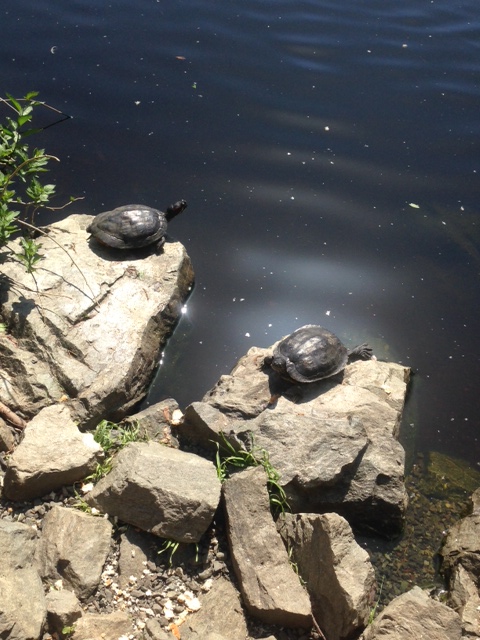
I do prefer to advise face to face; however, more of my advising and mentoring is taking place online via email and on different platforms. For students enrolled where I teach, I can do some of the fact finding via email, but there are moments when a face to face is needed and I point this out and then it is up to them. The photo below is of turtles sunning at Cedar Hill Golf Course trail.


sunturtles

Study Political Science

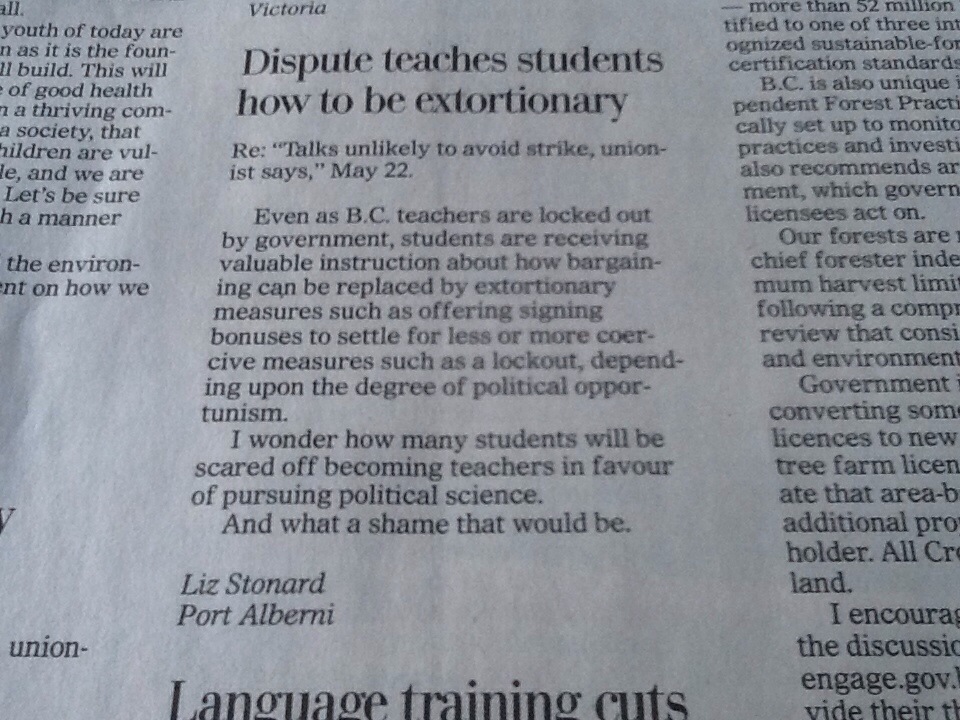
20140524-085648-32208419.jpg

My normal routine is to read the local paper and then one of the national papers. I was on my third cup of coffee and came across the above letter to the editor. I had to smile. I was in a former student’s class earlier this week speaking to the upcoming American mid-term elections and social media in politics. My former student is finishing up his student teaching and had taken courses with me in Political Science. He is one of many former students who has chosen to go into secondary or post-secondary teaching. Many of my former students are also serving in public office or doing other non-partisan work for the government. The letter writer’s binary is a false one and I am sympathetic to her easy comparison; however we cannot assume that all politicians have a Political Science degree.

Over the course of 17 years of teaching my students have gone into virtually every sector of the economy. I am seeing more work in communications and the tech industry lately, but overall, they are everywhere and hold a Political Science degree. And, many of them are double majors or took a minor in another field in order to round out their education or pursue multiple areas of interest. During my next 17 years, I hope to see this continue. When students ask me, “What can I do with my degree?” I answer that they can do almost anything–it’s up to them. The classroom or office hour experience is only one part of their education. My hope is that they will get involved in campus and local opportunities.

Political Science is diverse field with many sub-fields and I am proud to call myself a Political Scientist. I am also proud of my Political Science students. Keep up the good work!

Sustaining You

Who makes you feel safe? Friends and others who know you are safe or some might say: home. When I think of people I trust and respect, this networks of friends, family, and inner circle at work are supportive, good listeners, and are honest with their advice. I do not want a nodding head and mere agreement. I want someone to listen and then comment–especially if we disagree or if the friend has something to add. Again, a big part of this is listening. Try to stay away from emotional vampires who just take, take, and take. These people are exhausting to engage with on an ongoing basis. I find that I am controlling my time more and putting more distance with the emo vamps, as those conversations are usually not two-way conversations.

Affirm the good relationships and spend time with the people who add to your day. Remind your network that they are important collaborators, friends, and people in your life. These people challenge you to be a better person and they deserve reminders that they are important. This makes me think of places where I feel at home or safe. I’m thinking of the places or things that add to my day. The smell of coffee definitely makes me smile, and then the taste, well. I love coffee. 

When I think of where I feel safe or comfortable, I often think of the classroom. As a natural extrovert, teaching feels like home. I am not referring to talking at my students, but rather leading, facilitating, and listening to them. I want the classroom to embody a place where we can discuss, challenge, disagree, and grow. Do not assume that I mean that I expect the classroom to not be a place of contentious conversation–it is. But, when I walk into a classroom to teach or to give a presentation, I feel like I am at home or in a good place that I am comfortable.

What caused this stream of thought? This quote from George Eliot, “Oh, the comfort. The inexpressible comfort of feeling safe with a person. Having neither to weigh thoughts nor measure words. But pouring them all out. Just as they are, chaff and grain together, certain that a faithful hand will take and sift them, keep what is worth keeping, and with a breath of kindness blow the rest away.”  Keep and nurture. Blow the rest away.

cloudsinmycoffee


Revisiting Course Experience Evaluations

During the term faculty are required to distribute university approved evaluation forms for students to fill out and these instruments field a wide array of responses. The campus where I work is moving to online evaluations and the reaction is mixed. Regarding student evaluation I have heard lots and have blogged about the evaluation process, but these are the most common responses that I have heard recently.

They are not qualified to judge me

It’s a popularity contest more than anything else

I don’t read them

They’re useful

I read them

I bury them

I learn from them

I don’t like them

The comments will turn into a RMPish experiment

I do not want to engage in the online versus paper evaluations for this post. Much of academic life is filled with judgment. We get assessed by our peers, by our department, reviewers of scholarly presses, others up the academic food chain, and by the government and public if you are at a public institution. Frankly, everyone is always weighing in about higher education.

We judge and assess student work, yet somehow we are uncomfortable with this singular act of student assessment of our course or courses. Why? Well, that is cause for a long post. Let me speak to how I have changed my feelings about them. I think that the official university evaluations are a mixed-bag. They provide feedback. Some of the feedback is useful and other feedback is interesting and at times not helpful. I am sure we have all had this experience with a peer review:
Reviewer 1 provides good feedback and you know that they read your chapter or article. Reviewer 2 has skimmed it and refers to some work that you cited, but the reviewer did not bother to notice this. Reviewer 3 did not read your work and really dislikes the topic and offers nothing that is useful beyond you wishing evil upon this person. . Reviewer 4 refers to his or her work and how this article offers nothing new, but there are a few helpful comments.

Student evaluations can work like this, too. However, the rub is that our departments use these evaluations to measure teaching effectiveness or prowess and at times the numbers and comments do not paint an accurate picture or maybe they do?! Perhaps your students really like you and like your courses and the evaluations offer this assessment. But, maybe your students dislike you or the material and the evaluations convey this. And, that is the problem. We need to assess the larger picture and the evaluations offer one part. This is why peer evaluation is also important. But, do not stop there. If your campus has a learning and teaching center, visit it. Take some workshops and avail yourself of the various opportunities and make sure that you add these workshops to your vitae in the appropriate area.

Teaching requires work and preparation and we have a tough audience. Our students are bombarded with distractions and if they are not interested in the topic I feel like I have to catch them. But, alas, no matter what I do, I will not catch all of them.

What does this mean for student evaluations, then? They are necessary. But, faculty can respond by reviewing them and reflecting. Do you need to mix things up? Is it time to have a trusted colleague do a peer review of your syllabus and lecture? Departments also have to invest in faculty and offer opportunities for professional development and insist that faculty work on their teaching dossier. I am biased here as teaching track faculty, but am resolute in my opinion that teaching takes work. I include a photo of Stress Paul, a rubber stress ball.

20140421-142200.jpg