Lessons Learned from Advising

Officially I was an Undergraduate Advisor for some odd five years, but unofficially I have worked as a mentor, coach or advisor to my students and peers for as long as I have been in higher ed. Now, that I am a mere two months out of that official capacity I am repeatedly finding that I learned lots from those various moments. I was always appreciative of the special opportunity I had helping students maneuver through their undergrad, grad school, or higher ed more broadly speaking.

First, people often are too busy or perhaps not aware of the institutional or departmental guidelines. This is akin to an instructor reminding students to read the syllabus. We all experience information overload and need reminders to read the syllabus, the agenda, the meeting documents in Sharepoint, the Strategic Plan or the Framework Agreement. People want someone to bounce ideas off or have someone listen to them. Lots of people do not like change and react from a place of fear or anger and these feelings can manifest in some negative ways.

Second, I am often reminded that we forget that if the students were not on campus, we would not have jobs. This is not a controversial statement, but I am well aware that it is. I am not saying that students pay my wage, as that is not the case. Taxpayers pay my wage and that includes me. The current class of kids in Kindergarten is smaller than the graduating class of Grade 12 students. This means that all of the colleges, trade programs, and universities are competing for a shrinking pool of students. In the US, the pool of students is also more diverse and are the babies of the “Leave No Child Behind” policies. Depending on your political inclination, your reaction to this policy will vary. Having other educators in my family means that I am quite familiar with the way in which public school teachers must teach to the test, but this is really a discussion for a different post.

Third, I am a better listener thanks to my years of working with students, advising, and peer mentoring. You cannot help someone if you do not listen. And, listening is a real skill. I do not mean listening and waiting your turn to speak, but really listening to someone. I find that many of us wait to speak, but listening takes more work. I’m still learning, but feel that I am a mindful listener. As I work on a different career path for the next year or so, I look forward to listening and leading.
20140227-173735.jpg

When Students are Petty

This is an old post, but worth sharing. As an academic, you must develop thick skin. We are constantly critiquing one another and praise is not common. However, I try to rectify this with sending note cards via campus mail and positive emails to colleagues and people who work with and for me. Overall, at times people can be petty. This post speaks more so to some of my experiences with students.

Once again, I’m in the process of reviewing my annual Faculty Activity Report. For those of you not familiar with this process, once a year you meet with the department Chair and review your productivity. The array of information includes publications, service, and teaching. I just reviewed the teaching portion with my evaluation scores that the department is most concerned with for my review. My numbers have always been pretty good as a part-time worker and now as a full-time employee. However, I did notice a blip, if you will in one course from the Fall 2009. I had to think back and I recall two industrious people who were so kind to remind me, “We don’t care if you were in a car accident, keep your personal life out of the classroom.” Now, this isn’t a direct quote, but rather a paraphrase from two of the written evaluations. These same two lovely people also scored me with all 0’s. This was the first time ever in my academic career that I was scored with the lowest score.

In July of 2009, I was in a car accident and consequently to this day am still recovering from injuries sustained in the accident. This particular class was in the afternoon and afternoons in the Fall 2009 were hard for me. During the first week of classes, I explained to the class that I was going to stand at the podium more than usual. Usually I work the room–I walk around the room and am very animated. That term–not so much. The truth was that there were some days that I held on to the podium for fear that my left knee might just give out and I might collapse. On one other occasion, I was walking into the class and my knee did give out. I heard a few students gasp.  I was quite embarrassed and explained that this was part of my health issues and end of story. I never belabored my accident more than this.

I was frustrated when I read these two written comments. And, the 0’s factored into my overall score did influence the numbers for that particular course. What is really interesting for me is that per the university guidelines, I have to work with students and their learning disabilities, illnesses, and other registered issues. Students can register with the Resource Centre for Students with a Disability. Their learning plan might include more time with exams or more flexibility with due dates. But apparently for some students–I am not allowed to be human. I cannot mention twice that I am not as mobile around the classroom. I certainly hope that those two people look back at the class and think fondly of those two minutes when they chose to write a cruel comment and circle a series of 0’s.

The good news is that my evaluations were still at or above the department mean so this didn’t mean that I wasn’t eligible for a raise. However, I don’t think that some students realize how they can be cruel. I was more troubled with the statements than the 0’s. The 0’s are really an outlier for the statistical scores. I know that I take the written comments more seriously.

Updating that in 2012 when my partner had a serious illness the vast majority of my students were patient; however, a few were clear that my turnaround for graded work in 10-14 days was unacceptable. I wish them good luck in their lives. I am usually a super star and get graded work returned in 3-7 days. But, alas, my partner was in the hospital and I dropped the ball. <Note sarcasm>. Did I see a drop in my numbers for one class–yes I did. Were the qualitative comments interesting? Yes, the first year students applauded my availability knowing that I had a family crisis, while some of my students in an upper-division course complained about the turn around time for graded work. I had to smile. I cannot please them all and surprisingly the first year students were the most patient.

The Online Academic Community: Enterprise WP Environment

This post ran almost two months ago on Inside Higher Education for the University of Venus. I have revised it.

I would like to speak to  my use of our Online Academic Community (OAC) at the University. This is the enterprise WordPress site on our campus. It is in its first year of “real” (non-pilot) use and my hope is that more users were join the OAC for teaching, learning, research, and community building for scholars and student groups.

I had used the OAC during Summer 2013 term, but the 2013 Fall term was the first regular term in which I used the OAC. The OAC is our internal WordPress site. What makes it better than the regular WordPress site is that the cloud is on our campus. We only use themes, widgets, and plugins that comply with the provincial privacy regulations that keep my students’ data and all information in Canada. While I encourage my students to occasionally Google themselves and mind their digital footprint, it is important in the learning environment that any education technology tools I ask them to use as part of their evaluation maintains the integrity of their information. The other advantage of the OAC is that WordPress is my preferred blogging platform and I am quite comfortable with it. Plus, how can I say no to technical support from colleagues on campus? They are a tweet, email or phone call away from helping resolve a student query or the occasional odd troubleshooting. You cannot put a price on having technical support–it is priceless.

 What are we doing with the OAC? My students are blogging, vlogging, and uploading Wikipedia entries into the OAC. We are also using the OAC environment as portfolios for all of their work. Their blogs are academic research assignments that require the same care of an assignment that is submitted as a hard copy. Some of the students opt to make a particular post or vlog private, and this is acceptable. Given that the nature of my courses focus on issues of gender, politics, and sexuality, it is not uncommon that the students are blogging or vlogging about sensitive issues. The last major assignment is a research paper related to the course materials, and this also is uploaded into the OAC.

During this time, I have thoroughly enjoyed seeing their writing and analysis improve on their sites. Many of the students have been in my office working on their sites and discussing their work. In the beginning there were growing pains for some of the students as they figured out the technology and I helped them figure out the themes, widgets or overall set up of their blog site. And, this term the students are group blogging, placing their apps, and their TS Talks on their group sites.

The students are getting their fair share of writing opportunities, but they are thinking critically and learning transferable skills at the same time. The transferable skill really is the ability to use the OAC, publish on Wikipedia, and use Vimeo or YouTube for their vlogs. In previous terms, when we have used the regular WordPress site or other blogging platforms, I usually hear from a few students that using the technology was lots of work, but others note that the skills they learned were useful with their current job or their search for work.

 I am hopeful that the OAC site and technical support continues to make these assignments dynamic for my students. I am optimizing technology in the classroom in a way that works for most of them. While I have offered blogging assignments during the last six or seven years, I am more cognizant of protecting my students’ privacy and more familiar with effective social media platform use in the classroom. I like to try new things and I find that many students are open to using technology in different ways.

OAC

Revise and Resubmit

What would you do if you had a second chance? In my line of work, when I submit an article or proposal I can often get the opportunity to revise and resubmit the article or proposal. Well, a rejection requires assessing where the article goes next!  But, this post isn’t really about me. Instead, I am thinking of students and their need for second chances. There are moments when a second chance is needed. I do not like to think of myself as heartless when it comes to special situations; however, I also do not like feeling like I am someone’s rube.

There are these moments, when I have to step back and think about what is the cost of allowing a revision for a student. The revision might offer the student the chance for success or the opportunity to try to do better on the particular assignment. Ultimately, I do want students to learn and feel success. However, the means by which this is done is through their hard work. Then, I need to balance the entire group and think about my willingness to offer a second chance to 20-200 people. This is when it get tricky.

One thing that I am having to grapple with is the trickle of students who come to my office hours informing me that they did not do well on an assignment based on not just feeling prepared or some other issue that sounds like mere excuse. Here, I am not speaking to an illness or other major issue. Part of life is managing multiple stressors and responsibilities; yet, a cold before a major assignment is supposed to make a major difference. I cannot comprehend this as an excuse. Perhaps I am contradicting my last post. I feel patient, but less patient due to excuses. And, my syllabi include all the due dates and all the assignments. Is this a rant post? Tilts head and thinks–yes, but a short one.

I love Grumpy Cat and I suppose it is well-known. A colleague from another unit gave this to me and I keep on taking photos of it–knowing that Grumpy Cat would hate it.

20140208-220515.jpg

Patience and Mid-Terms

I come to my classes with a sense of compassion. The first week is a major clusterbug for everyone. And, we can ratchet this higher for the new students. What I find that I need to work on is my sense of patience during the upcoming weeks. No matter how many times I gently remind students, some will not bother to review the syllabus and email me queries that can be answered ever so quickly with a glance to the course syllabus. This term I have done something different–the quiz and the mid-term have a question related to the syllabus.

I also am aware that my class is one of four or five and once the students get into the routine, they will have a better idea regarding the protocol on campus. Until then, I read the emails, pause, smile and reply that, “As the syllabus states…” If anything, the flip side, is that the student is bothering to care to make sure that s/he gets the right information and reads the material, shows up to class on time, comes to my office hours at the right time, right? And, let’s be honest, there are moments when a keen student eye finds an error on the syllabus and I appreciate it! So, I am not perfect and I know that my students aren’t either.

I also wish that patience worked the other way. Students need to remember that I am one person serving many. My office hours are limited to some 4 because I have to teach my classes, get some administrative work, prepare for my courses, and possibly steal time for my own work. We are at the start of month two of the new term, and I am sure it will be another great, busy one. At this moment, I am thinking of Guns and Roses. Smiles. This is a reference to their song.

Learning Commons at UVIC

Students will be hard pressed to complain that no one is helpful at UVIC. Between faculty, TAs, the workshops at the Counseling Centre and the Learning Commons they have help at their finger tips. OK. Maybe at their toes, as they will have to walk to these offices. I walked around the library this morning and was really excited with the Learning Commons. So, excited that I made a 90 second video on my iPhone just on the fly. Here is the link: http://tinyurl.com/26lvel7 

And, this does not include the International Commons! Don’t forget that near all of this are the desks for the Help Desk (satellite) and Reference Desk. The Library is the place to be to get help, study, research or grab a latte in the Biblio Cafe. Seriously, get into the Library. This is an old post of mine, but too good to not add to and share that there are even more resources dedicated to student learning. What are you waiting for?


Those TPS reports won’t write themselves. 

darth vader dark side

Students with an Edge

In my sixteen years of teaching, not one term has gone by when I do not have at least one student athlete in one of my classes. One thing that I have noticed with the vast majority of the student athletes is that they have drive. These students usually want to excel on the class. Their competitive edge extends into the classroom. They know that their coaches and education team (whoever this may be at the respective institution) expects them to show up to class and to practice. Most of these students will introduce themselves to me during the first week or two and my standard practice is to ask that their contact send me any invitational or team related travel dates. While I have taught at four different institutions none have been at a major sports school–no top ten football programs, which is often a marker for a “big name” institution. I have taught at Division 1 institutions; however, this was at the start of my teaching career.

I truly wish that more of my students had this same drive and felt accountable to their coach or team. This does not mean that my students who are not athletes are slackers! Not true. The typical student wants to do well, but knows that among their array of courses some get more effort. The student athletes are generally more competitive and want to do well in all of their courses, so it is not a big surprise to see at the annual fundraising breakfast that many of them have strong grade point averages. Can I just spend a quick moment to say that I am proud of them. Very proud. And, I know that my colleagues are, too.

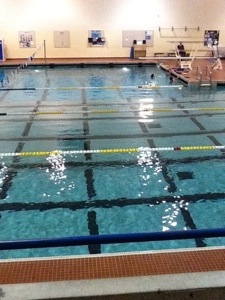
It is less common for one of the student athletes to phone it in with their coursework. When I have had a student athlete under-perform, the student has immediately contacted me via email, come to office hours, or in one instance the basketball coach called me to meet with him. When I met with the coach, he made no excuses for the student and said, “His first job is being a student. Do not go easy on him.” I wasn’t going to, but let me tell you that walking into the office was an intimidating experience. I felt empowered and I know that many of my colleagues will counter with examples of grade changes or pressure by the administration to change grades; however, this is not my experience. Getting back to the students–when they under-perform they want to know what they can do to fix it. Thankfully, the student athlete under-performing in my classes is not very common. They are competitive through and through and want to do well. I do not give them any extra credit or leeway. What I want to see is more students with that fire in their belly. Be competitive and humble. The photo below is one I took at the McKinnon Pool–one of the pools where the student athletes swim.

20131230-210921.jpg

Helping or Hindering Students

I want to discuss the fine balance between helping and hindering student progress. I am trying hard to work on this balance, as I am quite aware that sixteen years into teaching I am still learning. My current student population is different from my students circa 2005-6. I have attended various workshops about our students and more specifically about first years. Our students require more hands on attention and most universities now have stronger recruitment and retention strategies.

What this means for me on the ground is that I try to provide students with as much information as possible. But, I have also learned some important lessons. Several years ago I helped my godson register for courses and purchase his books in the bookstore. This entire experience really stuck with me. I have more compassion for my students and I am less invested in “schooling” them when they miss the obvious. There is no obvious for the new student. When I say schooling I am really talking about how I know that I have to repeat myself about due dates, have the due dates bolded in the syllabi, and that students will still inquire about things in the syllabus.

I can only do so much, though, and the students need to meet me half way. What do I mean by that? They need to show up to class and come to my office hours. I am not in the habit of chasing students down between my various courses; however, I will make announcements in class or send announcements via the online learning management platform reminding them about course related issues or other campus events. I do contact students when they suddenly disappear. Here, I am not including students who are in crisis or have other issues like learning accommodations that I must take into account. Those students require a different level of attention.

I have resolved for honesty in my office and with my marking. This translates into support and at times brutal honesty while I am assessing work. I do my students no favor when I am not honest with them. This might mean that I am clear about my  assessment of an assignment or an issue regarding academic integrity. What does this also mean? I am listening more. Does this make me helpful? I hope so. This term a common statement, “What can I do to help your success in this course?” But, this requires that the student contact me. Like I often say in class, “I don’t have ESPN.” I know–I need to find new jokes.

prof a

Before The New Term Begins: Redux

This is a revised post that is still applicable. It’s that time of year when most college students are thinking about the next year’s classes. This is a slow teaching time for most regular faculty (note this doesn’t include the sessional instructors, who usually have to teach full-time in order to stay afloat). One of the things that we forget though, is that this time of year is very busy for advisors and others who help students figure out courses and other important matter that is important to student success.

This quick note is a reminder for patience. Patience for the frantic student who needs a little reassurance about classes. For instance, I am finding that I am fielding more emails where a student really wants advice. “Which classes should I take?” A few have actually said, I want to know your recommendations. This is a big responsibility for me. Typically the student who asks, has already taken a course with me. So, I need to think about his/her interests and weigh my knowledge of the department’s courses. At first I would suggest all our courses, but now I am more careful. This is not based on content, but rather thinking more strategically about the student and her/his interests and possible grad school interests.

One common response from students is that they have heard that a colleague is a GPA buster. I always smile at this and explain that if the student wants to focus on Area A, for instance, in grad school that she absolutely needs to have a class with said colleague. The majority of the students come back to my office the next term and thank me for my suggestion. The other thing is that most students will do better in a course that interests them. I usually do not feel that this is a good excuse to not take a course. Also, our sub-fields are small and prospective grad schools and or entrance committees get used to seeing the same names and marks and they might understand that Prof. X is a tough marker.

I think that when I am queried–it is acceptable for me to make course suggestions to students. But, that pesky need of having the syllabi done–not completed! Eeeps, yes, those syllabi will not write themselves.

Read the Syllabus, Please

The syllabus is the course contract. This statement sounds like a simple one, but alas, it is not. The statement might sound legalistic, but it is not. The truth is that the syllabus is our guide for the course, not a guideline, but the rules. The thing that I try to remember is that while I take special care with crafting the syllabus and the ways in which I will evaluate my students, I do not have control over their time. I need to make sure that my syllabus clearly states the all the necessary information for student success. I also know that students have multiple courses with multiple deadlines. And, as much as I want to get frustrated that they are not reading the syllabus, it is a waste of time to get frustrated about them not reading. Instead, I am prepared to re-read and revisit the syllabus as necessary prior to assignment due dates. Plus, I must remember that they have three to four other syllabi to keep track of during the term and that my class is one of many.

No, instead, I remind them about the information on the syllabus and refer them to it. Each term many will say something to the effect, “Oh, I must have missed that.” I typically smile and say, “I know that you have four other courses, it is easy to get the information mixed up.” This is a better use of my time and emotional energy. My job is not to chastise or scold. Frankly, I do not like scolding unless I absolutely have to do so. My job is to give the information and move on to the next query or item. Sure, I chat with colleagues about how syllabi are not read. I am sympathetic and am the first to talk to a colleague about what we can do to make this better. However, each term it is the same song and dance. This term I noted in two different places on my syllabus that class would not meet during our Reading Break. The note is in bold, too. My Teaching Assistants went to the class and found almost half of my class sitting in the lecture hall. They looked at the students and said, “You need to read the syllabus. There is no class today.” I  am guessing that my students really liked the material and were keen for another lecture.

What can we do? Review the syllabus with the students and review it more than once. Remind them of the deadlines and refer them repeatedly to the appropriate resources on campus. My syllabi are considerably longer than before, but I am OK with that. This means that I have as much helpful information as possible and I am doing my job. The other half of this is that the students must do their job and review the syllabus–highlighting due dates and keeping an organized calendar. Yes, I am speaking to the students owning part of this and that might require a different blog post. And, I probably should work on that blog post, but now, I am thinking about the syllabi for next term and how I need to be as clear as the water in Maui. I am pining for warmer weather–can you blame me it is almost winter and I know that in just a week I will start three weeks of intensive marking and occasionally write on papers: you should have read the syllabus and followed directions.

on the syllabus baby

Please note that the above  photo of “Sassy Syllabus Baby” is from a former student who did get permission from his family to use the photo. And, Kevin always read the syllabus. May he have a great post-university life!