Sharing is Caring: Social Media Gone Mad

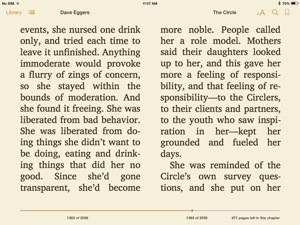
I finished The Circle by Dave Eggers and had a varied reaction to it. It was part genius, mirror, and possible futurist examination. Attentions spoilers are ahead. The book opens with the protagonist, Mae, getting a dream job at a tech company that is Google, Facebook, and Cisco rolled into one. Soon Mae immerses herself in the culture of the Circle. She becomes an extremely productive employee of the Circle and embraces the cult-like philosophy of the company. Mae is an ambassador to the brand of the company. She comes to learn that above all everything must be shared. “Privacy is theft.” The book reads like many dystopian novels, but resonates with some familiarity given our plugged in society.

Some of us were outraged when we found out the depth of surveillance by arms of the government, yet at the same time many of us share intimate details of our lives on blogs, tweets, and status updates on social networking sites. Where is the happy medium? That medium ultimately is what we are comfortable with our particular digital footprints. However, Eggers gets on to something more insidious with the absolute need to share. Sharing is caring and consequently this also means that privacy is selfish. Transparency becomes the norm and this requires completely embracing the panoptican. Jeremy Bentham would be so proud or perhaps horrified. Would it be democratic, though, to make everyone vote? Mandatory voting does exist, but as of right now it is not facilitated by a social networking site.

Dave Eggers is on to something with the book, though. The want to share everything and also feel accountable to your community of watchers is problematic at times. Here, Mae’s thoughts reminds me of disordered eating and people who report their food intake on Mia and Ana sites. How would you act if you were constantly surveilled? The idea is that with an audience one would be on their best behavior–eat right, exercise, and say the right things. But, being on all the time is exhausting and some of Mae’s friends realize this.

20131230-135543.jpg

20131230-135645.jpg


The book might give you pause as you think about your own connectedness. I know that I walked around campus more cognizant of needing to be unplugged.


Eggers, Dave. 2013, The Circle. NY: Vintage Books.
Due Dates

I’ve been a college instructor for some 17  wonderful years. In this time one thing has changed some. I am witnessing more students assume that due dates are a guideline. This is a problem. A due date is set with good reason by most of us. When I am managing a few courses and try to stagger my marking and if 10-30% of the class turns in late work, it really throws things off kilter.

Not only this, but due dates matter. I penalize students 5-10 points per day with late work and this penalty includes the weekends. My philosophy is that the coursework is a job and we don’t normally submit late work to our job. Of course, there will be family deaths, illnesses, accidents and other unforseen situations, but these are quite rare.

This is a post that I have revised. It was four years old and I am re-reading it thinking about how in the last four years I am not quite as agitated about the late work. I have instituted a new policy–I do not accept late work. At first I thought this would cause me problems–it did not. Yes, I am occasionally flexible when a student contacts me about extenuating circumstances, but my newish policy has worked. Minions make me smile and I hope that they do the same for you.

minion

Getting Involved in Your Community

This post is both for students and non-students. More then five years ago, I resolved (without it being a New Year’s Resolution) to get more involved in my community more so. I am already engaged on campus and within some networks in Political Science and Higher Education. What I wanted to do was expand these networks and friendships off campus in the city where I reside.  To this end, I started to attend more community events and actively networked more off campus.

It is too easy to get lazy and keep on going to the same old haunts and seeing the same people (some wonderful). At first I must admit, it was a little strange. Would I meet people? Would it be fun? Yes, to answer both questions. I have networked, relaxed, and socialized and in the process have met many people. Some of the connections have proved fruitful for former students—yes, I have helped students get internships or jobs. But, it has also been great for me. I feel like I was getting comfortable and not exploring the city and making Victoria my home.

Specific to students, getting involved on campus and networking is not only fun, but can also help you with your future career goals. And, you will meet your peers who are going through the same things that you are. You might even make some life-long friendships. As an undergraduate advisor, I want students to feel like they are part of the campus community. Why? Students are apt to be more successful and happier during their studies. Seriously. Check out the clubs and course unions. And, for community members–come onto campus and network with faculty, staff, and students.

I include a photo below of the wonderful Hudson Mack, who invited me to attend his class at Royal Roads. Thank you to Hudson and his great students! Hudson took the photo.

Janni and Hudson

Book Review: “I Hate Feminists!” December 6, 1989, and Its Aftermath

The book’s title caught my eye. I remember where I was when the news broke that a male student killed fourteen women students on a college campus in Canada. Melissa Blais weighs in on the terrible events that took place on December 6, 1989 in this short, and powerful book. Blais does not makes sense of the tragedy, as that is not the book’s intent. Each chapter examines what took place and the consequences. The chapters are divided accordingly: Introduction, Feminist Participation, Marginalization to Disparagement, Commemorations, Negotiating the Representation of the Massacre, and the Conclusion.

Some have called the events the Montreal Massacre and others have refer to the Polytechnique violence. Regardless of the shorthand this tragedy caused many to take a serious look at targeted violence against women. Of course, violence existed prior to this event, and the fact that the women were college co-eds caused more attention by some. Blais teases apart the ways in which the newspapers covered the events and the consequences of the murder to the feminist and anti-feminist movements in Montreal and surrounding areas.

I read the English translation (thank you Phyllis Aronoff) and doubt that anything was lost in translation. The book is not an easy read, as you will want to put it down and think about some of the points that Blais makes. I read the book and thought about what has changed since this tragedy. I also thought about the Highway of Tears in British Columbia and the missing and murdered women in Juárez. I have mixed feelings. I know that many things have improved, but I think that some have stayed the same.

I have had the honor of sitting on the Dec 6th planning committee at work and this is the sort of work that requires a sincerity of the larger project–stopping violence against girls and women. I recall hearing some engineering students lamenting that they had to be reminded about the event and how burdensome it was to have to do this. I think it is more burdensome to not remember the 14 women from Montreal, and the women before and after them. The commemorations have become about stopping violence and it is crucial to remember this.

One of the things that came out of my reading this book was that I found out that my colleague, Maureen Bradley wrote some thoughtful work about the events. And, Bradley’s work is cited in this book. I encourage you to look at Bradley’s website about her other work since. Overall, I Hate Feminists is a book is worth reading and then thinking about the different ways that you support anti-violence efforts in your community. The book lingers–as it should.

IMG_3153

Blais, Melissa. 2014. “I Hate Feminists!” December 6 1980, And Its Aftermath. Translated Phyllis Aronoff and Howard Scott. Toronto, Canada, Fernwood.

50 Shades of Meh: Women in Pop Culture

I can recall reading about women’s fan fiction with great interest. The cultural studies work about shipping and the Kirk/Spock love triangle was fascinating to me in the early 1990s. When fan sites began to devour (pun intended) the Twilight series, I did not think this was anything particularly new or exciting. Then, the fan sites frenzy gave birth to E. L. James and her 50 Shades of Grey series. I read the first book carefully and pretty much yawned through it. The writing was similar to the Twilight  series, which was no surprise given that this book came from one of the fan sites. The book was painfully difficult to read as it was obvious that the author was not familiar with the norms in this SadoMasochism (SM) or Bondage and Discipline (BD) community. BDSM as the abbreviation.>

Right about now, most readers will think one of two things: huh and wait, how do you know about this? Well, my MA thesis was about Women and Consent. This does not make me an expert, but it certainly makes me interested in the series, the movie, and conversations related to consent in pop culture. I have been mulling over a few things about the book(s) and now the movie, which apparently has made some real money. This series has popularized grey ties and re-ignited conversations about BDSM, and the popular culture depictions of a BDSM relationship. Now, if you want to read well-written books in this area you can see the Erotica Booklists or see what Susie Bright suggests–many know her by her alter ego, Susie Sexpert.

The BDSM issue is an extremely divisive issue for feminists. In the 1980s, the sex debates/sex panics/sex wars * culminated with the emergence of “anti-sex” and “pro-sex feminists.” The lack of cohesion and agreement among feminists and others centered around the definition and understanding of women’s sexuality. One of the problems was that feminist epistemology has never been unified in terms of defining what constitutes women’s sexuality. The various sides of the debates acquired their own definitions of women’s sexuality and furthermore, what constituted a feminist sexuality. -there is one feminist sexuality? No. And, if you have followed sex positive discussions, this is still not ironed out.  For ease of discussion, though, I will refer to the two major sides of the sex debates.>

There were different, heated opinions regarding women’s exercise of power and consent. Can women consent? The anti-sex side viewed women’s sexuality as something that male-identified society defined, controlled, and used against women. By contrast the pro-sex camp acknowledged women’s power to pursue pleasure and exercise sexual consent with others in SM sex or non-SM sex. Subsequently, women’s bodies were interpreted as either a site of domination or power among the two loudest or most prominent factions. And, this might shed light on how sex positive debates are at times fraught with controversy, when perhaps they should not be.

Feminists need to take consciousness raising to the level of self-education of women’s various sexualities. It is self-effacing for feminists not to make coalitions among one another and acknowledge the diversity of the movement and identity. We must understand the history and struggles behind women’s sexuality and how this aspect informs women’s identity in society. Clearly this does not require a monolithic feminism with feminists united in one belief. Feminists must work toward developing an inclusive theory of sexuality that includes pleasure, desire, and autonomous consent to sex thinking of women as having sexual agency.

In the future an inclusive sexual theory that embraces various sexualities and sanctions sexual consent as part of women’s sexuality is auspicious. Continued research into theories of sexual politics and consent is justified and needed in the hope of someday securing equality and not playing with the same tired tropes about male dominance of women, as witnessed with the 50 Shades series. This is one of the many reasons why I think: 50 Shades of Meh. I read the book, and do not have to see the stylized version of the book from Hollywood. My safe word here: no.

*Yes, I linked to Wikipedia. It is a good synopsis and written for the lay audience. <Do not be cheeky.>

2014: Retrospect

I am thinking about the last year and I have more than a few takeaways; however, I want to focus on five. This year was filled with many highlights and I do not want to do the brag or the humble brag.

What was important to me:

1. My family. My family keeps me grounded. I love the texts from different family members: leave work. Where are you? Are you picking me up? This array keeps me focused while I am work and then focused on my time with them. They are also great at reminding me that I need to unplug.

2. Good health for me and my family. No need to explain more here.

3. Learning. This includes my own learning and others around me. I love teaching and each time I walk into the classroom I think about how lucky I am to get paid to think, read, grade, and write for a living.

4. Leadership. Here I am referring to my own leadership on campus, but also the crucial people who I am learning from thanks to their leadership and mentorship.

5. Listening. Listening is such an important skill to have and when I was an undergrad advisor a major part of that job was listening (and helping) students in my office. Leading a service unit on campus means that I must listen lots to the team and those around me.

I look forward to what the next school term holds. I know that my family will remind me to unplug and that I will continue to learn from those around me.

/home/wpcom/public_html/wp-content/blogs.dir/fa7/15300516/files/2014/12/img_5615.jpg

Finish the Term Strong: Redux

This post is all about suggestions for student success. As a former Undergraduate Advisor and an instructor, I am supportive of student success. I have one more week in the term and due date are looming, but I realize that many of my colleagues have one to two more months left. This post will speak to some suggestions for how students can finish the term strong

1. Go to class

2. Read the syllabus

3. Go to office hours

4. Review points one through three

Seriously, I am not kidding about the above as they are extremely important to student success. As I told a group of librarians today, I might as well say that the sky is blue; however, it is key to emphasize the obvious. There are moment when we need reminding about what is the obvious Beyond the absolute obvious, I also suggest that during the last part of the term that students manage their time well. Now is the time to focus on ending on a high note. It is to easy to finish with the best that you can do in that moment, but that will not make you stand out above the others. I encourage you to become a hermit during the last week or two as you write your papers.

What else can you do? You can visit your Writing Center and then ask if your professor is willing to chat about your draft or to review your draft. Please note that most professors will not copy-edit your draft. Please remember that your professor may have 30-400 students that term, so don’t be too hard on your professor if they are only willing to chat about your paper. If you have a Teaching Assistant, by all means go to her or his office hours. Own your education. Take charge and act like you care. Acting like you care about your education and success really does count for something.

My last words of guidance are about reading the assignments and following directions. I am always surprised and frustrated by the number of students who do not read the syllabus and think that this is not important. A student approached me recently saying, “This is a 12 point font.” I responded, “Yes, it is but it is not Times New Roman 12 and is a huge font. Please review my syllabus.” Following directions is the first part of an assignment and reflect attention to detail. Good luck with the last few weeks and your papers and final!

Graduation is a mere two months away and I can’t wait to sit on the stage and witness this momentous event. Until then, I send positive energy to my students as they wind down. Finish the term well!


20140329-221218.jpg

Girls Learning Code Day

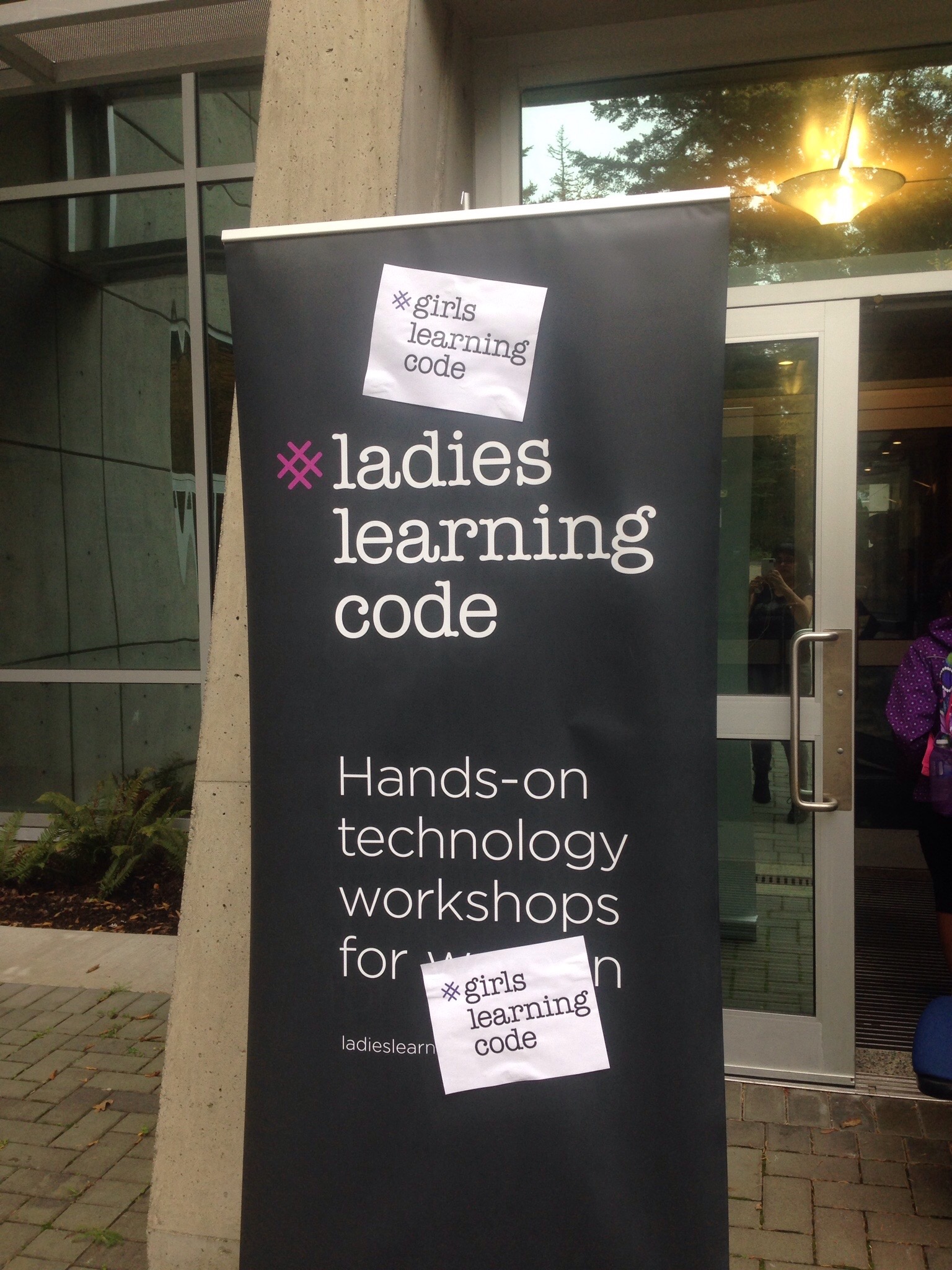
Today my youngest daughter and one of her friends attended Girls Learning Code Day activities at UVIC. It was a packed day of coding in the Engineering Computer Science Labs for the kids and their parents. The crowed was packed with girls, a few boys, and lots of parents. The girls and their parents stormed the Ivory Tower or in this case the tower of the Engineering wing. This day probably saw the most girls and women in the building than at any other time.

There were numerous mentors at the event, too. The mentors were a good mix of UVIC graduate students, alum, and local mentors from tech companies or other businesses in Victoria. The Girls Learning Code Day took place across Canada and was sponsored by MasterCard. I would like to thanks Ladies Learning Code national, the Victoria Chapter, Erin Athene, and Linley Faulkner for all of their hard work in putting together the successful event.

IMG_5772.JPG

Childbirth Reflections

I’ve been thinking about the ways in which birth experiences influences the ways in which you feel about your health care provider and yourself. I heard a great MA Thesis defense this year and during the latter part of the defense there was some discussion about personal birth experiences. This made me think about my two birth experiences with my daughters. Both births required some intervention. And, here I am thinking about them some ten years later.

I did not opt to find out the gender of either of my girls. And, I had a birth plan in mind. I did not follow the birth plans, but I did end up with two baby girls. My eldest was encouraged to join us via the breaking of my waters and I labored for some 11 hours with her. I was quite thankful that for the epidural and will never forget the excruciating back labor. It really was like someone was trying to grate the skin off my back and hurt like nothing I had ever felt before. The next wonderful thing that I experienced were the shakes post-childbirth thanks to the epidural–with my teeth chattering. The rails of the hospital bed were cushioned so that I would not hurt myself, during my seizure like shakes.

The easiest part of my birth experience was breastfeeding. I had no issues with breastfeeding post-child birth. I also have warm memories of that first diaper change with the meconium being released by each daughter. Oh, good times.

My second (and last) child birth experience was more traumatic. I started off laboring standing and was feeling pretty good; however, in the matter of 10 minutes I went from laboring standing to the nurses realizing that something was wrong. I was summarily prepped for surgery and had an emergency c-section. I will never forget the moment on the hospital bed with my arms strapped down and feeling the doctor tug and open me up. I did not feel any of the surgery, but I could feel movement, and then my daughter was taken out of me. My doctor explained that the umbilical cord was wrapped around my daughter’s neck twice and this explained the fetal distress. I shed tears of joy and relief. I felt guilty that every contraction strangled my poor girl. This daughter is more of a fighter and she comes by it naturally. Listening to other women’s child birth stories I am struck with the joy, honesty, and in some cases regret.

I did not feel guilty about the interventions that I had with my birth experiences, then, I do not now. And no one else is going to change my mind. Smiles.