Career Advice: Redux

This is an old post that I have tweaked (not twerked) for the start of a new academic year.

You’re in your last year of university and getting nervous as the school year starts, hits the half way point or is ending. But, for the sake of ease, let’s pretend it’s the start of your last year of university. I’m going to make some suggestions for you. And, these are my opinions alone and not endorsed by my employer. This advice comes from my university experience, 16 years of teaching, and years of advising unofficially and officially.
1. Get yourself to the Career Center or the Career offices. Your campus should have an office with extremely competent staff who are there to help you. But, understand that they aren’t there to help you get a job, rather they are there to give you the skills so that you get yourself that job. They will empower you, but it’s all about your own skills and your own file. Have a Career Counselor review your CV or resume.

2. Speak with your departments Undergraduate Advisor. Believe it or not, s/he might have some good advice to give you. The advisor might know of additional job boards in your area of interest.

3. Speak to trusted peers who are in your situation or who have recently graduated. Your peers are a useful resource, too. Ask them if they can introduce you to anyone else–that is you need to network.

4. Confer with other faculty or mentors that you have in the campus community or community at large. Now is not the time to feel shy. You have to reach out and make some effort.

5. If it works for your field (and which fields does it not work for?) get on social media. Yes, join Linked in and establish your profile there and meet others on the platform. Ask people questions—especially those in the industry that you’re interested in.

6. Are you blogging or on Twitter? Will these platforms be useful for you? If so, then do it. But, always be very careful with your digital footprint. Google yourself and see what is out there. That photo of you in residence engaging in naked beer sliding—might need to be deleted! OK, you really don’t have compromising photos, but do take a look and see what photos and status updates you’ve had so that you won’t have a future employer “creep” and find something that they don’t like.

Particular to Victoria, I suggest to students that they not only look at the local job boards (BC Public Service, municipality job boards, and UVIC’s U-Hire, but also VIATEC’s. You never know what you might find in many of these. I also explain to students that they most likely won’t get hired right out of their undergrad as a senior policy analyst. The truth is that you’re going to have to work your way up and this might mean that you’re working in a position that requires data entry, filing, and “gofer” work. You have to cut your teeth in a job and be prepared for this.

If you’re interested in working in Victoria, I suggest that you keep abreast of when there are Chamber of Commerce events (Victoria or Westshore) and attend some of the events to network and meet local members. Note that members of this organization aren’t only local business owners, but government types, elected officials, and just regular people who are interested in the community. Also, attend other local events and get to know the community. This might mean registering with Meet Up and looking for events that will allow you to meet other like minded people. The thought of doing this might make you feel uncomfortable, but you need to get out and meet more people and realize that the limited discomfort can pay off with a mentor, community building, contacts, and possibly a job connection.

I have seen students take 4-8 months to find work after they graduate and this is pretty common. The students who are willing to take risks or start at the entry level position are the ones who have been the most successful. What are you doing to do?
Presence as a Gift

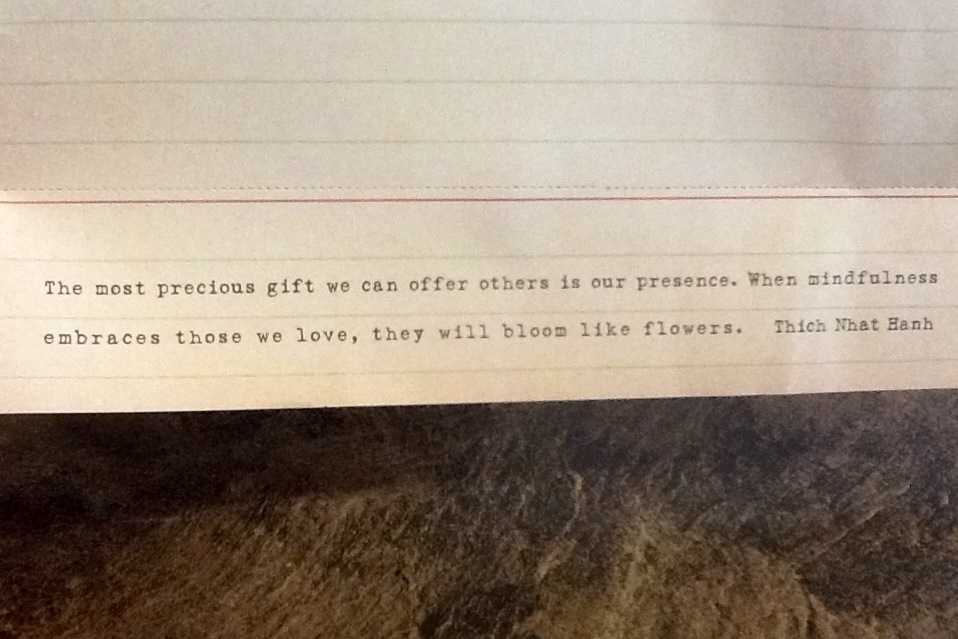
This quote reminds me what a gift mindful listening is. I refer to being present and communicating. We are all so busy and giving the gift of our time is a real present. This is really about the gift of mindfulness when we are with others. Are you a good listener? Are you present when you are with your loved ones, friends, and co-workers? I remember one of my professors from my undergraduate days could never be bothered to actually look at me or near my direction during office hours. She was too busy doing her mail and putting together her next lecture. I never felt like I had her attention. I learned something from those visits to her office, though.I learned that I would never do this during my office hours. I am present.

I have my limits and know what times of day that I am best for better listening or office hours, for instance. It is important to know when you are productive for the work that you need to do. As much as I would love to have my office hours one day a week, like some of my friends, I just can’t do that. I need about an hour or hour and a half at tops to focus, listen, and help. Then, I need to take care of the paperwork from the meetings, and get to the next task. I feel that I can offer my full presence two to three designated times per week and then for appointments as needed another hour in the week. Now these are the sort of meetings where I am working with my undergrads. I’m not referring to meetings with my graduate students or colleagues.

I attend lots of meetings based on sitting on different committees and I have to say that it is easiest to be present with the focused or organized meetings and most of the university meetings have an organized agenda, which I really appreciate. When the Chair of the meeting leads effectively, the meeting is more successful. One colleague from the Law Faculty would also time the different points on the agenda. These organized meetings kept all of us present. I wish that I was able to follow suit with this tactic, but overall, I learned lots from her. She was present and made sure that we all were present at our meetings.

Thinking of friends and presence is important, too. I really need to feel like the friendship is mutual in order to be present and give my attention. I can recharge after a great coffee or lunch with a good friend and I hope that they feel the same way. And, of course, I try to be present at home with my family. How do you focus? How do you stay present? One easy tactic is to keep the technology at a minimum or to have technology breaks. I will do this with girlfriends, a social media break when we all spend 2-3 minutes checking in or we agree to no phones. My family keeps me on track: they ask me to unplug. How are you mindful?

20130721-194756.jpg

Putting Your Best Foot Forward: Interviewing

I serve as an instructor and undergrad advisor to many and then to another group I am also a mentor or coach. I have also cultivated relationships with employers locally and outside of the city. I take these relationships seriously and they know that I try to send them strong candidates. Likewise, I try to check in with some of these contacts periodically to keep the connection fresh and to also ask them questions. I want to know  what is the profile of a strong candidate. Who are they looking for? And, they know that when they call to check references, they will get an honest reference about the candidate.

During the last month or so, I have met with some of my contacts and even made some new ones. I’m going to share some points from these conversations. This list is not an exhaustive list of advice, but a start. Now, it’s not uncommon to have an interview with more than one person and I refer to this group as the interview panel.

You got the Interview! Congratulations to you. Now, you need to impress them so that they call your references and then hire you.

Dress to impress. Ignore those articles on Linked In and elsewhere to dress how you are comfortable and don’t worry about impressing. Nope.You need to dress to impress and try to dress appropriately for the employer. If you’re interviewing for a non-profit, government, or conservative business you should dress according to the culture of that workplace.

Prepare for the interview. Google interview questions and review them and your answers in the mirror or hopefully with some trusted friends, mentor or sponsor. Also, do your research about the company. Why do you want to work with the organization? Make sure that you have a question or two for them, too. You do not want to make it painfully obvious that you haven’t taken the time to research the company and what they do. What is their mission statement? Who do they serve? Make sure that you have these basics down pat.

Be humble. You got the interview and you do not want to turn off the interview panel with arrogant responses. None of us are perfect, so think about what you have to learn or work on and how the company can help you grow. I am not suggesting that you downplay your skill set, but remember that you are getting assessed about how you will work with a team of people. I often remind my students about one employer sharing that a candidate was late to the meeting and one person opened the door to an apology asking, “Did you get lost?” The candidate responded with a quick, “No.” Big mistake. She was late to a job interview and needed to apologize for this. She did not and this set the tone for the interview. Remember that you are the short list and anything that you do that makes you look like a less serious candidate can hurt you.

Google yourself and check your digital footprint. The reality is that employers often creep and check you out–especially if they do not have good references or have a gut instinct about a candidate. I have heard from several employers who are honest about doing their research about job candidates. And, reminding you here to Google the company and what they do. This will give you ample information to ask the panel a question or two.

Prepare examples. When answering questions, offer examples from previous employment or volunteer experience that highlights your skills. You must remind the panel that you are more than competent for the job. For instance, if the panel asks you about working under deadlines, you need to refer to a situation that demonstrates your ability to work under a tight deadline and juggle multiple projects. Now, some of you might have a thin resume and could offer that you worked part-time and was enrolled in courses full-time and maintained a good grade point average. The panel will typically ask about working with a difficult situation or person–be prepared to offer a good example that highlights your ability to combine professionalism and team work.

Get a good night’s sleep and show up to the interview 10 minutes early. And, the next day place a thank you card in the mail. Yes, send a thank you card to the panel who interviewed you. Good Luck!

Election Hangover

Here we are a few days post BC Election and I am suffering from an election hangover. This is pretty normal for a political junkie or in my case, a political scientist, who enjoys following elections. Now, I have no issue sharing that the election results were not surprising. I suspected that we’d see the economy and business as usual providing the impetus for votes.  I anticipated strategic, economic voting and suspected we’d see another BC Liberals majority government. This is not endorsing the results.

Let me be clear: I am not happy with the results. Nope. And, for the love of my friend’s dog, please don’t make that giant leap of logic that this is hate speech. (Oh, yes, my person under the bridge loves to give me so much attention–er–get a life). What can we do during these next four years? Wake up. Wake the hell up. This is also making me think about that I might actually need to work on the GOTV campaign, too. I talk about the importance of voting and I do vote federally in the US, but maybe I need to seriously entertain doing more on the island.

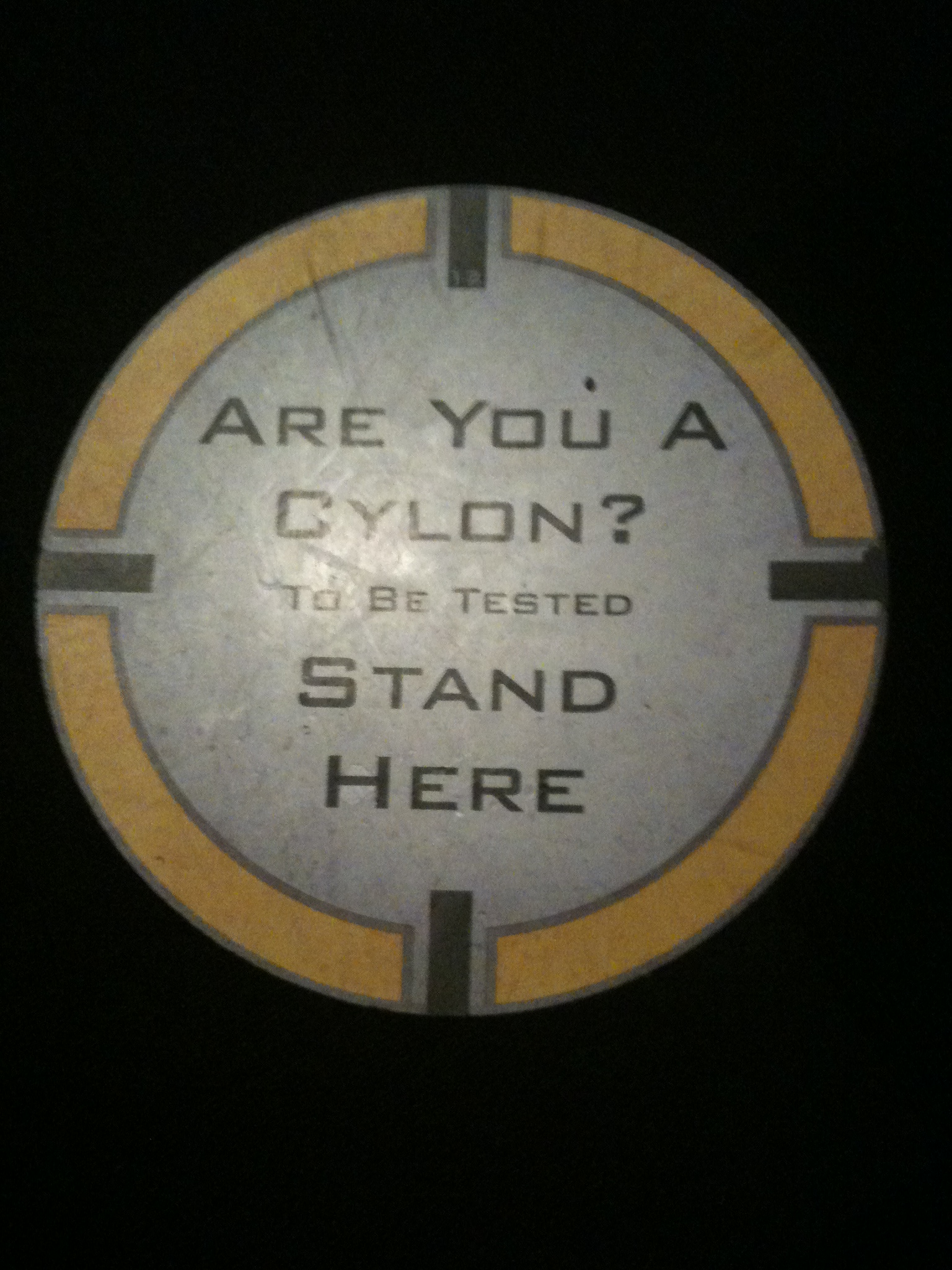
trin-045.jpgDon’t be a robot (a cyclon)–get involved!


Mentoring and Coaching: Listening

I work with hundreds of students each term and do my best to help as many as I can. One way that I do this is to set up my course assignments in such a way that each one builds on the next and that the student can learn and improve. I also actively mentor and coach many students from the prospective student who I might take on a tour or chat with in my office through the graduate student teaching her or his first class.

As a mentor or coach, I appreciate those moments when I can celebrate a student’s success. And, those teachable moments, when focus is needed to figure out what is next. What is the next step after there is a set back. These moments provide lessons in coping, crying, and then the strategy. What are Plans B, C, and D? There are also times when you just have to keep quiet and listen. I find that in many instances, the person sitting across from me at the coffee table or in my office needs to articulate aloud what they’re thinking and you have to listen attentively and pause. For me, this occasionally means biting my tongue. I want to help, but the help is to just listen and encourage.

A good mentor/coach must listen. When a student gets closer to their last year, term or graduation a panic can set in for them. I remember this feeling before I graduated, as I wondered what graduate school would be like (that is another post). I’ve bumped into many current and soon to be former students and April was all about listening and encouraging them. They are on the precipice of major change and need to work through this. The best gift I can give is to listen. Today I’m thinking about the importance of listening.

misc-b-004.jpg

My Lifetime Listens to Yours. Muriel Ruckeyser

I have a book of quotes that serves as writing prompts and this is prompt two. There is space to write on the page, but I sent the first prompt to a friend in another department. And, have torn out the second prompt. Now, the title of this post comes from part of poem and the lengthy poem says lots. But, what does this excerpt say or how does it speak to you. I am thinking like a Political Scientist or Social Scientist at the moment and how I learn from reading and listening. If I think from a mentor’s point of view, I know that my reading and listening includes what is not said or spoken. People have “tells” for when they lie or feel uncomfortable and these nuances of movement are important to support and understand. What is your tell? I have different tells, but one is to stop and think and take a drink of water. During this short moment, I am thinking of my response–formulating what I want to say next.

We listen with more than our ears. But, do we learn from what we hear and see? I am in the midst of heavy marking and looked forward to this writing prompt and I come back to learning from others. I have also had several hours of office hours and meetings and tried my best to listen intently these past few work days. I firmly believe in life-long learning and this prompt reminds me of the importance of mindfulness. When I think of mindfulness, I always picture Dr. Juliann Allison, as she practices mindfulness in all that she does. This week I am trying to actively practice mindfulness. The Ruckeyser quote was the perfect reminder, as I try to balance out meetings, honors presentations, grading, and planning a conference. And, that is only part of the to do list. I’m breathing in and out and trying to listen.

Writing A Love Letter To Someone You Dislike: What?

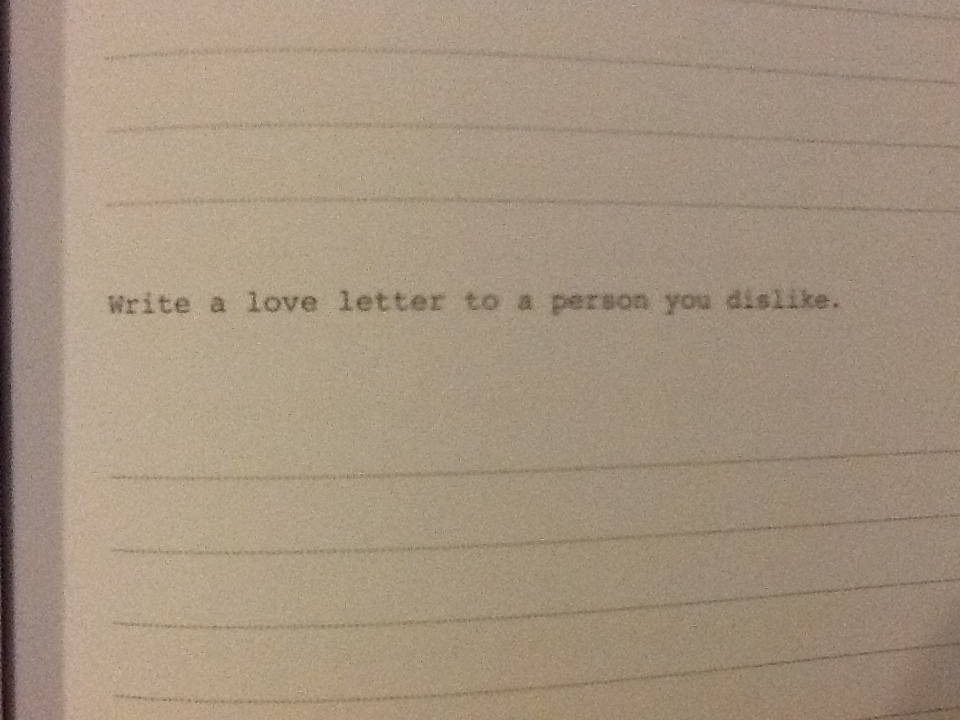
My spawn used some of her birthday money at the Assembly of Text on Sunday. She bought a journal, 642 Things to Write About by Raincoast. My spawn was smitten with it and was quite happy to make this purchase. I leafed through the journal and found some hilarious prompts. The journal is clearly for an adult given that there are a few prompts that speak to alcohol or more life experience, but overall the journal offers some great exercises in creative writing. I’m including a screen shot from one prompt about writing a love letter to a person you don’t like. Now, this post is not a love letter to such person or persons. But, it did make me think about what causes us to like or dislike another person. I am providing a list of traits that I immediately thought of and it is not exhaustive.

Things I like in a person (first six I thought of):

Honesty

Smile

Generosity

Intelligence

Witt

Compassion

Five things that turn me off (first six I thought of):

Dishonesty

Laziness

Arrogance

Disrespectful

Trolls

Patronizing

If I think of these traits and people who I have easily engaged with, I know that they had some or all of the six traits that I noted. We might have met at work, in the community, at a conference or at a kid-related event. And, as far as the turn offs–same places. I will add that I meet so many people each year given my work and family life. I know for a fact that I don’t click well with people who dislike strong women. There, I said it. And, yes, I have found this to be true from about high school onward.

And for the dear, sweet souls who feel that they have to stalk me online, this is not a love letter to any specific person.  That’s right–it’s not about you. The writing prompt made me think about traits. What traits do you like/dislike? Think about it–write them down and get blogging.

love letter

It is the time of the year when students are thinking about what they are going to do next. Some are in their last term or last year of school and wondering if grad school is for them. It is important to have some plans. Yes, I said plans. Plan A, B, C, and maybe even a plan D. Some students want to get organized several months before they have to apply. The grad school process is a frightening one, as it makes most students do something that they are completely unfamiliar with–promoting themselves.

I find that it does not matter if the student is a strong one or one with lots of potential most still have a hard time putting together their grad school dossier. I know that I did, but I was extremely lucky to have some wonderful mentors, and was involved with a peer mentoring group. This post is going to make some suggestions that assume that you are an undergraduate thinking about applying to grad school in the Fall.

Here, we are in the Spring (almost). The firs thing that I tell my students is that the grad school application process is like having another course. You need to research the schools and programs. You need to research potential mentors and their areas of expertise. You really should not just pick a program and land there without having done some research about the courses and the faculty.

Where do you want to live? Seriously. This was a concern for me. I knew that I did not want to leave the West Coast when I was looking at Political Science programs.

What do you want to study? Which courses did you find most interesting during your undergrad career? Which courses were the most fulfilling? These might not be the courses that you did the best in, but rather that rocked your world.

Where do you picture yourself in 1 year? Three years? Five years? There is not one answer for each of these questions. There should be multiple answers and that is perfectly fine.

What do you have to do to get there? To answer any of the above questions and this question, lean on your friends and your mentors. Now, you might not think that you have any mentors. It is not like you sign an agreement with your mentor and there is an understood relationship. No, I have had students send me cards after they graduated and found out that they referred to me as their mentor. There are different levels of mentoring and for some students being at the front of the classroom is enough. And, for other students there is more engaged relationship between the student and the faculty member. My point is that you probably do have a mentor or two! Seek them out and ask them for advice.

You’ve picked a program. Now, make sure that there is 2-3 faculty to work with there. Now, this might seem ridiculous at a smaller program, so maybe you might need to look for 1-2 people to work with at the program. One of the best ways to find out if you will be successful is to chat with current grad students. Find out what the lay of the land is. Also, find out what most graduates of the program do once they finish their theses. What do most of the grads end up doing? Policy work? Continue on with PhD programs?

Now, when you find out what you think you want to do, you need to get your application in order. Who are you going to get letters of support from for your dossier? Who will review your statement of intent? As they say, get your ducks in a row. Once you get your dossier together, you will need someone to review it all. This is where your friends and your mentors are important.

This is part one of a few posts. Good luck!

Grading and Offering Helpful Advice

I have large classes and this means lots of grading for me and my team of Teaching Assistants. I do not have Teaching Assistants for all of my courses, though. What I will say is that grading offers an interesting moment. That moment when you can assess if a student has: followed directions, read the material, organized her/his ideas well, and attempted to do the assignment in a timely fashion. Grading, though, is not about the student. It is about the work. And, this is where things get complicated.

Most of us take issue with people evaluating our work. It’s tough. The evaluation can make you squirm or sit taller in your chair. I’m cognizant of this, when I mark papers. There are moments, when I want to say: you totally kicked ass with this assignment. But, alas, that is not appropriate or even helpful. I might offer something like, it’s obvious that you have spent time thinking about the materials and have successfully articulated your analysis. Then, there are those moments, when you just know that a student did not have enough time to complete the assignment or did not manage his/her time well and you weigh what you need to say. I take no pleasure in offering critical commentary about student work. In most instances, I will offer that the assignment or paper did not meet the requirements. I try to avoid using the word: you. You is personal. The student reads it in a different way.

I have witnessed many students turn the to the last page for the grade. I was the type of student who read page by page the comments and if the grade was on the first or last page it did not matter. I wanted to get the feedback. I tweeted the other day that I was marking and was attempting to balance three things.

1. Firm    2. Fair    3. Compassion

These three things are important to me. The mark can influence a student’s assessment of their work, but also of the class, and the department. Maybe I’m thinking too much about this. But, I really do think that the feedback is important. Even if the assignment is just terrible–feedback is important. When the assignment is a failure, I do ask the student to come see me. I want to know what happened and if I can help. No student wants to earn the F. Usually there are extenuating circumstances and this is when I can offer guidance and compassion. Grading is not easy. I provide my first year students with a paper checklist, so that they can remind themselves of each component. This is a useful exercise for them, but even so it will not translate into 100% of the students using it or using the checklist properly. I continue to mark and think about the marking or grading process.

For my Teaching Assistants, the grading process is similar. I know from talking to them that some take the grading personally. They only want the students to succeed and feel a sense of frustration, when the students do not do well. They say, “I reminded them of this in tutorial. Why aren’t they following directions.” And, then, they are very proud when a student does well. Grading can seem so subjective at times, but ultimately it is not. We have our grading rubric and the grade categorization and explanation from the university. We know what we are looking for and we hope to find as many strong assignments as possible. In the interim, we plug away at the grading and offering useful commentary to our students.

Janni's files 388

Parenting, Community Building, and Email

I never thought I’d post about something as mundane as trying to get birthday invites to my elementary aged daughter’s friends. Previously she was enrolled at a private school and not only did we have an online family directory, but we also had class representatives who collated a parents’ email, address, and phone list. This made birthday or play date invites extremely easy. This also allowed for socializing among the families–yes, for community building and did so in a way that many of us appreciated. We could email and connect or choose to call and coordinate.

I have booked my daughter’s birthday party and given that she’s two months into a new public school I thought that I should find out what the protocol is for birthday invites. Actually, I walked into the office assuming that I would get the contact information for the classroom parents or an email for the class representative. Well, I could not even get the teacher’s email. Nope. This violates privacy laws in the province, allegedly. No information about the child can be disseminated via email. Whether or not this is true is not my bone of contention. The fact that in 2013 I could not get the work email for my child’s teacher was absolutely ridiculous. I was politely told that my daughter can distribute the invites at lunch or recess. This is a great exercise for kids to see who is invited and not invited. Big sigh. The e-vites allows for no paper waste.

The staff suggested that I speak with the teacher to see what she prefers. So, off we trundled down the hall. I spoke with the teacher and she would not give her email. She asked if I could just come in. I explained that I am always near a device, so that email is convenient. I received another polite smile and was told that she’s happy to meet with me prior to school. I’ll have to be happy with that. Apparently, she does not check her email often–and that’s fine. But, I’m still shocked. I inquired about the birthday invites and was again informed that my daughter will need to hand them out during recess or lunch.

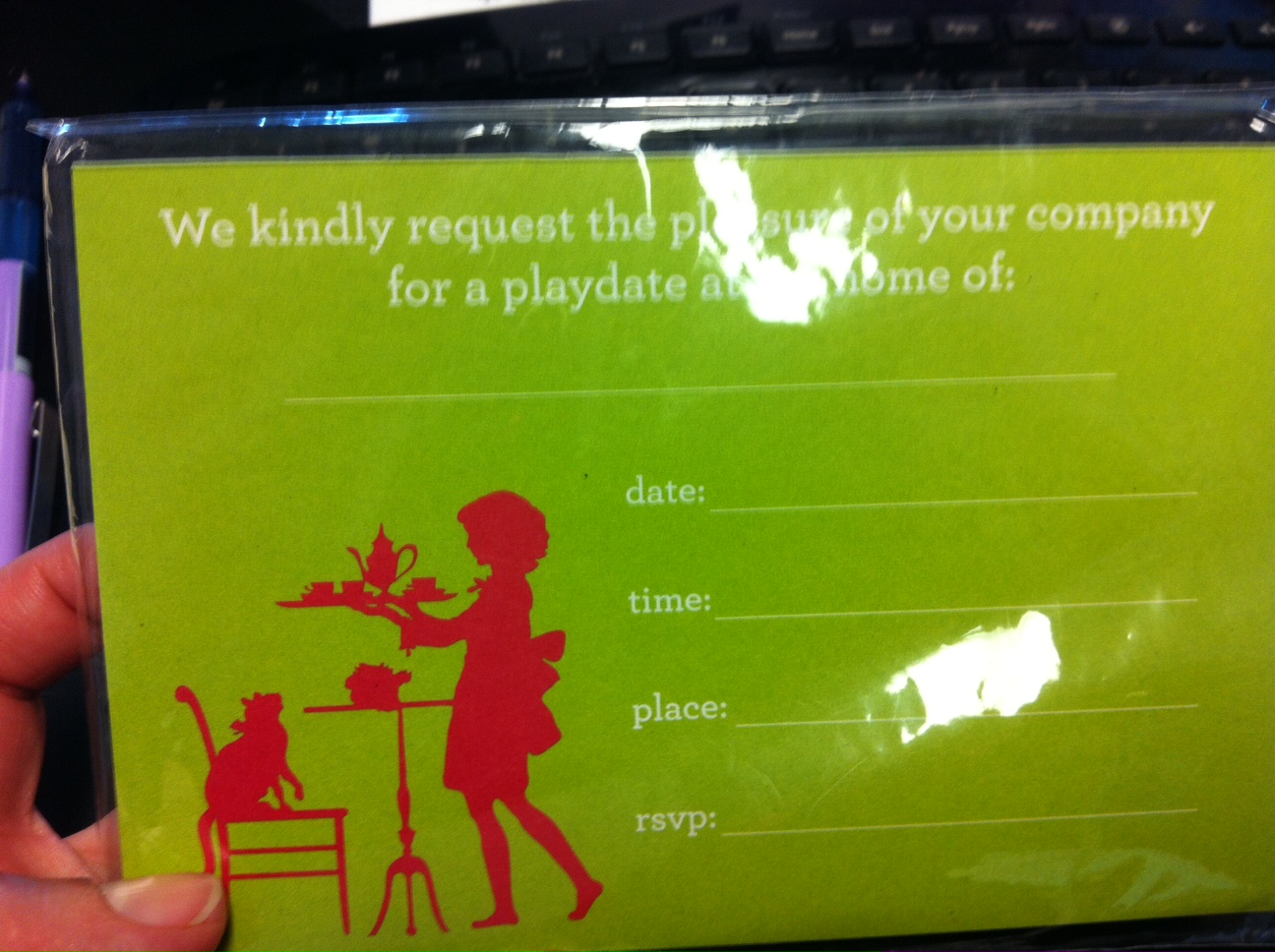
I might sound like one of those self-entitled parents who demands that the system works her way, but I’m not sure if that is the case here. My concern is three-fold: ease of communication, access to information (emails) to set up play dates or arrange a pick up swap, and understanding that it’s 2013 and technology is pervasive. So, slap my rear and call me Betsy, because I was shocked with my findings today. Seriously, I have to go old school and have my kiddo pass out invites. This also means that I have to meet the other parents so that we can actually become part of this new community. I have some “let’s arrange a play date” note cards that I can finally use. The good news is that I’m going to be more outgoing at drop off and pick up to meet other parents. I’ll roll with it.

My second to last concern is that the kiddo is not inviting the entire class, so the chances are that some kid will have her or his feelings hurt. We have a set limit for the party and we are inviting a mix of kids from the old school and new school. Thankfully, I can use an e-vite for the kids from the old school. Regarding the hurt feelings, well that’s part of growing up–I know. I will have a chat with the kiddo about how to do this as discreetly as possible. And, my last concern, I’m still troubled by the fact that the nuclear codes were not made available to me as a parent– I don’t have the teacher’s email address. An email address is something so basic in my world as an educator. But, then again, maybe the teacher is drawing boundaries and really prefers only face to face interaction. At this point in time, I’m expressing my surprise via the blog post, but I’m not about to write the school board. This is not official complaint worthy. Thoughts?

Adding–of course–I googled the teacher. Her email was not found and she is off the grid. Boundaries, time management or teaching philosophy…

playdate image