Is is Better to be a Leader than a Manager?

I agree. It’s not an either or…the two roles can vary in a day.

Jason Scriven's avatarThe Accidental Manager

In the last week, the comparison of leader vs. manager has popped up a couple of times in my LinkedIn feed usually through a quote that implies that it’s better to be a leader than a manager. Here is one as an example, from someone whose ideas I admire:

Management is about arranging and telling. Leadership is about nurturing and enhancing.  –Tom Peters

While I am hoping that Tom intended to demonstrate the different skills inherent in managing and leading, it is likely taken by most people as an either or statement.  If you are a manager, all you do is arrange and tell, but when you are a leader, the choirs sing and the heavens part as you nurture and enhance your team. Most readers would also take those attributes and assign them by proxy to managers and leaders – because surelyit’s better to be a leader…

View original post 231 more words

Reflections: No Glares

Now that another term has almost ended, I can look over my shoulder at the previous school year and think reflect. Each year I reflect and try to learn from the previous year and then resolve to make some changes in the next year in the classroom, for my professional development or my ongoing efforts to mentor/coach students and peers. What did I do differently last year in the classroom, office hours or other interactions with my students? I resolved for more honesty. I was blunt. I was diplomatic, but more so, I was blunt. I am helpful and professional; however, I refuse to waste my students’ time with circular conversations. I do them no favors if I try to sugar-coat conversations.

What were the repercussions for me, if any? I heard more of these comments:
Thank you for being honest. I’ve never heard this before. Why am I almost done and no one has told me this? I didn’t know that this was plagiarism. Thank you for your time.

I did not have any incidents where someone stormed out of my office or a conversation escalated. If anything, I had meaningful conversations about assignments, interactions, writing, grad school, and other issues. As I have noted on numerous occasions, part of my job means that I have the good fortune to work with young people in the classroom or in my office. I love it. I would not trade this job for another as I get to teach, mentor, coach, and lead.

This last year I also thought more about my time. I strategically chose to focus my time differently. Part of it is that I had to, given a job change, but that is cause for a different post. I was not as available for extended office hours and the world did not fall apart. I expected a few day’s notice for extra appointments. What I am saying is that I established better boundaries for office houring and mentoring students. I had to protect my time thanks to the job change and I was working more. I managed my time effectively and accomplished more. And, at the same time I did not field complaints from my students. If anything, the change was better, as they commanded my full attention at times that were not pressed between meetings and I could listen.

My writing prompt for this post comes from a Swedish Proverb, “Fear less, hope more; whine less, breathe more; talk less, say more; hate less love more; and all good things are yours.” This last school year was filled with so much good and change. I welcome the change with a big smile and an open mind. The 2015-16 school year is half way through and I am in a great place. And, I’ll add that my little Grumpy Cat agrees and has her head on the desk!

Affirmations

What are some of the mantras that you repeat? I love different quotes and use them as power ups, to share or to remind me about positive things. I have a few books of different quotes and refer to them, as needed. On an older version of my business card is the quote, “I believe in women.” My partner had the cards designed for me when I finished my dissertation.

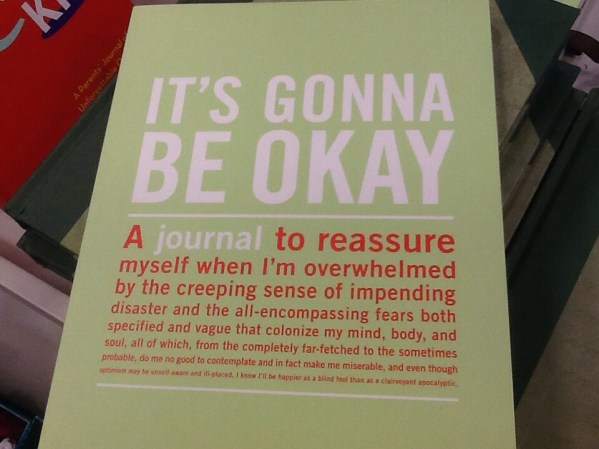
What are some of your favorite quotes or affirmations that you say to yourself before a tough situation? This book is great. It’s perfect for writing prompts or just writing down the mundane. 20140227-173735.jpg

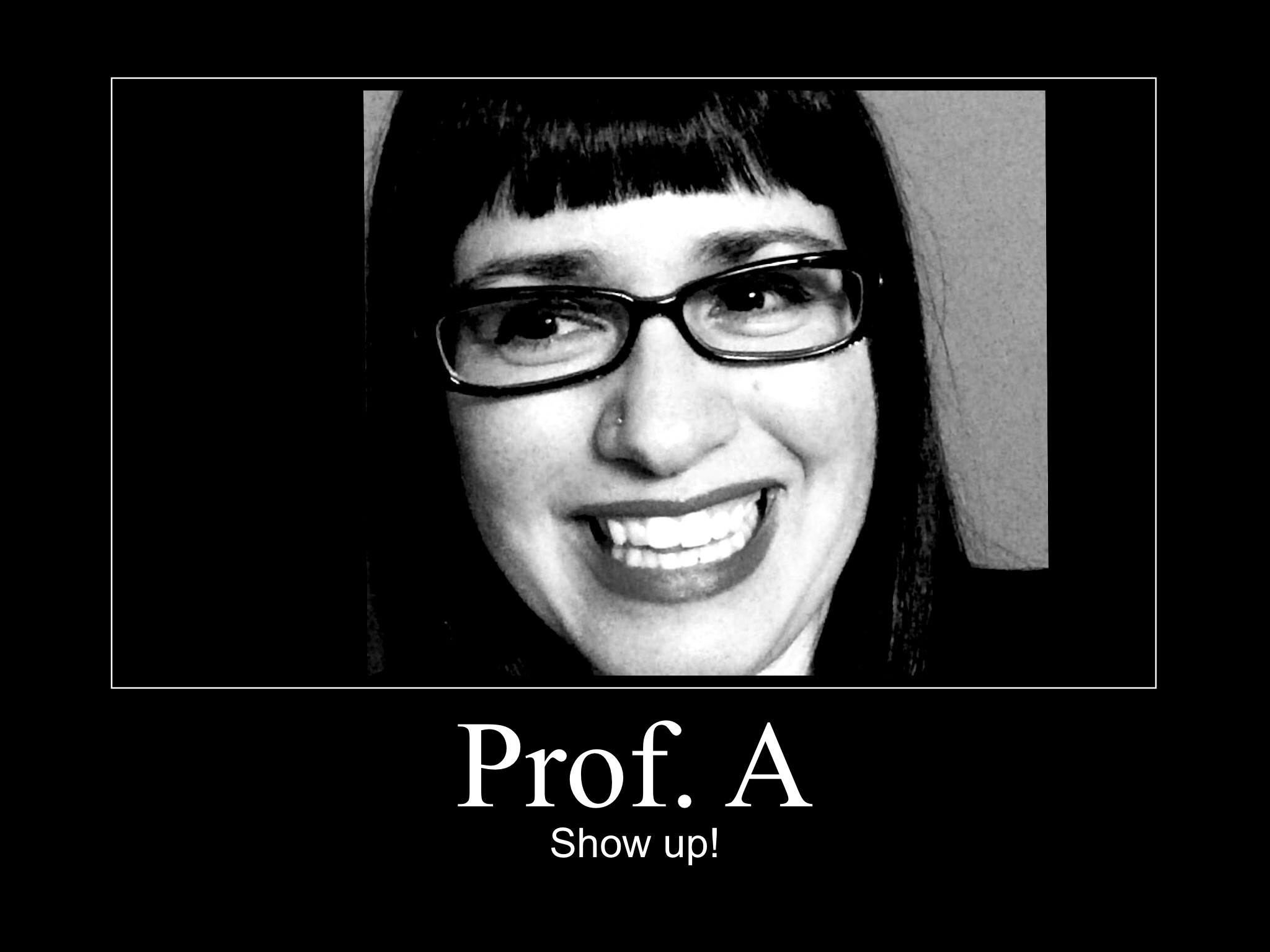
Participation Ribbons: Show Up

At some point in the last decade or two participation ribbons became common at sports events. I have mixed feelings about this. While I understand the need to make every kid feel good about her or his participation in a cross country meet, there is another part of me that cringes with this practice. My mixed feelings stems from not wanting my kids to think that they have to win to be their best. Perhaps this is why they both like competitive swimming? While they swim against others, ultimately they are trying to lower their swim times and it becomes self-focused. 

I know that when I watch competitve sports events I am the one in our household who always comments that it is an honor for the athletes to compete. And, I think it is. Participation ribbons, though, have another part to them. Things get more complicated when I am in the classroom. Somehow this culture of rewarding people for showing up has bled into school work. There is this equation in some students’ minds: effort = A. And, this equation is a problem. 

Yes, it is important to participate. You need to show up to class. However, that is only one part of it. There are terabytes worth of research about the correlation between student attendance and success. Part of it is that students who attend class are more likely to be prepared and feel accountable, but the other part of it is that this same group is also likely to hear annoucements, do the reading, and possibly attend office hours for clarification about assignments. My issue is that I often have to explain to a student that their gauge for effort will vary, and that some students can whip an assignment together fast and do well and others will not. 

I do not believe in participation ribbons in the classroom. A solid blog post, research design, paper or vlog is going to take some effort, and merely doing the assignment is not enough. A stronger assignment is going to have to make me pause. The pause is one of excitement–this is great work. However, most of the students will do good to fair work and this is in the B to C range. And, nothing is wrong with this. What is the saying, “Bs and Cs earn degrees.” It’s true, but the learning experience is more than grades. A new term is right around the corner for our college students. My advice: show up. I hope that your instructors entice you to learn, think, and try. You do not have to do your best, but note that you’ll benefit based on the effort you put into the class. The benefits, though, are more tangible than a grade, and you might end up taking away more than the the ability to write better and think critically. You might be moved to change your major or take more classes with that instructor.


Networking at Work

I am an administrator with teaching responsibilites, and at the same time I am a unionized faculty member. This role gives me the opportunity to lead a service department, and continue to teach and mentor. The department I run held our annual retreat this year and a colleague from Human Resources facilitated the event. Based on the response at the retreat and the ensuing days, I feel comfortable stating that it was a success. We did some team building and got to know one another better and this was fun. The manager and I also had a chance to speak to what is next and what our roles are in the unit. I am glad that I have taken the time to get out of my home department, Political Science, and know people throughout campus. 

Almost monthly I meet with my Human Resources consultant to chat about the unit, my team, and other issues as needed. These meetings provide me leadership coaching and human resources training. I have my advanced degrees, but none of them are in managing people or campus wide projects. The Human Resources team have been crucial to my leadership success. And, thinking back to the last year, establishing good, work relationships with others across campus has also served me well. Of course, it is not about me, but here I am thinking about the importance of face to face meetings and casual coffees to chat with people who I work with or need to work with on projects. I also have monthly meetings with others across campus, who I regularly work with and these meetings are coffees where we update one another about our projects. 

People always use the metaphor of silos for university campuses and it fits. Most tend to stick to their building or their side of campus. A new school year is upon on and I encourage academics and alt-academic types to venture out of their usual haunts on campus. Make a coffee date with a colleague who you have always wanted to collaborate with or who you know also teaches large first year courses. My point is to network with others who you might normally not take the time to get to know. 

This suggestion includes staff. It is my experience that academics tend to spend time with other academics. The campus is filled with people. Get to know others across campus in different roles. Before you know it, you have established more meaningful relationships around your campus. I realize that networking turns some people off, so think about expaning your circle at work. The photo below is one that I took at a conference where academics were the minority, but the goal was to move major projects across campus in a collaborative manner. It was a great exercise to see the numbers of staff involved in raising funds and planning for a new building or thinking about active learning environments for students. 


My falling-out with Myers-Briggs

Corinne's avataro! wandering folk

We have an identity crisis. Call it what you will, a post-modern, existential, millennial crisis of self, we are all asking ourselves: Which Game of Thrones character am I?

Ok, in all seriousness. The rash of Buzzfeed, Playbuzz, Quizmodo, etc “Personality Quizzes” that promise to tell you who you really are, in terms of your favorite fictional paradigm, is really just the latest symptom of our human desire to know ourselves, to approve of ourselves. “Ugh, I got Pansy Parkinson? Are you serious? I wanted to be Bellatrix Lestrange!”

For those seeking to understand themselves in less frivolous terms, we might seek to discover if we’re Type A or Type B, or which of the four humors we are, or, in terms of the perennial, inescapable, enduring favorite: What’s my Myers-Briggs type?

Sigh.

I’ve long been a fan of the Myers-Briggs. It’s helped me understand certain aspects of my personality…

View original post 457 more words

This is my house.

Automattic Special Projects's avatarThe Bloggess

The greatest gift in the world is to grant a kindness to another. The amazing thing though is that the aforementioned gift is one you give yourself. It may be a small thing. Leaving a flower for the tired woman at the coffee shop. Telling a stranger that they have such kind eyes. Listening happily to a story told by an elderly friend or relative who has told you the same story a million times. Nodding in solidarity even when you don’t completely understand. Letting a friend or a stranger yell hurtful things at you because you hope it will help them let go of a small part of that anger…that it will open up room in them for the greater things that they deserve.

This is the way the world goes. Small, mean acts affect the next person who in turn amplify that anger or sadness and take it out on others who suffer…

View original post 2,646 more words

Creative Assignments and Student Centered Learning

I am finishing up another term and will spend next week grading research designs. This assignment is meant to provide students an opportunity to fully sketch out a larger paper. And, this assignment is quite specific in terms of the expectations. I offer creative assignments and couple them with the traditional paper assignment. I am going to list a few common issues that I have faced.

1. Just make me write a paper

2. Why can’t you give us a mid-term or final

3. I enjoy the opportunity, but learning the technology takes time

4. Thank you

I did not place these in a ranked format. But, these are the most common comments about blogging, vlogging, e-portfolios, proposals, and research designs. Trying to offer different types of assignments and foster student-centered learning presents opportunities and challenges! I will respond to the four points in another post.

Post for My Students: Looking For Work

I have some points of advice for my current and former students looking for work. I was counting back and realize that I have sat on more than 3 dozen hiring committees in the last 15 years. In that time I have reviewed cover letters, resumes, CVs, and sat in on the interviews. I have also served as a job reference for countless people, and am a MBA Leadership Coach.

1. Proofread your resume or CV

2. Have someone else review your resume or CV. Chances are you are forgetting something about some of your skills or have missed an error with formatting or a typo.

3. Prepare for your interview. Find out information about the employer and the position that you have applied for. You can Google common interview questions and practice formulating your answers.

4. Send an email thank you to the interviewer after the interview. Be concise: thank you for the opportunity, I look forward to hearing from you.

5. If you do not get the job, it is acceptable to contact the interviewer and ask if they can offer feedback. They may respond with some, but do not expect that they will.

6. When you are in the interview, never speak ill of your current employer or any past employers.

7. Do not under any circumstance lie or inflate on your resume.

8. Be prepared for your interview and gracious to the interviewer or interview panel.

9. Be on time to your interview.

10. Dress appropriately for your interview. It is better that you are a bit overdressed, then not dressed up enough.

11. Try to relax and think positively before your interview. You do not want to be that candidate who was extremely nervous and could not answer questions.

12. Review your digital footprint. Update your LinkedIn account and make sure that you have your LinkedIn account information on your resume. 

Do not burn a bridge. If somehow you are not happy with the process, never send an email or make a phone call when frustrated. 

Overall, good luck with your job search! The Spring is busy with students looking for jobs, co-ops, and volunteer opportunities.

Mentoring Grad Students

I have been having more conversations with graduate students about life after graduate school. Not all of them are interested in the traditional career path in academe. I don’t blame them–the job market for full-time work in higher education is dismal. There is lots of work for contingent (part-time) faculty, but that doesn’t really provide a stable income. I know this well, as for most of my academic career, thus far, I worked part-time. Sometimes this work was between three different departments at three campuses, ergo the term “freeway flyer.”

I do think that we need to be more responsible with our mentoring of graduate students and part of this includes not suggesting graduate school as a viable option to some students. There, I said it. Graduate school is not for everyone; however, some will figure this out on their own. I am referring more so to being honest about the psychic and financial instability of graduate school. Lately, I am seeing more undergraduates entertain what they are referring to more “practical” programs like advanced degrees in Public Administration and even a few are entertaining MBA programs. I think this is a good thing–let them branch out into different degree programs. An advanced degree in Political Science is useful, but it is not the only option.

I have been pleased to see an ongoing threads and hashtags on Twitter #PhDchat #gradchat #NewPhD. These short conversations are interrogating degree programs and what we think needs to change. These are important conversations.

We need to be more honest with our graduate students and make sure that our institutions offers different types of job training or workshops. And, if the student does want to go into higher education, we need to do a better job mentoring. This can be tedious, but meeting one on one with the students is really worth the time. This is part of an ongoing train of thought for me.