Gratitude

A long weekend has started here in Canada. Technically it starts after work today for me, but campus sure is more quiet today. This is the Canadian Thanksgiving weekend, and I am pausing between meetings to share thoughts about gratitude. 

1. I have gratitude to the team of people who have kept me healthy this year, and this includes the family doctor, physiotherapist, dentist, and oral surgeon. 

2. I have gratitude for my family. I am noting that this is for my kin and my made family. My family supports me and I do not thank them enough. 

3. Deep gratitude for my in laws. I could not manage my week without the help that they offer. I am extremely lucky to have them five minutes away from us. Our family Excel spreadsheet is a thing of beauty and if they did not do a drop off or pick up it would make things more difficult for me. Thank you. 

4. I have gratitude to my co-workers. Here I am thinking those who I report to, later colleagues, my staff, and other colleagues across campus. I know that I am lucky to have a job that is my career. I have a privileged life enjoying my work, and feeling satisfied. 

5. I cannot finish this list without thanking about my students, and other students across campus. Thank you for making all of this worth it. Your energy makes me smile. Your questions motivate me. And, working with you is a pleasure. OK. It’s a pleasure most of the time! 

6. Thank you to my many mentors! I include a photo of Dr. Kathy Jones. I worked with her at SDSU–back when I was an undergrad and we have kept in touch. She’s one of the many amazing mentors I have had. Thanks, Kathy! 

It might not be Thanksgiving for you, but what is in your gratitude list? 


Introspective Exercises

I am co-teaching a new course, Digital Skills for Your Career. Last night my slide deck consisted of a letter  in bullet point form to my 20 year old self. I shared with my students some regrets and points of reflection. It was blunt and at times humorous. My point was to help them with their exercises. Co-op and Career had provided them a venn diagram to fill out and for some of the students the exercise was a tough one. They needed to think about their skills, wants, and competencies. The exercise is all about introspection and self-promotion. It is not as easy as it sounds. 

And, their first assignment was due this week. We had asked them to curate a fulsome About.Me page, and in two weeks their LinkedIn URL is due. They worked away in pods chatting with one another about what is holding them back, and how to overcome self-doubt. 

Mentoring university students has taught me numerous things. One consistent issue is the uncertainty and the way it can stifle creativity, bravery, and happiness. My exercise in self-deprecation and honesty was to remind them that they are going to make mistakes and it is OK. We are three weeks into this course and I hope that they are enjoying it as much as I am. 

My photo of one of Co-op’s Slides. Thanks! 

Girls Learning Code: Scratching at the Surface 

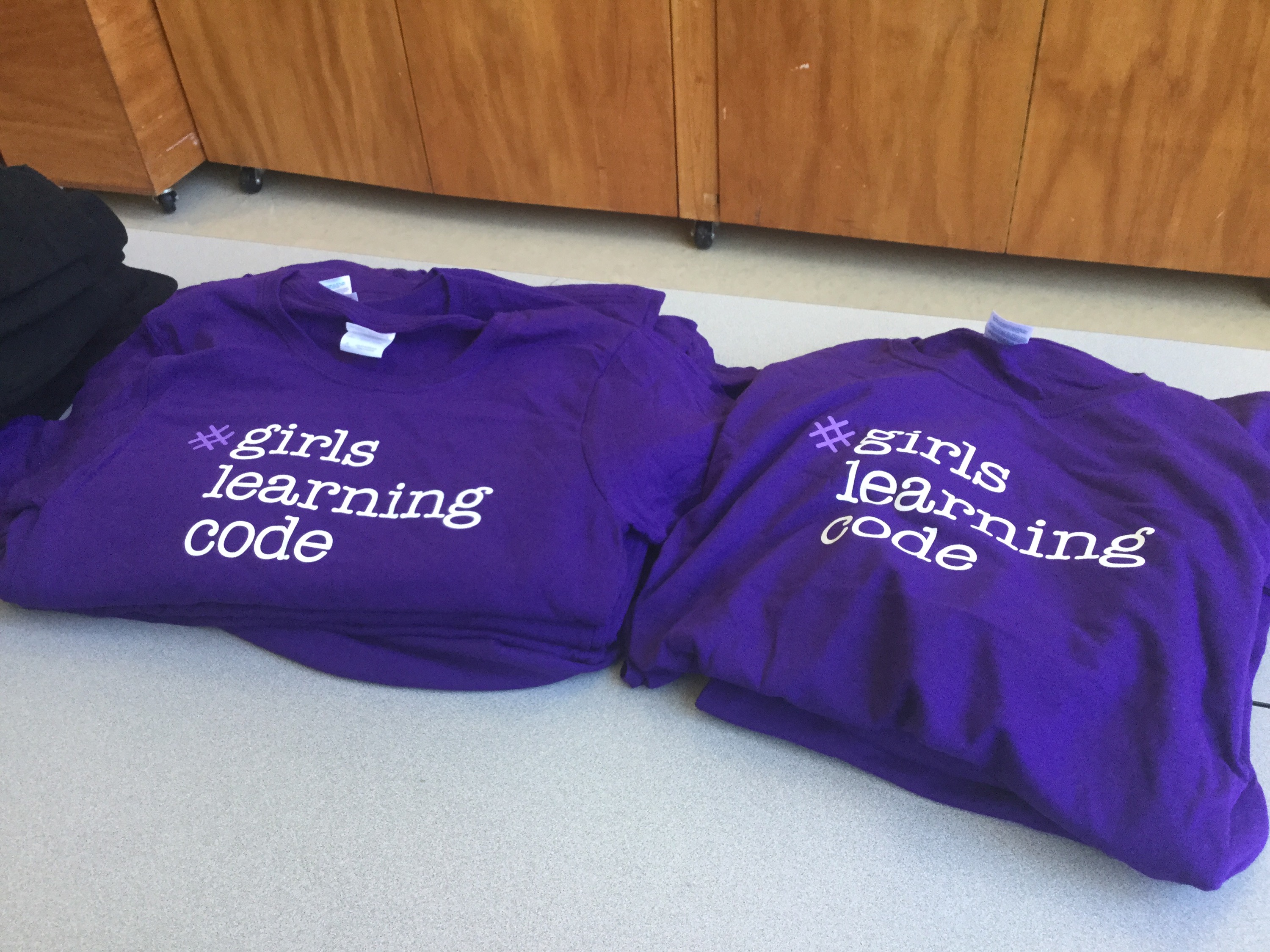
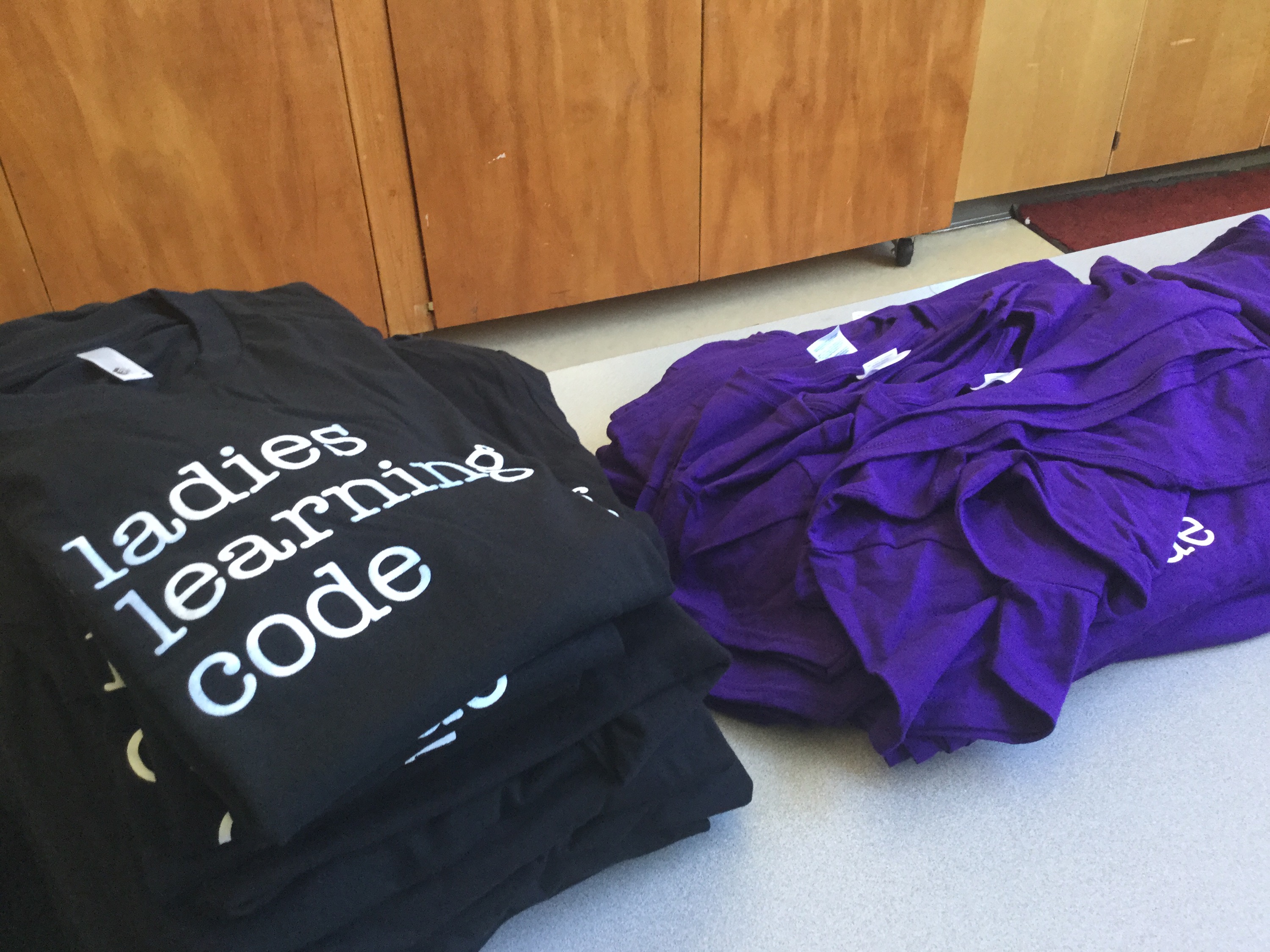
This last weekend I volunteered at one of the local Ladies Learning Code events. I helped by doing social media for the Girls Learning Code event at St. Margaret’s, an all girls school in Victoria, BC. The “code” for the day was learning Scratch, and the girls had fun designing games. The school had donated space including the use of their labs, a large area for the girls to eat their lunches, and then the presentation of the games. We ended up using a computer lab at the Junior School and another lab next door at the Senior School campus. Thank you to the school! 

The day was fun and the girls demonsrated their wicked skills with Scratch. Some of the girls were familiar with Scratch, and others were new to it. Regardless, they had fun. The labs were warm with the hum of the computers and the din of conversation among the girls and the mentors roving around to assist. The mentors donated the bulk of their day to help. And, I want to speak to the mentors. 

The vast bulk of the mentors were women, and virtually all of them shared one message. They wished that Girls Learning Code existed when they were young, and that we need more women in the tech industry. One mentor noted that she has never worked on a project team with another woman. And, another mentor noted that in some of her Computer Science courses she is the only woman or one of three in a class of 50. Yeah, re-read those sentences. It’s 2015. We still have work to do. 

A few of the mentors were men and they echoed the comment. “We need more women and girls coding.” The mentors were great and coached the girls through the day. But, I really hope that the girls were left with the messages that it’s cool to like Math, Games, Computers, and Science. The mentors were introduced to the parents, and again the mentors shared their stories. I am sure that some of the girls and parents left the event with a sense of optimism. I hope to see these girls at more of the Girls Learning Code events. 

I used #llcyyj on Instagram, Vine, and Periscope. The Twitter handle is @llcvictoria. 


Things College Professors Like

Let me start by saying that this is not an exhaustive list. And, this list is based on my experiences as a college professor, teaching assistant, and life-long learner. I also talk to other instructors in the college environment, as well as teachers in the primary and secondary schools.

1. Show up to class

2. Read the syllabus or course outline

3. Come prepared

4. Talk to us after class or in office hours. You are never bugging us when you want to chat about the course or materials. If you need another copy of the syllabus, ask for it. 

5. Plan your time accordingly for the assignments. We realize that you have other courses 

6. When you email us, please use complete sentences and the usual rules of writing. And, start of formal and use Prof. A or Professor. Some profs prefer the title and others will say it’s fine to use their first name.

7. Be open to the materials and course content. 

8. Get involved

9. Come to office hours

10. Review graded work with the prof to see what you can do better next time. <This is different than asking for more points>.

11. Have fun

Number 11 is about making connections between the materials and your other courses or events in the news. Overall, I want to see you engaged and it is a give and take situation. I cannot expect students to magically engage–part of it is my work. I need to make you want to come to class. I will do my part.  


Popular Instructors

I cannot believe that I am starting my 18th teaching year. I always start counting the years in September and this is 18. One of the things that I am mulling is what a popular instructor or popular prof means in academe. Does this reflect your enrollments? Is this term cast as a negative assuming that your course content is easy? I think the context mattters.

1. Hearing it from some colleagues it is clear that it cheapens your pedagogy and the depth of what you teach. 

2. Hearing it from students varies, but it is mostly meant as a compliment. 

3. Some colleagues clearly mean it as a compliment. 

Overall, my sense is that the so-called popular instructors generally enjoy teaching. I think that is the difference.  


Participation Ribbons: Show Up

At some point in the last decade or two participation ribbons became common at sports events. I have mixed feelings about this. While I understand the need to make every kid feel good about her or his participation in a cross country meet, there is another part of me that cringes with this practice. My mixed feelings stems from not wanting my kids to think that they have to win to be their best. Perhaps this is why they both like competitive swimming? While they swim against others, ultimately they are trying to lower their swim times and it becomes self-focused. 

I know that when I watch competitve sports events I am the one in our household who always comments that it is an honor for the athletes to compete. And, I think it is. Participation ribbons, though, have another part to them. Things get more complicated when I am in the classroom. Somehow this culture of rewarding people for showing up has bled into school work. There is this equation in some students’ minds: effort = A. And, this equation is a problem. 

Yes, it is important to participate. You need to show up to class. However, that is only one part of it. There are terabytes worth of research about the correlation between student attendance and success. Part of it is that students who attend class are more likely to be prepared and feel accountable, but the other part of it is that this same group is also likely to hear annoucements, do the reading, and possibly attend office hours for clarification about assignments. My issue is that I often have to explain to a student that their gauge for effort will vary, and that some students can whip an assignment together fast and do well and others will not. 

I do not believe in participation ribbons in the classroom. A solid blog post, research design, paper or vlog is going to take some effort, and merely doing the assignment is not enough. A stronger assignment is going to have to make me pause. The pause is one of excitement–this is great work. However, most of the students will do good to fair work and this is in the B to C range. And, nothing is wrong with this. What is the saying, “Bs and Cs earn degrees.” It’s true, but the learning experience is more than grades. A new term is right around the corner for our college students. My advice: show up. I hope that your instructors entice you to learn, think, and try. You do not have to do your best, but note that you’ll benefit based on the effort you put into the class. The benefits, though, are more tangible than a grade, and you might end up taking away more than the the ability to write better and think critically. You might be moved to change your major or take more classes with that instructor.


Networking at Work

I am an administrator with teaching responsibilites, and at the same time I am a unionized faculty member. This role gives me the opportunity to lead a service department, and continue to teach and mentor. The department I run held our annual retreat this year and a colleague from Human Resources facilitated the event. Based on the response at the retreat and the ensuing days, I feel comfortable stating that it was a success. We did some team building and got to know one another better and this was fun. The manager and I also had a chance to speak to what is next and what our roles are in the unit. I am glad that I have taken the time to get out of my home department, Political Science, and know people throughout campus. 

Almost monthly I meet with my Human Resources consultant to chat about the unit, my team, and other issues as needed. These meetings provide me leadership coaching and human resources training. I have my advanced degrees, but none of them are in managing people or campus wide projects. The Human Resources team have been crucial to my leadership success. And, thinking back to the last year, establishing good, work relationships with others across campus has also served me well. Of course, it is not about me, but here I am thinking about the importance of face to face meetings and casual coffees to chat with people who I work with or need to work with on projects. I also have monthly meetings with others across campus, who I regularly work with and these meetings are coffees where we update one another about our projects. 

People always use the metaphor of silos for university campuses and it fits. Most tend to stick to their building or their side of campus. A new school year is upon on and I encourage academics and alt-academic types to venture out of their usual haunts on campus. Make a coffee date with a colleague who you have always wanted to collaborate with or who you know also teaches large first year courses. My point is to network with others who you might normally not take the time to get to know. 

This suggestion includes staff. It is my experience that academics tend to spend time with other academics. The campus is filled with people. Get to know others across campus in different roles. Before you know it, you have established more meaningful relationships around your campus. I realize that networking turns some people off, so think about expaning your circle at work. The photo below is one that I took at a conference where academics were the minority, but the goal was to move major projects across campus in a collaborative manner. It was a great exercise to see the numbers of staff involved in raising funds and planning for a new building or thinking about active learning environments for students. 


My falling-out with Myers-Briggs

Corinne's avataro! wandering folk

We have an identity crisis. Call it what you will, a post-modern, existential, millennial crisis of self, we are all asking ourselves: Which Game of Thrones character am I?

Ok, in all seriousness. The rash of Buzzfeed, Playbuzz, Quizmodo, etc “Personality Quizzes” that promise to tell you who you really are, in terms of your favorite fictional paradigm, is really just the latest symptom of our human desire to know ourselves, to approve of ourselves. “Ugh, I got Pansy Parkinson? Are you serious? I wanted to be Bellatrix Lestrange!”

For those seeking to understand themselves in less frivolous terms, we might seek to discover if we’re Type A or Type B, or which of the four humors we are, or, in terms of the perennial, inescapable, enduring favorite: What’s my Myers-Briggs type?

Sigh.

I’ve long been a fan of the Myers-Briggs. It’s helped me understand certain aspects of my personality…

View original post 457 more words

This is my house.

Automattic Special Projects's avatarThe Bloggess

The greatest gift in the world is to grant a kindness to another. The amazing thing though is that the aforementioned gift is one you give yourself. It may be a small thing. Leaving a flower for the tired woman at the coffee shop. Telling a stranger that they have such kind eyes. Listening happily to a story told by an elderly friend or relative who has told you the same story a million times. Nodding in solidarity even when you don’t completely understand. Letting a friend or a stranger yell hurtful things at you because you hope it will help them let go of a small part of that anger…that it will open up room in them for the greater things that they deserve.

This is the way the world goes. Small, mean acts affect the next person who in turn amplify that anger or sadness and take it out on others who suffer…

View original post 2,646 more words

Creative Assignments and Student Centered Learning

I am finishing up another term and will spend next week grading research designs. This assignment is meant to provide students an opportunity to fully sketch out a larger paper. And, this assignment is quite specific in terms of the expectations. I offer creative assignments and couple them with the traditional paper assignment. I am going to list a few common issues that I have faced.

1. Just make me write a paper

2. Why can’t you give us a mid-term or final

3. I enjoy the opportunity, but learning the technology takes time

4. Thank you

I did not place these in a ranked format. But, these are the most common comments about blogging, vlogging, e-portfolios, proposals, and research designs. Trying to offer different types of assignments and foster student-centered learning presents opportunities and challenges! I will respond to the four points in another post.