The Academic Interview: Visit, Talks, and Politics 

  The last time I had a job interview for a tenure-track job, I was successful and got the job. I had spent 2/3 of my academic career as contingent faculty and felt like I caught the golden snitch. Now, that I am several years past the job interview I am thinking more about the process. I have some points to share based on my experience as the job candidate and sitting on numerous hiring committees between two universities. 

You can never be over-prepared. Do your research about the university and the department. You need to speak to the classes you can teach and how you can add to the teaching, learning, research, and overall community in the department. Practice your job talk and teaching talks with friends, who can offer you advice about your presentation and “working” the room. Choose what you’re going to wear for the trip with special care. Be prepared for a jam packed day or days at the campus. You will be scheduled from dusk to dawn to meet everyone on campus. 

You likely will meet with students in the department. Make sure that you give them the attention that they deserve. They might not have a vote on your position, but these are the students who you might work with come the next term. Have questions for the students. Some of the student are really invested in who you are and are likely interested in who will join the department. 

When you are done with the process, send the department chair a thank you note for the opportunity. 

Odd things that happened to me during my last interview process:

1. A student came up to me and let me know that he supported my candidacy, but the student course union did not. I smiled and reminded him that the course union does not have a vote. However, I will say this. The student leaders with their closed arms during my talk was something that I remembered for the next school year, and then let go. When some of them later approached me for letters of reference, I was surprised. Their behavior was rude. 

2. Hiring brings out the best and worst in the hiring committee and you have little control over this. There is often different factions in a department and this is not about you, but perhaps your supervisor or old arguments in the department. 

3. If you work at the campus where you’re interviewing, you will see the other candidates getting escorted around campus, at lunch, and elsewhere. Roll with it. 

4. If someone falls asleep during your job talk, do not take it personally. I have seen this happen and was surprised, and felt terrible for the job candidate. If you do something silly, recover. I recall one job applicant coughing out his mint. He recovered well. I don’t remember his name, but I remember how smooth he was with the issue. 

5. Be prepared for things you cannot control, people coming to your presentation late, texting during it, and making sour faces after you answer a question. While this behavior is uncollegial, at times it is really not about you. 

Related to the five brief points: be gracious. If you get an interview, you will feel like you won the lottery. Do not lose the ticket, and prepare for the interview. 

Good Luck! 

This is the first of a few posts related to the interview process. 

Fill the Right Cup: Revisit

cloudsinmycoffee

Ray Bradbury explained, “We are all cups, constantly and quietly being filled. The trick is, knowing how to tip ourselves over and let the beautiful stuff out.” This metaphor works for me. And, I have taken care to surround myself with people who fill the cups, and not only take away from you. 

Which cups do you fill? Do you fill the cups of optimism, pragmatism, or pessimism? It is important to think about where you expend your mental energy. Thinking back to my grad school days there were moments when the pessimism cup was the cup that I filled and that was not a good thing, but those moments of overwhelm and impostor syndrome were intense. I have to thank my peer mentors and faculty mentors for helping me fill the other cups.

My networks helped me stay grounded during grad school. Sure, we had our moments when would complain about our workloads and our financial situations, but overall it was pretty fabulous to read, research, teach, and write for a living. My peer mentors were primarily from the cohorts ahead of me and to this day some of my closes friends are from my grad school days. I met both of my best-friends in grad school.

Related to this, peer mentors listened. The listening cup was overflowing and there are times when I miss that interaction–the ability to have long conversations. The cup that we need to keep filling is the listening cup. Listening is an important part of a supportive and honest network. As I am working with undergraduates through graduate students, I am thinking about the importance of them finding good peer networks. I am only one part of the puzzle and know that the rest of the puzzle must include peers.

I knew that at home I had support, and my friends and networks at work in the department and larger academic community helped me through my grad school days. Peer mentoring is invaluable and if your cohort does not feel supportive, seek out peers ahead of you for guidance or go outside of your department. This advice is appropriate for those of us years out of grad school, too. And, if you are years into your career remember to connect your students to other students and to other faculty. Expand your students’ networks–this is part of the mentoring or coaching process.

 Fill the cups! Confer, trust, connect, mentor, listen, and celebrate your success…and by all means surround yourself with your friends and family.


Manager: The Art of Watching & Listening

I know that my official title is Director; however, I do lots of managing. Managing of people, expectations, small to large projects, and managing my performance. Part of managing is not talking, but watching and mindfully listening. My issue is that I have to be present in the office to interact with staff, and some weeks I live meeting to meeting. The way I manage my time is with Outlook and I plan my meetings weeks in advance to carve out time to meet with my staff.

I have given everyone a copy of Thanks for the Feedback. This is for me, and for my staff. I have found that giving my staff tools to communicate with one another and me is is important. We had our annual retreat and what a difference a year makes. This retreat was important to establish the team mission, communicate, and also look forward to what is next for the team.

A good manager or leader needs to plan, watch, listen, and lead.

Gratitude

A long weekend has started here in Canada. Technically it starts after work today for me, but campus sure is more quiet today. This is the Canadian Thanksgiving weekend, and I am pausing between meetings to share thoughts about gratitude. 

1. I have gratitude to the team of people who have kept me healthy this year, and this includes the family doctor, physiotherapist, dentist, and oral surgeon. 

2. I have gratitude for my family. I am noting that this is for my kin and my made family. My family supports me and I do not thank them enough. 

3. Deep gratitude for my in laws. I could not manage my week without the help that they offer. I am extremely lucky to have them five minutes away from us. Our family Excel spreadsheet is a thing of beauty and if they did not do a drop off or pick up it would make things more difficult for me. Thank you. 

4. I have gratitude to my co-workers. Here I am thinking those who I report to, later colleagues, my staff, and other colleagues across campus. I know that I am lucky to have a job that is my career. I have a privileged life enjoying my work, and feeling satisfied. 

5. I cannot finish this list without thanking about my students, and other students across campus. Thank you for making all of this worth it. Your energy makes me smile. Your questions motivate me. And, working with you is a pleasure. OK. It’s a pleasure most of the time! 

6. Thank you to my many mentors! I include a photo of Dr. Kathy Jones. I worked with her at SDSU–back when I was an undergrad and we have kept in touch. She’s one of the many amazing mentors I have had. Thanks, Kathy! 

It might not be Thanksgiving for you, but what is in your gratitude list? 


Things College Professors Like

Let me start by saying that this is not an exhaustive list. And, this list is based on my experiences as a college professor, teaching assistant, and life-long learner. I also talk to other instructors in the college environment, as well as teachers in the primary and secondary schools.

1. Show up to class

2. Read the syllabus or course outline

3. Come prepared

4. Talk to us after class or in office hours. You are never bugging us when you want to chat about the course or materials. If you need another copy of the syllabus, ask for it. 

5. Plan your time accordingly for the assignments. We realize that you have other courses 

6. When you email us, please use complete sentences and the usual rules of writing. And, start of formal and use Prof. A or Professor. Some profs prefer the title and others will say it’s fine to use their first name.

7. Be open to the materials and course content. 

8. Get involved

9. Come to office hours

10. Review graded work with the prof to see what you can do better next time. <This is different than asking for more points>.

11. Have fun

Number 11 is about making connections between the materials and your other courses or events in the news. Overall, I want to see you engaged and it is a give and take situation. I cannot expect students to magically engage–part of it is my work. I need to make you want to come to class. I will do my part.  


Popular Instructors

I cannot believe that I am starting my 18th teaching year. I always start counting the years in September and this is 18. One of the things that I am mulling is what a popular instructor or popular prof means in academe. Does this reflect your enrollments? Is this term cast as a negative assuming that your course content is easy? I think the context mattters.

1. Hearing it from some colleagues it is clear that it cheapens your pedagogy and the depth of what you teach. 

2. Hearing it from students varies, but it is mostly meant as a compliment. 

3. Some colleagues clearly mean it as a compliment. 

Overall, my sense is that the so-called popular instructors generally enjoy teaching. I think that is the difference.  


Networking at Work

I am an administrator with teaching responsibilites, and at the same time I am a unionized faculty member. This role gives me the opportunity to lead a service department, and continue to teach and mentor. The department I run held our annual retreat this year and a colleague from Human Resources facilitated the event. Based on the response at the retreat and the ensuing days, I feel comfortable stating that it was a success. We did some team building and got to know one another better and this was fun. The manager and I also had a chance to speak to what is next and what our roles are in the unit. I am glad that I have taken the time to get out of my home department, Political Science, and know people throughout campus. 

Almost monthly I meet with my Human Resources consultant to chat about the unit, my team, and other issues as needed. These meetings provide me leadership coaching and human resources training. I have my advanced degrees, but none of them are in managing people or campus wide projects. The Human Resources team have been crucial to my leadership success. And, thinking back to the last year, establishing good, work relationships with others across campus has also served me well. Of course, it is not about me, but here I am thinking about the importance of face to face meetings and casual coffees to chat with people who I work with or need to work with on projects. I also have monthly meetings with others across campus, who I regularly work with and these meetings are coffees where we update one another about our projects. 

People always use the metaphor of silos for university campuses and it fits. Most tend to stick to their building or their side of campus. A new school year is upon on and I encourage academics and alt-academic types to venture out of their usual haunts on campus. Make a coffee date with a colleague who you have always wanted to collaborate with or who you know also teaches large first year courses. My point is to network with others who you might normally not take the time to get to know. 

This suggestion includes staff. It is my experience that academics tend to spend time with other academics. The campus is filled with people. Get to know others across campus in different roles. Before you know it, you have established more meaningful relationships around your campus. I realize that networking turns some people off, so think about expaning your circle at work. The photo below is one that I took at a conference where academics were the minority, but the goal was to move major projects across campus in a collaborative manner. It was a great exercise to see the numbers of staff involved in raising funds and planning for a new building or thinking about active learning environments for students. 


Post for My Students: Looking For Work

I have some points of advice for my current and former students looking for work. I was counting back and realize that I have sat on more than 3 dozen hiring committees in the last 15 years. In that time I have reviewed cover letters, resumes, CVs, and sat in on the interviews. I have also served as a job reference for countless people, and am a MBA Leadership Coach.

1. Proofread your resume or CV

2. Have someone else review your resume or CV. Chances are you are forgetting something about some of your skills or have missed an error with formatting or a typo.

3. Prepare for your interview. Find out information about the employer and the position that you have applied for. You can Google common interview questions and practice formulating your answers.

4. Send an email thank you to the interviewer after the interview. Be concise: thank you for the opportunity, I look forward to hearing from you.

5. If you do not get the job, it is acceptable to contact the interviewer and ask if they can offer feedback. They may respond with some, but do not expect that they will.

6. When you are in the interview, never speak ill of your current employer or any past employers.

7. Do not under any circumstance lie or inflate on your resume.

8. Be prepared for your interview and gracious to the interviewer or interview panel.

9. Be on time to your interview.

10. Dress appropriately for your interview. It is better that you are a bit overdressed, then not dressed up enough.

11. Try to relax and think positively before your interview. You do not want to be that candidate who was extremely nervous and could not answer questions.

12. Review your digital footprint. Update your LinkedIn account and make sure that you have your LinkedIn account information on your resume. 

Do not burn a bridge. If somehow you are not happy with the process, never send an email or make a phone call when frustrated. 

Overall, good luck with your job search! The Spring is busy with students looking for jobs, co-ops, and volunteer opportunities.

Leaning In

This post first ran on Inside Higher Education as part of the University of Venus blogs. I’m sharing it here on my blog.

I’m going to offer a few reviews of Sheryl Sandberg’s Lean In and this first one is going to be a sweeping overview of the entire book. There are specific chapters that I want to speak to as well, but first I’ll do a review of the book and the Lean In movement. In order to get access to the Lean In circles, er… movement, you have to join the site via Facebook, which is of no surprise given that Sandberg is the Chief Operating Officer of Facebook. I say this in both an honest and tongue in cheek way, as I know that the Facebook metrics are working away analyzing users use of the Facebook platforms and various add ons.

The Lean In site offers anecdotes from different women who are members of Lean In and they each share their stories of times in their life when they leaned in. The members are mostly women and some men from different backgrounds (race, class, and work sector). What they share is an inspiring story about a learning experience or successful moment in their lives—either at work or in their personal lives. The anecdotes are concise. There are also videos that vary in time and some are quite lengthy (40 minutes long). I’ve enjoyed poring through the site and reading and watching the different stories. Some feel like testimonies and are quite personal, whereas others read like a motivational speech.

Getting back to the book, Sandberg is asking that women own their skills and success. Try to sit at the table; overcome the imposter syndrome. But, she also warns that we will have moments when we must work together and help others. This isn’t a book about selfishly helping yourself or being selfless. This book offers her personal story about when she had to lean out and focus on family or other issues in her life, or moments when she leaned in to get to the next stage in her career. She refers to statistics, feminism, and important stories as she shares her truth. She also acknowledges that some women (and men) will stay at home and do the important work of raising children, so she gives a nod to the parents who choose to stay at home and does refer to this opportunity as a privilege. I was glad to see this reference, as it is a privilege to stay home. Of course, some women are indigent and at home, but the opt out conversation is often lacking any discussion of class privilege or mention that women of color have been leaning in for years, if not decades and that their leaning in is complicated by racialized sexism.

On a side note, I’m really tired of the reviews and commentaries that are published by a commentator who has not opened the book. Not cool. And I am not keen with the haterade against the book based on the fact that Sandberg is a wealthy, Jewish woman. The review needs to say more than simply attacking the messenger. The book is not perfect, but Sandberg offers some great points that many of us need to hear again and again. I cannot represent all Latinas and know that I have class and heterosexual privilege, but I will say this: there are many takeaways from this book. It is important to believe in yourself, network, make smart decisions, invest in yourself, and help others. Mentor, coach, sponsor. Get mentored, sponsored, and coached. There is more to this book and so-called movement.

Now, I have heard lots of commentary about how this book does not help all women or is myopic in its view. These comments are interesting to me. No book will speak to everyone. This book and its message, though, might help some women realize that they deserve to be at the damn table. The book and its anecdotes might squelch feelings of impostor syndrome. The videos on the Lean In site might also make some women and men realize that they need to serve as a better mentor or coach to those around them. My suggestion to my current students or students who just graduated–Lean In.

Peer to Peer Mentoring: Leaning In

This is a good post to share for my March Month of Mentoring. I will post another about the book, since I have read it!

Now, I haven’t read Sheryl Sandberg’s Lean In yet, but I’m going to weigh in based on the reviews offline, online, her 60 Minutes interview, as well as based on joining Lean In’s site last week. The conversations about the book and the phenomena of Lean In as a movement reminds me of Graduate Women Scholars of Southern California. This was a peer-mentoring women’s group facilitated by one of the Women’s Studies faculty members at San Diego State University. Dr. Susan Cayleff saw that her office hours were busy with women graduate students asking the same questions. In 1991 she decided to try hosting once per month meetings at her house related around a particular topic.

These monthly meetings were workshop-like and typically led by one of the members and the Cayleff. The topics covered varied from how to put together your CV, prepping for a conference presentation, working on your thesis/dissertation, dealing with your committee, and more. These meetings provided a safe place of support for women students. We were Leaning In. We were learning from one another and sharing strategies. It was a bullshit free zone for the most part and we were allowed to admit that we were second guessing our choices or having a hard time finishing projects. The women involved were primarily from the Art (Humanities) and Social Sciences from the local universities in San Diego; however, there were several from Los Angeles and even one or two who were from the Bay Area, but living in San Diego.

Thanks to this peer-mentoring group I was better prepared for grad school. Sure, I occasionally felt like I was faking it or didn’t belong, but overall the mentoring sessions reminded me that I had to make academe my own (or attempt to do so). I think that Lean In is on to something and that peer to peer mentoring is important. If Sandberg’s book and the site get more women to connect–great! I have benefited from strong mentors throughout my academic career and to this day have some great peer mentors and coaches. I have blogged before about how mentoring is my mandate. It is. Part of my mentoring is getting my students or peers to Lean In.

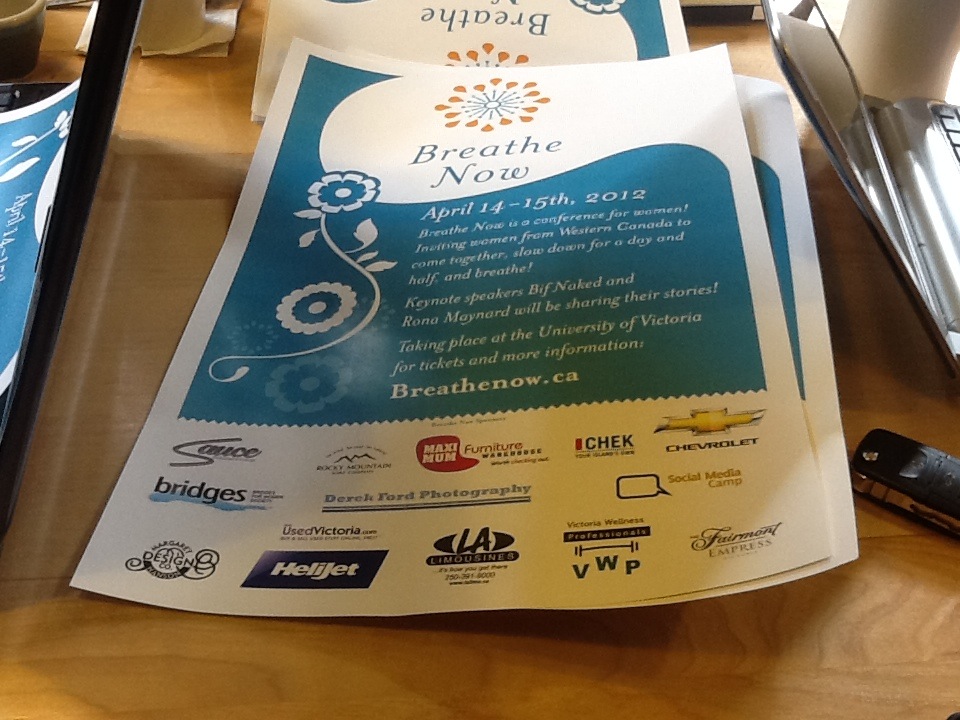
I need to read Sandberg’s book. And, yes, I know that she’s Harvard educated and part of the elite. I know that she’s wealthy–Google, then moved to Facebook as their Chief Operating Officer. But, from perusing different bios and videos, I can see that there is lots to gain from Lean In. And, I also know that we can be are worst enemies in our work lives, as well as our personal lives. Self-doubt, not negotiating, and making poor decisions hurts us all, but women more so at work. I am not an acolyte with rose-colored glasses. I think my main point is that I know how to Lean In and the Breathe Now is yet another example—a conference that I co-planned. Many of us have been networking, strategizing, and organizing. We know this work well. But, I’ll speak more to Sandberg’s book and movement after I read the book and pore through more of the blog.

496