
Love it!
Home » Uncategorized (Page 4)
Category Archives: Uncategorized
Bananas
I love playing Bananagrams. I am not a big board game person, but I have a slight obsession with Bananagrams. I will play with my kids, but I prefer to quietly play the game by myself and time my game. I will scramble the letters and play with the same set and try to make different words. I might play for five or thirty minutes, but this quiet time is important for me to recalibrate and focus on one task.
I guess what I am saying here is that Bananagrams is a good way for me to unwind.
2014: Retrospect
I am thinking about the last year and I have more than a few takeaways; however, I want to focus on five. This year was filled with many highlights and I do not want to do the brag or the humble brag.
What was important to me:
1. My family. My family keeps me grounded. I love the texts from different family members: leave work. Where are you? Are you picking me up? This array keeps me focused while I am work and then focused on my time with them. They are also great at reminding me that I need to unplug.
2. Good health for me and my family. No need to explain more here.
3. Learning. This includes my own learning and others around me. I love teaching and each time I walk into the classroom I think about how lucky I am to get paid to think, read, grade, and write for a living.
4. Leadership. Here I am referring to my own leadership on campus, but also the crucial people who I am learning from thanks to their leadership and mentorship.
5. Listening. Listening is such an important skill to have and when I was an undergrad advisor a major part of that job was listening (and helping) students in my office. Leading a service unit on campus means that I must listen lots to the team and those around me.
I look forward to what the next school term holds. I know that my family will remind me to unplug and that I will continue to learn from those around me.

Thanksgiving 2014
It is Thanksgiving weekend in Canada and I am sitting here thinking about the things that I am thankful for with this new school year. In the spirit of brevity I will number.
1. I am thankful for my mostly good health.
2. I am thankful for my sweetheart’s good health.
3. I am thankful for my wonderful family–both made and born. Not a day goes by that I do not think of all my family in California.
4. I am thankful to have such wonderful friends near and far. I know that I can text or email this inner circle and hear from them quickly. Thank you.
5. I am thankful for my job as a professor. As I have noted before, I have the great fortune to mentor young people.
6. I am thankful for my admin gig. I get to help other faculty, staff, and students and enhance their learning environment.
7. I am thankful for my peer mentors. You know who you are. Thank you.
8. I am thankful for my students. I enjoy interacting with them in the classroom, office hours, and the mentoring moments.
I have lots more to say, but I think this is a great start for Canadian Thanksgiving. Smiling. The photo below is from UVIC Communications, Photo Services.

Blog Her, Blog Her
I am going to a conference for professional development this week. You might have heard of the conference–BlogHer. This year marks its 10th conference. You have to figure that some 11-12 years ago the group of women founders looked around the Silicon Valley and realized that they were doing something unique and needed to network with other women. Voila–BlogHer was born.
Now, BlogHer is a tween and is going strong based on the various other conferences, website, and more. I am happy to attend this year’s conference in my home state, California. And, I am looking forward to learning more and making connections. Lifts coffee cup–to BlogHer.

Revisiting Course Experience Evaluations
During the term faculty are required to distribute university approved evaluation forms for students to fill out and these instruments field a wide array of responses. The campus where I work is moving to online evaluations and the reaction is mixed. Regarding student evaluation I have heard lots and have blogged about the evaluation process, but these are the most common responses that I have heard recently.
They are not qualified to judge me
It’s a popularity contest more than anything else
I don’t read them
They’re useful
I read them
I bury them
I learn from them
I don’t like them
The comments will turn into a RMPish experiment
I do not want to engage in the online versus paper evaluations for this post. Much of academic life is filled with judgment. We get assessed by our peers, by our department, reviewers of scholarly presses, others up the academic food chain, and by the government and public if you are at a public institution. Frankly, everyone is always weighing in about higher education.
We judge and assess student work, yet somehow we are uncomfortable with this singular act of student assessment of our course or courses. Why? Well, that is cause for a long post. Let me speak to how I have changed my feelings about them. I think that the official university evaluations are a mixed-bag. They provide feedback. Some of the feedback is useful and other feedback is interesting and at times not helpful. I am sure we have all had this experience with a peer review:
Reviewer 1 provides good feedback and you know that they read your chapter or article. Reviewer 2 has skimmed it and refers to some work that you cited, but the reviewer did not bother to notice this. Reviewer 3 did not read your work and really dislikes the topic and offers nothing that is useful beyond you wishing evil upon this person. . Reviewer 4 refers to his or her work and how this article offers nothing new, but there are a few helpful comments.
Student evaluations can work like this, too. However, the rub is that our departments use these evaluations to measure teaching effectiveness or prowess and at times the numbers and comments do not paint an accurate picture or maybe they do?! Perhaps your students really like you and like your courses and the evaluations offer this assessment. But, maybe your students dislike you or the material and the evaluations convey this. And, that is the problem. We need to assess the larger picture and the evaluations offer one part. This is why peer evaluation is also important. But, do not stop there. If your campus has a learning and teaching center, visit it. Take some workshops and avail yourself of the various opportunities and make sure that you add these workshops to your vitae in the appropriate area.
Teaching requires work and preparation and we have a tough audience. Our students are bombarded with distractions and if they are not interested in the topic I feel like I have to catch them. But, alas, no matter what I do, I will not catch all of them.
What does this mean for student evaluations, then? They are necessary. But, faculty can respond by reviewing them and reflecting. Do you need to mix things up? Is it time to have a trusted colleague do a peer review of your syllabus and lecture? Departments also have to invest in faculty and offer opportunities for professional development and insist that faculty work on their teaching dossier. I am biased here as teaching track faculty, but am resolute in my opinion that teaching takes work. I include a photo of Stress Paul, a rubber stress ball.

New Educational Technology + Old Pedagogy = No Significant Difference
Rich, great points!
Students with an Edge
In my sixteen years of teaching, not one term has gone by when I do not have at least one student athlete in one of my classes. One thing that I have noticed with the vast majority of the student athletes is that they have drive. These students usually want to excel on the class. Their competitive edge extends into the classroom. They know that their coaches and education team (whoever this may be at the respective institution) expects them to show up to class and to practice. Most of these students will introduce themselves to me during the first week or two and my standard practice is to ask that their contact send me any invitational or team related travel dates. While I have taught at four different institutions none have been at a major sports school–no top ten football programs, which is often a marker for a “big name” institution. I have taught at Division 1 institutions; however, this was at the start of my teaching career.
I truly wish that more of my students had this same drive and felt accountable to their coach or team. This does not mean that my students who are not athletes are slackers! Not true. The typical student wants to do well, but knows that among their array of courses some get more effort. The student athletes are generally more competitive and want to do well in all of their courses, so it is not a big surprise to see at the annual fundraising breakfast that many of them have strong grade point averages. Can I just spend a quick moment to say that I am proud of them. Very proud. And, I know that my colleagues are, too.
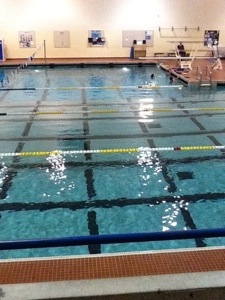
It is less common for one of the student athletes to phone it in with their coursework. When I have had a student athlete under-perform, the student has immediately contacted me via email, come to office hours, or in one instance the basketball coach called me to meet with him. When I met with the coach, he made no excuses for the student and said, “His first job is being a student. Do not go easy on him.” I wasn’t going to, but let me tell you that walking into the office was an intimidating experience. I felt empowered and I know that many of my colleagues will counter with examples of grade changes or pressure by the administration to change grades; however, this is not my experience. Getting back to the students–when they under-perform they want to know what they can do to fix it. Thankfully, the student athlete under-performing in my classes is not very common. They are competitive through and through and want to do well. I do not give them any extra credit or leeway. What I want to see is more students with that fire in their belly. Be competitive and humble. The photo below is one I took at the McKinnon Pool–one of the pools where the student athletes swim.
Make Sure that Your Girls Aren’t Too Ambitious
One of my students shared the Cosmo Special Report in the October 2013 issue. I photo copied the article, read it, and have carried it around for two months. I wanted to blog about it immediately, but alas, grading and other work related responsibilities got in the way of a response. Here I am just weeks before a new year begins and I am finally ready to comment on the nine page article, “The Ambition Gap” by Lorie Gottlieb. The Cole’s Notes version is that single women are more ambitious and successful than their male cohort and consequently are having a hard time finding an equal. It is more complicated than this, but this article speaks to the supposed crisis of heterosexual masculinity (see Michael Atkinson for an informed position), women’s success, and the alleged post-feminist era. Yes, the article assumes that the coupling is between a heterosexual couple.
The first point that I want to make is that we are not in a post-feminist era. We are not in a feminist era. We are in an era that extols the importance of equality, but we wring our hands when we talk about the reality of who is successful, who sits at the table, and who are the high earners. Now, clearly, happiness and ambition are not mutually exclusive. What Gottleib is getting at, though, is that men are “losing their drive” (144). She recounts story after story of the young, single, successful woman who is more successful than their male partners or former partners. Thanks to the success of Liberal feminisms, we see more women working, buying homes, and in managerial positions (Gottleib 145). However, I want to ask: which women? Surely, we need to disaggregate and examine these numbers. Lots of statistics in the US and Canada illustrate that more single headed households are women headed households. We are also quite familiar with the fact that men, on average, make more money than women. And, when we look at upper management, board of directors, and chief executive officers the picture becomes more homogenous–male and white.
On page 147, Gottlieb has a column dedicated to “Watch Out for These Red Flags.” And, what are they?
1. He has no plan 2. He doesn’t communicate 3. He’s envious of your success 4. He takes advantage 5. He’s resistant to change
I am no dating expert; however, I think that these are red flags for most in their 20s and older and not so much about an ambition gap. Gottleib offers a shallow examination, but at the same time does not ask more important questions regarding race, class, sexual orientation, education, and types of career. Women might earn 60% of the undergraduate and graduate degrees (148), but she does not break this down enough for me. Why do I care? My experience as a university professor and one who has continued to look at women, politics, leadership, and higher education, I know that women tend to gravitate to certain fields of study that do not translate into higher earning jobs. We see women over-represented in Education, Humanities, and Social Work and under-represented in Engineering, Sciences, and Computer Sciences. This, then, influences the earning power for women.
What do I like about the article? Well, it was provocative and I read it closely several times. I also appreciated her column about “How You Can Bridge the Gap.” She pulls from Sheryl Sandberg’s Lean In (my thoughts on the Lean In movement).
She offers some points of advice: 1. Prescreen 2. Establish boundaries 3. Accept trade-offs 4. Give him a nudge
This advice is timeless and part of having a healthy partnership for heterosexual or same-sex couples. What do we do? Encourage people to think about what they want and how they want to pursue their dreams. Encourage girls to go into the STEM fields and work on the leaky pipeline for women and work. I am also concerned with this notion that women are too ambitious. There are parts of the article that equate being single with too much work success. This message is problematic.
Make a Difference
I bought a writing prompt book and I do not use it as much as I would like to do so. This post is a response to, “Believe with all your heart that how you live your life makes a difference” by Colin Beavan. This quote made me think about work and university life in general. I use the quotes as a writing response and try to put pen to paper (yes, I hand write them out first) my first thoughts to the particular quote. Here are my first thoughts about Beavan’s quote.
Some people like to think of the university as this quaint place where professors reside in Ivory Towers or perhaps silos and are completely shut off from the rest of society. In fact, some opine that professors are clueless about the so-called real world. We professors are at times depicted as this uber-privileged class who are disinterested in students and teaching. Our students are often depicted as this group of youth who are hiding out in university learning about books or issues that will not help them get a job. Yes, that coveted job is the end result or want for our students. These depictions might offer an accurate view of some of my colleagues and some students; however, I would argue that for most these stereotypes or caricatures are false based on 16 years of teaching in universities in the US and Canada. Yes, this is my opinion.
The reality could not be further from the truth. Many professors are engaged in a myriad of work related projects that stem from research, teaching, service, governance in their units or across campus, as well as some community building in their disciplines or the wider community in which they live in locally. Sure, there are research intensive colleagues who are focused on that next book and their army of graduate students that they supervise. The university needs these different types of professors. This post is not about the army of exploited contingent faculty, as that deserves a monograph or at least its own post. It speaks volumes that I have this footnote or sidebar note in my scrawl on the writing prompt sheet.
Many do not understand that prior to smart-phones and other advances with digital technology, professors’ flexible schedules means that there is always work to do. There are always assignments that require marking, emails to get to, research to do, writing to think about and maybe do, and then more emails to respond to from students, colleagues, and others. With the advent of increased use of technology, people expect to hear back faster and in many instances you will get follow up emails about an email that was sent 15 minutes earlier or perhaps a few hours earlier. I have been emailed three times within my lunch hour by an administrative assistant about a meeting. The meeting was not a life threatening situation; however, my lunch hour meant that I was available. I did not respond until I was done with my lunch and my errand across campus. But, let me say that I was not keen to see a flurry of emails about something that was not pressing. My point is that boundaries are thin. Perhaps you think that I have moved away from the quote. But, I’m sitting here thinking about work and how I try to live my work life as if it makes a difference to those around me: my students. Do not get me wrong, I like my colleagues across campus, but my primary role right now is teaching and mentoring. This means that I need to go in each day and remember this quote. The little things that we do can make a difference.

 Dr. Janni Aragon