Participation Ribbons: Show Up

At some point in the last decade or two participation ribbons became common at sports events. I have mixed feelings about this. While I understand the need to make every kid feel good about her or his participation in a cross country meet, there is another part of me that cringes with this practice. My mixed feelings stems from not wanting my kids to think that they have to win to be their best. Perhaps this is why they both like competitive swimming? While they swim against others, ultimately they are trying to lower their swim times and it becomes self-focused. 

I know that when I watch competitve sports events I am the one in our household who always comments that it is an honor for the athletes to compete. And, I think it is. Participation ribbons, though, have another part to them. Things get more complicated when I am in the classroom. Somehow this culture of rewarding people for showing up has bled into school work. There is this equation in some students’ minds: effort = A. And, this equation is a problem. 

Yes, it is important to participate. You need to show up to class. However, that is only one part of it. There are terabytes worth of research about the correlation between student attendance and success. Part of it is that students who attend class are more likely to be prepared and feel accountable, but the other part of it is that this same group is also likely to hear annoucements, do the reading, and possibly attend office hours for clarification about assignments. My issue is that I often have to explain to a student that their gauge for effort will vary, and that some students can whip an assignment together fast and do well and others will not. 

I do not believe in participation ribbons in the classroom. A solid blog post, research design, paper or vlog is going to take some effort, and merely doing the assignment is not enough. A stronger assignment is going to have to make me pause. The pause is one of excitement–this is great work. However, most of the students will do good to fair work and this is in the B to C range. And, nothing is wrong with this. What is the saying, “Bs and Cs earn degrees.” It’s true, but the learning experience is more than grades. A new term is right around the corner for our college students. My advice: show up. I hope that your instructors entice you to learn, think, and try. You do not have to do your best, but note that you’ll benefit based on the effort you put into the class. The benefits, though, are more tangible than a grade, and you might end up taking away more than the the ability to write better and think critically. You might be moved to change your major or take more classes with that instructor.
  

Networking at Work

I am an administrator with teaching responsibilites, and at the same time I am a unionized faculty member. This role gives me the opportunity to lead a service department, and continue to teach and mentor. The department I run held our annual retreat this year and a colleague from Human Resources facilitated the event. Based on the response at the retreat and the ensuing days, I feel comfortable stating that it was a success. We did some team building and got to know one another better and this was fun. The manager and I also had a chance to speak to what is next and what our roles are in the unit. I am glad that I have taken the time to get out of my home department, Political Science, and know people throughout campus. 

Almost monthly I meet with my Human Resources consultant to chat about the unit, my team, and other issues as needed. These meetings provide me leadership coaching and human resources training. I have my advanced degrees, but none of them are in managing people or campus wide projects. The Human Resources team have been crucial to my leadership success. And, thinking back to the last year, establishing good, work relationships with others across campus has also served me well. Of course, it is not about me, but here I am thinking about the importance of face to face meetings and casual coffees to chat with people who I work with or need to work with on projects. I also have monthly meetings with others across campus, who I regularly work with and these meetings are coffees where we update one another about our projects. 

People always use the metaphor of silos for university campuses and it fits. Most tend to stick to their building or their side of campus. A new school year is upon on and I encourage academics and alt-academic types to venture out of their usual haunts on campus. Make a coffee date with a colleague who you have always wanted to collaborate with or who you know also teaches large first year courses. My point is to network with others who you might normally not take the time to get to know. 

This suggestion includes staff. It is my experience that academics tend to spend time with other academics. The campus is filled with people. Get to know others across campus in different roles. Before you know it, you have established more meaningful relationships around your campus. I realize that networking turns some people off, so think about expaning your circle at work. The photo below is one that I took at a conference where academics were the minority, but the goal was to move major projects across campus in a collaborative manner. It was a great exercise to see the numbers of staff involved in raising funds and planning for a new building or thinking about active learning environments for students. 


Post for My Students: Looking For Work

I have some points of advice for my current and former students looking for work. I was counting back and realize that I have sat on more than 3 dozen hiring committees in the last 15 years. In that time I have reviewed cover letters, resumes, CVs, and sat in on the interviews. I have also served as a job reference for countless people, and am a MBA Leadership Coach.

1. Proofread your resume or CV

2. Have someone else review your resume or CV. Chances are you are forgetting something about some of your skills or have missed an error with formatting or a typo.

3. Prepare for your interview. Find out information about the employer and the position that you have applied for. You can Google common interview questions and practice formulating your answers.

4. Send an email thank you to the interviewer after the interview. Be concise: thank you for the opportunity, I look forward to hearing from you.

5. If you do not get the job, it is acceptable to contact the interviewer and ask if they can offer feedback. They may respond with some, but do not expect that they will.

6. When you are in the interview, never speak ill of your current employer or any past employers.

7. Do not under any circumstance lie or inflate on your resume.

8. Be prepared for your interview and gracious to the interviewer or interview panel.

9. Be on time to your interview.

10. Dress appropriately for your interview. It is better that you are a bit overdressed, then not dressed up enough.

11. Try to relax and think positively before your interview. You do not want to be that candidate who was extremely nervous and could not answer questions.

12. Review your digital footprint. Update your LinkedIn account and make sure that you have your LinkedIn account information on your resume. 

Do not burn a bridge. If somehow you are not happy with the process, never send an email or make a phone call when frustrated. 

Overall, good luck with your job search! The Spring is busy with students looking for jobs, co-ops, and volunteer opportunities.

Finish the Term Strong: Redux

This post is all about suggestions for student success. As a former Undergraduate Advisor and an instructor, I am supportive of student success. I have one more week in the term and due date are looming, but I realize that many of my colleagues have one to two more months left. This post will speak to some suggestions for how students can finish the term strong

1. Go to class

2. Read the syllabus

3. Go to office hours

4. Review points one through three

Seriously, I am not kidding about the above as they are extremely important to student success. As I told a group of librarians today, I might as well say that the sky is blue; however, it is key to emphasize the obvious. There are moment when we need reminding about what is the obvious Beyond the absolute obvious, I also suggest that during the last part of the term that students manage their time well. Now is the time to focus on ending on a high note. It is to easy to finish with the best that you can do in that moment, but that will not make you stand out above the others. I encourage you to become a hermit during the last week or two as you write your papers.

What else can you do? You can visit your Writing Center and then ask if your professor is willing to chat about your draft or to review your draft. Please note that most professors will not copy-edit your draft. Please remember that your professor may have 30-400 students that term, so don’t be too hard on your professor if they are only willing to chat about your paper. If you have a Teaching Assistant, by all means go to her or his office hours. Own your education. Take charge and act like you care. Acting like you care about your education and success really does count for something.

My last words of guidance are about reading the assignments and following directions. I am always surprised and frustrated by the number of students who do not read the syllabus and think that this is not important. A student approached me recently saying, “This is a 12 point font.” I responded, “Yes, it is but it is not Times New Roman 12 and is a huge font. Please review my syllabus.” Following directions is the first part of an assignment and reflect attention to detail. Good luck with the last few weeks and your papers and final!

Graduation is a mere two months away and I can’t wait to sit on the stage and witness this momentous event. Until then, I send positive energy to my students as they wind down. Finish the term well!


20140329-221218.jpg

Reactions to Working

As a parent you learn lots from your kids, and I had one of those moments a few days ago. My teenage daughter is in her second year of working. We were are on our way to an event and she noted that she was not looking forward to seeing some people. Why? Apparently the fact that she is working, is an issue to some of her friends and other parents. The reactions vary from not understanding why she would bother to work, why she chooses to work, how could her parents allow her to work, and curiosity and support for her work. Unfortunately, the last response is less common.

I was surprised. We chatted about the ways that she responds to these comments and I dropped her off at the event. I drove away thinking about how I started working the day that I turned 16 and how I have not stopped. Is it really odd that she’s working? Nope. I was chatting with our family doctor and his daughter is the same age and is also working. And, I have chatted with other parents who have kids in high school and their kids are working, too. When I have chatted with other parents we talk about how our kids are learning life skills–dealing with people, coaching younger kids, organizing workouts, and getting familiar with work and life balance.

When I was walking around campus the yesterday I was thinking about this conversation with my daughter and I also thought about the countless office hours that I have had with students who have an empty or virtually empty resume. Yes, I am relating this moment that I had with my daughter to my work as a mentor and college instructor. I think it is important that young people are giving ample opportunity to work and develop their resumes. Work opportunities provides a chance to mature, learn time management, and make money. I also think that working offers you a chance for maturity and resiliency.

IMG_3506-0.JPG

Mentoring

I am rounding out my two months of Spring Undergrad Advising for the department and thinking about how I help my students. I’ll place these thoughts in bullet form.

  • I want to help them find out how they are doing with the course of their studies
  • I enjoy giving them good advice
  • I offer them advice about their course choices
  • I inform them of any resources we have on campus that they might find useful
  • And, the most important thing–is that I listen

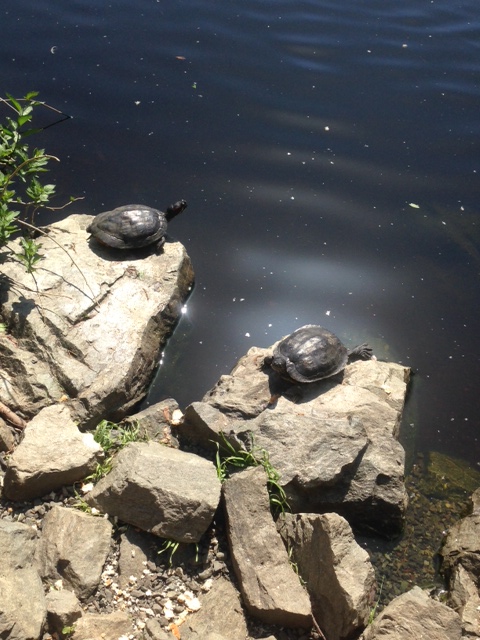
I do prefer to advise face to face; however, more of my advising and mentoring is taking place online via email and on different platforms. For students enrolled where I teach, I can do some of the fact finding via email, but there are moments when a face to face is needed and I point this out and then it is up to them. The photo below is of turtles sunning at Cedar Hill Golf Course trail.


sunturtles

Sustaining You

Who makes you feel safe? Friends and others who know you are safe or some might say: home. When I think of people I trust and respect, this networks of friends, family, and inner circle at work are supportive, good listeners, and are honest with their advice. I do not want a nodding head and mere agreement. I want someone to listen and then comment–especially if we disagree or if the friend has something to add. Again, a big part of this is listening. Try to stay away from emotional vampires who just take, take, and take. These people are exhausting to engage with on an ongoing basis. I find that I am controlling my time more and putting more distance with the emo vamps, as those conversations are usually not two-way conversations.

Affirm the good relationships and spend time with the people who add to your day. Remind your network that they are important collaborators, friends, and people in your life. These people challenge you to be a better person and they deserve reminders that they are important. This makes me think of places where I feel at home or safe. I’m thinking of the places or things that add to my day. The smell of coffee definitely makes me smile, and then the taste, well. I love coffee. 

When I think of where I feel safe or comfortable, I often think of the classroom. As a natural extrovert, teaching feels like home. I am not referring to talking at my students, but rather leading, facilitating, and listening to them. I want the classroom to embody a place where we can discuss, challenge, disagree, and grow. Do not assume that I mean that I expect the classroom to not be a place of contentious conversation–it is. But, when I walk into a classroom to teach or to give a presentation, I feel like I am at home or in a good place that I am comfortable.

What caused this stream of thought? This quote from George Eliot, “Oh, the comfort. The inexpressible comfort of feeling safe with a person. Having neither to weigh thoughts nor measure words. But pouring them all out. Just as they are, chaff and grain together, certain that a faithful hand will take and sift them, keep what is worth keeping, and with a breath of kindness blow the rest away.”  Keep and nurture. Blow the rest away.

cloudsinmycoffee


Mentoring Graduate Students

I am assessing the last year and thinking about my mentoring of my Teaching Assistants (TAs) and Research Assistants (RAs). While I need them to grade and facilitate the tutorials, the other thing that I want them to do is learn. I am a firm believer in giving them ample opportunity to learn and lead. And, a major part of this is trying to get them used to project management and working with people. Another key thing is to help them have better work life balance. It is easy to get caught up in the “flexibility” of our academic jobs and to work all of the darn time.

One thing that I set up with my TAs is that any email sent on Friday at 5pm through Sunday is considered a Monday morning email. They are not on call to me and I want to have productive boundaries with them. I also set up with them the guidelines for responding to emails from me Monday through Friday and from my students. I think it is important to offer clear guidelines for working with me.

It was hard to let go and give more freedom for how they lead tutorials, but somehow this is easier for me. I have to trust them and that they will learn what works for the group of students in the tutorial. The art of letting go is important to offering the TAs a chance to get comfortable leading discussions and learning how to work with a supervisor. What have I learned? Some of my TAs are dedicated and others have different skill sets that will serve them well elsewhere.

My most successful TAs and RAs are the ones who take direction well, are organized, and think ahead about the course material or the project. These graduate students are generally more receptive to feedback and have a willingness to learn and do more. These particular graduate students take pride in the work and do not act like the job is funding—they treat the work, like a job. I am thankful for them.

Learning Commons at UVIC

Students will be hard pressed to complain that no one is helpful at UVIC. Between faculty, TAs, the workshops at the Counseling Centre and the Learning Commons they have help at their finger tips. OK. Maybe at their toes, as they will have to walk to these offices. I walked around the library this morning and was really excited with the Learning Commons. So, excited that I made a 90 second video on my iPhone just on the fly. Here is the link: http://tinyurl.com/26lvel7 

And, this does not include the International Commons! Don’t forget that near all of this are the desks for the Help Desk (satellite) and Reference Desk. The Library is the place to be to get help, study, research or grab a latte in the Biblio Cafe. Seriously, get into the Library. This is an old post of mine, but too good to not add to and share that there are even more resources dedicated to student learning. What are you waiting for?


Those TPS reports won’t write themselves. 

darth vader dark side

2013 The Year of Reflection

I’m reading lots of top ten posts about 2013 and thinking about the last year. The last year was consumed with having to find balance. This was not having some idealistic want for balance, but rather out of necessity. What have I learned in these last 12 months? Well, I’m going to share my top ten thoughts from 2013.

1. Stay Healthy–this includes exercise, sleep, and eating right

2. Say no strategically

3. Work smarter–this meant rethinking my productivity

4. Make time for family and friends

5. Say yes strategically

6. Read, relax, and run

7. Be firm

8. Honesty is important

9. Unwind

10. Happiness is more important than just about everything

The list is in no particular order. I will say this there is nothing like a health emergency to force you to rethink everything. I am forever grateful to the family and friends who were supportive during the last year, as we coped. I am looking forward to 2014. I am sure it will hold lots and I look forward to tackling it with my family by me.

20131230-055223.jpg