To Take Roll or Not

After 19 years of teaching, I decided to not include a participation and attendance mark. I did have people sign in to assess attendance unofficially. But, what I really wanted to see is if not having participation marks made a difference. Oh, it did. And, the biggest proof is in the marks. I have taught my Gender and Politics course numerous times during my academic career at four universities and I can confidently say that there was a noticeable change in the students’ attendance and their assignments.

  1. Attendance was mediocre at best. And, by not attending announcements were not heard regarding assignments. My syllabus is lengthy, but I speak to each assignment in more depth during a class meeting.
  2. My office hours were not as busy as usual. While some might think that this is a good thing–it’s not. Office hours are important. This is when many students will get the check in to make sure that they are on the right track or the chance to chat about their assignments.
  3. Overall, the marks were the lowest that I have ever seen. Now, they were not terrible, but 3-5 points lower than usual.

My takeaway is that by not having a participation and attendance mark some students do not feel the pressure to come to class, to show up. I’m teaching in the again and I’m going to have a participation and attendance mark. My students benefit from it. I’m going to ask them to show up!

IMG_4699

Kindness in 2017

Be kind to yourself. Make this your mantra for 2017 and beyond. This is not my suggestion for a resolution, but perhaps a suggestion for thinking about the importance of self-care every darn day. Do not give into the need to prove you are worthy. You are. You are enough. Do not think that you need to list or proclaim how busy you are. We are all busy. You are important. We know this. Be kind to yourself and in turn to others around you. Kindness and compassion begins with you. A new term begins for me and my students. Don’t forget kindness.

In 2017, treat yourself well. Take moments to balance yourself so that you can function. Remember that you are happier and more centered when you have a positive outlook about your life and the way that you treat those you encounter. Kindness is contagious and is not just about you. We can be our own worst enemy. Be a friend. Don Marquis noted, “The chief obstacle to the progress of the human race is the human race.” Do not be an obstacle to your own happiness and success. Be an asset. This short post is not filled with platitudes. No, it is a reminder about the importance of kindness. Think about what you want. Happy New Year! Think about your super power for the year! I am sure flying would be great or being invisible would be awesome to awkward, but I want a super power that helps me and others. Kindness will work. Compassion will work. Empathy will work. OK, those are superpowers.

20131230-213017.jpg

Prepping for the New Term

feminist thor

I am currently prepping for the new term. I am teaching Technology and Society 400: Technologies of the Future. I’m doing something different this term, and working closely with colleagues at two local public institutions. I’ll be more specific in another post. Essentially, the students in the class will get opportunities to assist with efforts to digitize artifacts.

The students will also work in groups. Now, this is likely the most difficult thing, as some students work well with others. I find that schedules and priorities will influence the students’ abilities to work together. I am prepared with a second option for their work. I usually have two choices for research papers or major projects. And, this course is no different. If students are unwilling to choose the experiential learning opportunity, they can opt to write a research paper.

This syllabus is taking me more time. I’ve changed the course enough and added two new books. It feels like a new course. I’ll blog more about this course.


That Awkward Moment: When Your Prof is Rude to You

my prof is

I have taken a few online courses during the last five to six years. I support life-long learning and it’s good for me to be a student after nearly 20 years of teaching. I was recently enrolled in one course and I dropped it. It’s too bad, too.

Why did I drop the course? Well, after four negative experiences with the instructor, I spoke up and said, “I do not appreciate your passive aggressive emails to me.” I also contacted the department to complain about the way that I was treated. I cannot remember the last time I was treated this poorly by one of my professors. Actually, I can, but that particular professor was rude to everyone and some found it charming. I did not. I did not take any additional courses with her and I promised that I would not repeat that behavior.

As a professor, I have had to ask a student to leave my office and go to the chair with the comment/complaint. I have also told a student that a boundary has been crossed with a rude email to me. However, I try my best to treat my students with respect and hope for the same. I have had to walk away from a student and say, “We are done.” And, this has only been when the student stepped into my physical space and I knew that the best thing was to end the conversation.

Overall, I am glad that I dropped the course. I am also quite appreciative that I heard back from the department. I had a good conversation and I was clear that I will not take another course with that instructor. Remember–treat people the way that you want to be treated. And, if you have the urge to be rude, don’t. It takes energy to be mean or rude, and it is far easier to be pleasant and professional. Thanks for reading!

Teaching as Mentoring


prof a

Last week I blogged about Lessons Learned, when a class does not go well. This post picks up where I left off, but focuses on my best teaching experience to date. I love teaching. I view it as a form of mentoring and learning that works both ways. I learn from my students, and I have ample opportunity to work with them as they read and engage with the course materials, their peers, and me. Mentoring is important to me and this class offered lots of mentoring moments.

Last Fall I taught a new course for the Technology and Society Program, Digital Skills for Your Career and the course was amazing. I need to clarify, I co-taught with an awesome person and she helped make it successful. The students were also open to the material and learning. We also had colleagues from Career and Co-op  lecture about planning for your career trajectory, resume tips, and LinkedIn tips. The thing is that we had lots of exercises and group work for the class.

The students started off with putting together an About.me page, where they could think about who they are and what they’d like to share. The course was also meant to have them think about being in control over their digital footprints. They also had to populate a LinkedIn profile well, blog, and then give a presentation about themselves and something that they’re interested in as their final project. There was also group work during class sessions.

We had a wide array of guest speakers from government, media, technology, non-profit, entrepreneurs, and other educators. Everything fit in well and our office hours were quite busy with the students. The student feedback unofficially and officially (student evaluations) was extremely positive. What worked well is that we allowed them to be vulnerable. We talked about vulnerability and we saw that thinking and planning was frightening, and they needed a space to do this. We graded them on their writing, depth of analysis, and public speaking. Overall, the course was awesome. Several of the students shared that they were recruited via their LinkedIn profile, and others used the class to think about what was next for them.

I am teaching the course again, and by myself this time. We are going to read Tom Rath’s Strength Finders and Sheryl Sandberg’s Leaning in For Graduates. I also have lots of articles about using social or digital tools wisely. Overall, I am looking forward to the class, and I hope that this next cohort of students are as excited as I am.

Lessons Learned

microsoft women.JPG

I have had two outlier terms in my teaching career. And, one was in the last year. When things work well, you feel like every damn thing is in order, and you want to pinch yourself. In a similar way, when things begin to go wrong you want to stop and fix them, but they continue to slip out of your reach, it feels like a train wreck. Well, I had a term like this and I’m looking back, so that I can look forward.

I used some new materials, had some strong personalities, and did my best. Well, things did not go as planned, and I need to do a few things. I need to own it. I need to move on. But, right now I am reviewing things. What could I have done to make things better? I know it was not just the books, the students, and me. There are always more factors at play when a class is mediocre. I pride myself on how much I enjoy teaching, as I view it as a form of mentoring and I find teaching fulfilling. And, when things go offside, I feel responsible.

I chose a few new books in order to push my class to read about debates in the field. If I could go back, I would have chosen one new book. The material was provocative enough to cause uncomfortable feelings, debate, and a good measure of animosity between the students, and some directed at me. It is far easier to teach the usual suspects. So, there is a part of me that stubbornly thinks that I would not change the books. I did explain that the material would push the students and that they should feel uncomfortable, but it was not enough. From the papers, I could read that a handful of the students did not like the book or both books. Now, whether or not I had a deep reflection about the content is a different story, but I did hear about the materials vocally. “I want a different book suggestion, since I cannot relate to this one.” I did not give the student another book option.

Course materials are important and I reviewed several books and was really happy with the overall syllabus and assignment. I can reluctantly admit that I would not teach both new books again. One did not work. I won’t name it, as it will do a few things. It will make the students realize that I am talking about their class, and it’s likely better that they not know which of the courses I am referring to in this post! Well, on their own, both books are intellectually engaging or problematic. I do not want to teach perfect books, as that is too darn easy. What else would I have done differently? I think I would have noted that this course had fewer readings and pages of work due to me, than previous terms. From reviewing the evaluations, it is clear that some of the students thought that I was asking them to do too much work. I was not.

The good news here is that I take each class as a learning experience. While teaching feels like it comes easy to me, it is good to know that I will still have an off term. It is good for me to reflect on the course. And, I am not a rock star every term. I have been fortunate to have so many awesome courses and experiences–this year reminded me to be humble! And, the few unhelpful evaluations say more about the student, than they do about me. Thanks for reading the post. I’d appreciate any feedback you have about awesome or crappy terms. We all have them.

 

Great Book: How to Deal with Difficult People

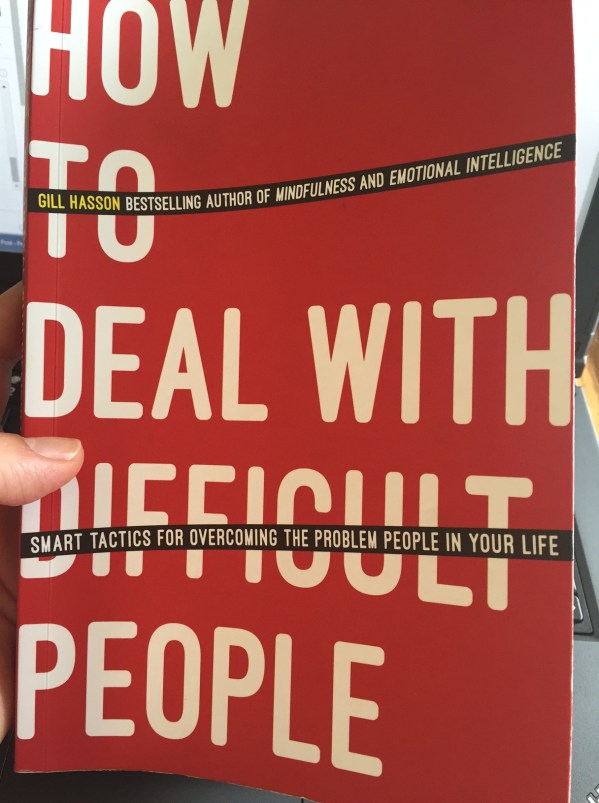
I have found that some books work as great conversation starters. Several months ago I read Gill Hasson’s How to Deal with Difficult People: Smart Tactics for Overcoming the Problem People in Your Life. This book caused more nervous reactions from people in my office than other books. I later moved the book out of eyesight so that people would not nervously asked if I bought the book in preparation for a meeting!

difficult front cover

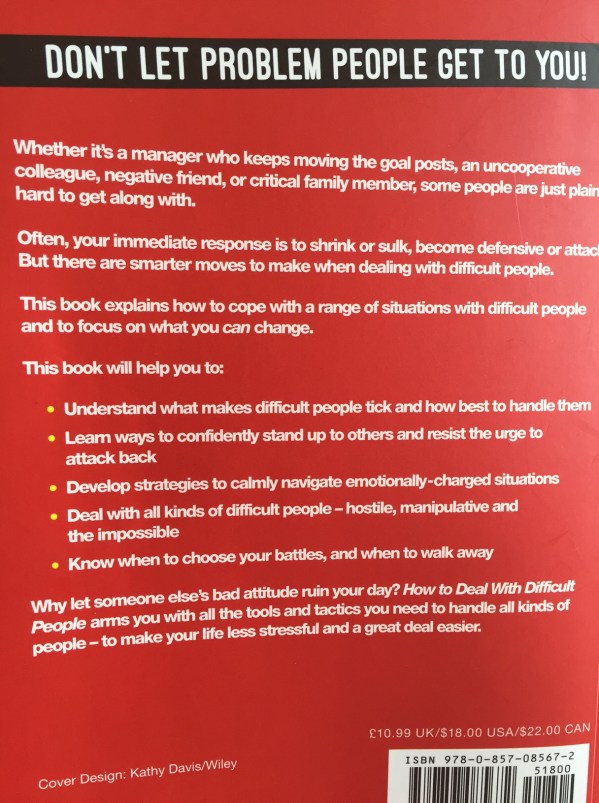
The truth is that I did buy the book to review the array of skills that are needed to work effectively with difficult situations and difficult people. The book is about communication and it’s a great addition to my library. I have also suggested the book to others. I appreciate the back cover, “This book explains how to cope with a range of situations with difficult people and to focus on what you can change.”

The table of contents is clearly divided into three main areas: Dealing with Difficult People, Putting It into Practice, and When All Else Fails. Each section is about communication; however, the sections also provide opportunity for introspection. What can you do better? And, tips for dealing with different types of hostility. We all have dealt with the co-worker who is unwilling to take on work. “Oh, I’d do it, but I just don’t have the capacity to do one more thing.” And, I know that this is typically a way to not share a work task.

The book also gives some great tips. Listening. I am getting better at listening, but this is a real skill. I have ideas and I am bursting with them, but I have to remember to pause. This takes work! Hasson notes that it’s important to be direct and honest, and offers some assertive phrases:

I need you to…

Can you explain?

Can you tell me more?

I think it would be better to discuss this at another time.

There are certain phrases that many of us understand that can escalate a situation. Using “you” instead of I. Starting off a sentence with: I’m not racist/sexist/homophobic, but. With all due respect. These phrases usually contradict what the person is trying to say and can escalate a conversation. The phrases are anything but part of effective communication. The backdrop of the book is that we need to communicate honestly. Never send an email when you’re angry. Pick up the phone or make time to speak face to face.

Hasson also explains that some people are impossible. That’s right–it’s not that they are difficult, but they are impossible and there is no way to compromise or communicate with them. You need to put on your thick skin and plan how you will communicate and feel about the engagement. And, Hasson notes that with the impossible person, you might want to not engage. The impossible person envelopes themselves in drama and relishes pulling you in. Run. Run as fast as you can and stay away from this person. But, if you must engage, try to make it on your terms.

I try to protect my time and will make sure that I have an immediate other appointment after a meeting with a really difficult or impossible person. I have also protected my personal time from people what some refer to as emotional vampires and seem to only need me. This is not real friendship. Gill Hasson’s book is perfect work and your personal life. The book is filled with lots of tips and I will likely offer a post related solely to one chapter. There is a great chapter on bullies, and that chapter deserves its own post. Here is a screen shot of the back cover.

difficult back cover

Energy Focus

It’s that time of the year when you have to reframe requests. I was chatting with some faculty colleagues about student work, and noted that I do not accept late work. The truth is that I do with qualifiers. I have a sentence or two in my syllabi that notes that students need to contact me before an assignment is due if they are deathly ill or an emergency has come up for them. I find it easier to specifically state my expectations. But, I also know that I have to be flexible. Life happens. 

I do not have enough mental energy to stress about late work. I was more rigid about deadlines, and then moved to rolling deadlines. And, an amazing thing happened, the percentage of students with excuses dropped. They knew that the first deadline meant more comments, and the last deadline was not late. This works well for my students. But, overall, my opinion with late work is one with less frustration. In some of my classes there are no rolling deadlines and just the policy–no late work is accepted. 

I have to choose what is my biggest concern. I want my students to be successful in the course. I do not want to hound them. I will not. They need my energies focused in the classroom and office hours. 

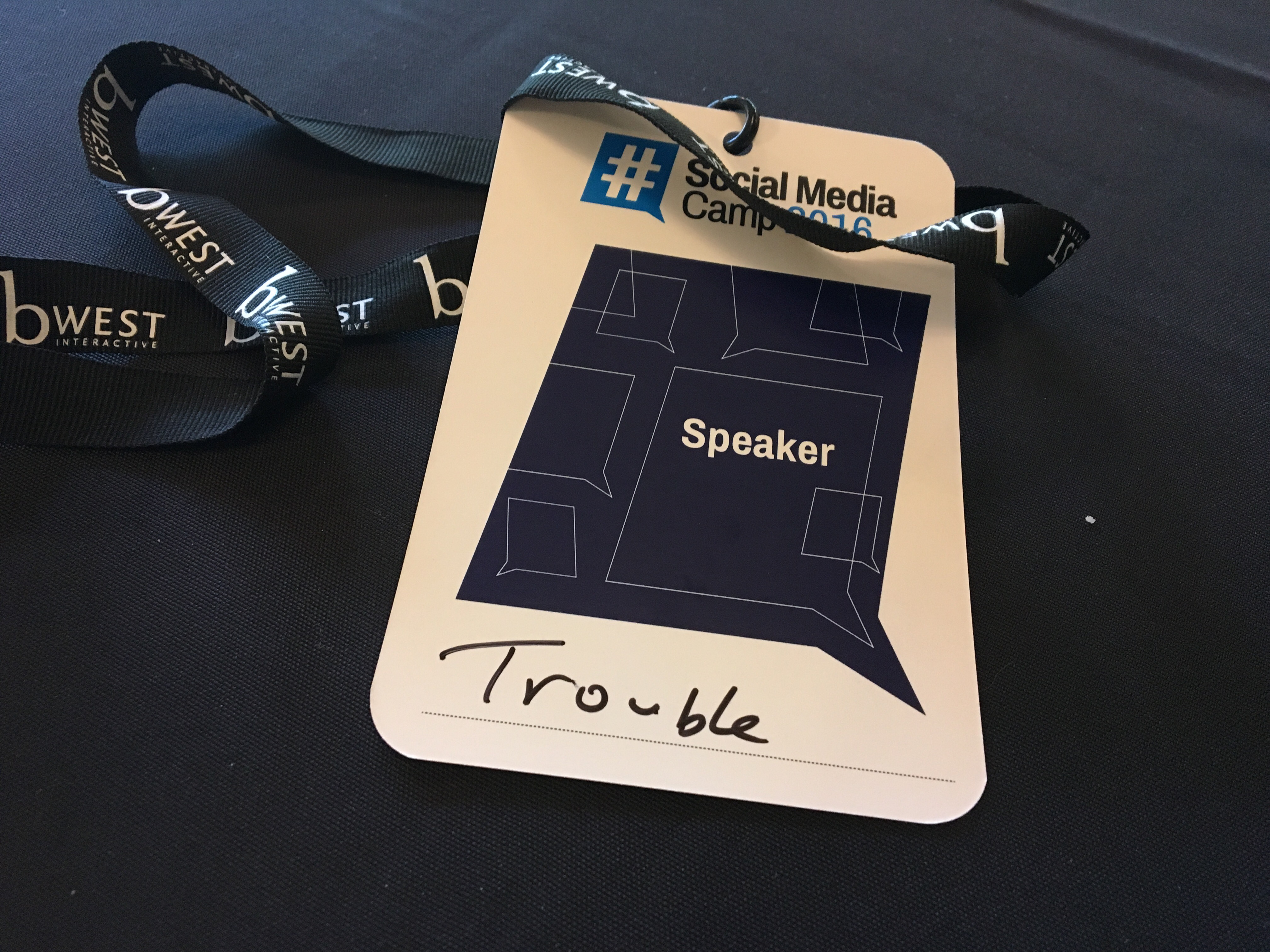
The photo below is the flip side of my Social Media name tag. My name is on the other side, but this side works. 

Why I Run Review Sessions

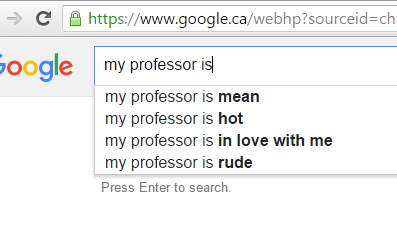
I am revisiting this idea. While I am not teaching a large first year course anymore, this post is relevant. I started this post a few years ago and saved it as a draft. Now, I am finishing it and mindful that it is a good reminder for my teaching and learning. I am an advocate of review sessions and workshops for students. We want students to think about how their professor is helpful. I include a screen grab from a search for “my professor is.”

my prof is

I am co-teaching a first year level course with three other faculty and one of the things that I take on as the professor of record is offering review sessions for the exams and other major assignments. I have taught first year courses for most of my academic career and the review sessions are important to helping my students with their learning. Review sessions or re-visiting “how to be successful” is not pandering to our students. It is an important part of active teaching.

Now that I have started my 19th year of teaching, I have come to realize several things. My students want more guidance about assignments. For an array of reasons, when I first started teaching the typical student would come to office hours or ask a question about an assignment in class. Now a majority of them want me to give them more information about the major assignments during class time. They likely feel that the stakes are higher for them and they want to fully understand my expectations.

I have also found that when we are blogging, uploading to Wikipedia or using any educational technology platforms in the classroom they need more than one workshop session to learn the technology. Some colleagues are surprised to hear this, “but they are the digital generation.” Yes, we can refer to our students as such, but when marks are involved it is a different story. This is not an exhaustive list of what I have learned over the years. I will certainly add to this post, as I ruminate why I am fine with clarifying, review sessions or otherwise digging deeper.


Conferences and Conferencing

This Spring is extremely busy or perhaps more busy. I have been to four conferences in less than two weeks. I have had ample opportunity to re-connect or meet new people at each of the conferences and I have some advice for networking. This is not an exhaustive list.

  1. It’s great to introduce yourself, but make sure that you pause and listen to the people that you’re meeting.
  2. You’ll need to re-charge after the networking, and it’s important that you self-care and have some down time.
  3. Try to follow up with the new connections that you’ve made. This might be via an email or liking/sharing something that they’ve said on a social media platform.
  4. See if you can meet new people! At some conferences, work colleagues will congregate and the conference is the perfect opportunity to build your networks. You can meet new people and introduce them to others, who you know at the conference.
  5. Learn. Go to sessions that you’re interested in and be open to learning about new topics.

Regroup after the conference and think about how you can share what you have learned with your colleagues.