Manager: The Art of Watching & Listening

I know that my official title is Director; however, I do lots of managing. Managing of people, expectations, small to large projects, and managing my performance. Part of managing is not talking, but watching and mindfully listening. My issue is that I have to be present in the office to interact with staff, and some weeks I live meeting to meeting. The way I manage my time is with Outlook and I plan my meetings weeks in advance to carve out time to meet with my staff.

I have given everyone a copy of Thanks for the Feedback. This is for me, and for my staff. I have found that giving my staff tools to communicate with one another and me is is important. We had our annual retreat and what a difference a year makes. This retreat was important to establish the team mission, communicate, and also look forward to what is next for the team.

A good manager or leader needs to plan, watch, listen, and lead.

Networking at Work

I am an administrator with teaching responsibilites, and at the same time I am a unionized faculty member. This role gives me the opportunity to lead a service department, and continue to teach and mentor. The department I run held our annual retreat this year and a colleague from Human Resources facilitated the event. Based on the response at the retreat and the ensuing days, I feel comfortable stating that it was a success. We did some team building and got to know one another better and this was fun. The manager and I also had a chance to speak to what is next and what our roles are in the unit. I am glad that I have taken the time to get out of my home department, Political Science, and know people throughout campus. 

Almost monthly I meet with my Human Resources consultant to chat about the unit, my team, and other issues as needed. These meetings provide me leadership coaching and human resources training. I have my advanced degrees, but none of them are in managing people or campus wide projects. The Human Resources team have been crucial to my leadership success. And, thinking back to the last year, establishing good, work relationships with others across campus has also served me well. Of course, it is not about me, but here I am thinking about the importance of face to face meetings and casual coffees to chat with people who I work with or need to work with on projects. I also have monthly meetings with others across campus, who I regularly work with and these meetings are coffees where we update one another about our projects. 

People always use the metaphor of silos for university campuses and it fits. Most tend to stick to their building or their side of campus. A new school year is upon on and I encourage academics and alt-academic types to venture out of their usual haunts on campus. Make a coffee date with a colleague who you have always wanted to collaborate with or who you know also teaches large first year courses. My point is to network with others who you might normally not take the time to get to know. 

This suggestion includes staff. It is my experience that academics tend to spend time with other academics. The campus is filled with people. Get to know others across campus in different roles. Before you know it, you have established more meaningful relationships around your campus. I realize that networking turns some people off, so think about expaning your circle at work. The photo below is one that I took at a conference where academics were the minority, but the goal was to move major projects across campus in a collaborative manner. It was a great exercise to see the numbers of staff involved in raising funds and planning for a new building or thinking about active learning environments for students. 


Sharing is Caring: Social Media Gone Mad

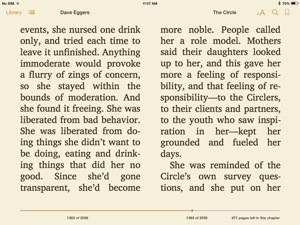
I finished The Circle by Dave Eggers and had a varied reaction to it. It was part genius, mirror, and possible futurist examination. Attentions spoilers are ahead. The book opens with the protagonist, Mae, getting a dream job at a tech company that is Google, Facebook, and Cisco rolled into one. Soon Mae immerses herself in the culture of the Circle. She becomes an extremely productive employee of the Circle and embraces the cult-like philosophy of the company. Mae is an ambassador to the brand of the company. She comes to learn that above all everything must be shared. “Privacy is theft.” The book reads like many dystopian novels, but resonates with some familiarity given our plugged in society.

Some of us were outraged when we found out the depth of surveillance by arms of the government, yet at the same time many of us share intimate details of our lives on blogs, tweets, and status updates on social networking sites. Where is the happy medium? That medium ultimately is what we are comfortable with our particular digital footprints. However, Eggers gets on to something more insidious with the absolute need to share. Sharing is caring and consequently this also means that privacy is selfish. Transparency becomes the norm and this requires completely embracing the panoptican. Jeremy Bentham would be so proud or perhaps horrified. Would it be democratic, though, to make everyone vote? Mandatory voting does exist, but as of right now it is not facilitated by a social networking site.

Dave Eggers is on to something with the book, though. The want to share everything and also feel accountable to your community of watchers is problematic at times. Here, Mae’s thoughts reminds me of disordered eating and people who report their food intake on Mia and Ana sites. How would you act if you were constantly surveilled? The idea is that with an audience one would be on their best behavior–eat right, exercise, and say the right things. But, being on all the time is exhausting and some of Mae’s friends realize this.

20131230-135543.jpg

20131230-135645.jpg


The book might give you pause as you think about your own connectedness. I know that I walked around campus more cognizant of needing to be unplugged.


Eggers, Dave. 2013, The Circle. NY: Vintage Books.

Due Dates

I’ve been a college instructor for some 17  wonderful years. In this time one thing has changed some. I am witnessing more students assume that due dates are a guideline. This is a problem. A due date is set with good reason by most of us. When I am managing a few courses and try to stagger my marking and if 10-30% of the class turns in late work, it really throws things off kilter.

Not only this, but due dates matter. I penalize students 5-10 points per day with late work and this penalty includes the weekends. My philosophy is that the coursework is a job and we don’t normally submit late work to our job. Of course, there will be family deaths, illnesses, accidents and other unforseen situations, but these are quite rare.

This is a post that I have revised. It was four years old and I am re-reading it thinking about how in the last four years I am not quite as agitated about the late work. I have instituted a new policy–I do not accept late work. At first I thought this would cause me problems–it did not. Yes, I am occasionally flexible when a student contacts me about extenuating circumstances, but my newish policy has worked. Minions make me smile and I hope that they do the same for you.

minion

2014: Retrospect

I am thinking about the last year and I have more than a few takeaways; however, I want to focus on five. This year was filled with many highlights and I do not want to do the brag or the humble brag.

What was important to me:

1. My family. My family keeps me grounded. I love the texts from different family members: leave work. Where are you? Are you picking me up? This array keeps me focused while I am work and then focused on my time with them. They are also great at reminding me that I need to unplug.

2. Good health for me and my family. No need to explain more here.

3. Learning. This includes my own learning and others around me. I love teaching and each time I walk into the classroom I think about how lucky I am to get paid to think, read, grade, and write for a living.

4. Leadership. Here I am referring to my own leadership on campus, but also the crucial people who I am learning from thanks to their leadership and mentorship.

5. Listening. Listening is such an important skill to have and when I was an undergrad advisor a major part of that job was listening (and helping) students in my office. Leading a service unit on campus means that I must listen lots to the team and those around me.

I look forward to what the next school term holds. I know that my family will remind me to unplug and that I will continue to learn from those around me.

/home/wpcom/public_html/wp-content/blogs.dir/fa7/15300516/files/2014/12/img_5615.jpg

Finish the Term Strong: Redux

This post is all about suggestions for student success. As a former Undergraduate Advisor and an instructor, I am supportive of student success. I have one more week in the term and due date are looming, but I realize that many of my colleagues have one to two more months left. This post will speak to some suggestions for how students can finish the term strong

1. Go to class

2. Read the syllabus

3. Go to office hours

4. Review points one through three

Seriously, I am not kidding about the above as they are extremely important to student success. As I told a group of librarians today, I might as well say that the sky is blue; however, it is key to emphasize the obvious. There are moment when we need reminding about what is the obvious Beyond the absolute obvious, I also suggest that during the last part of the term that students manage their time well. Now is the time to focus on ending on a high note. It is to easy to finish with the best that you can do in that moment, but that will not make you stand out above the others. I encourage you to become a hermit during the last week or two as you write your papers.

What else can you do? You can visit your Writing Center and then ask if your professor is willing to chat about your draft or to review your draft. Please note that most professors will not copy-edit your draft. Please remember that your professor may have 30-400 students that term, so don’t be too hard on your professor if they are only willing to chat about your paper. If you have a Teaching Assistant, by all means go to her or his office hours. Own your education. Take charge and act like you care. Acting like you care about your education and success really does count for something.

My last words of guidance are about reading the assignments and following directions. I am always surprised and frustrated by the number of students who do not read the syllabus and think that this is not important. A student approached me recently saying, “This is a 12 point font.” I responded, “Yes, it is but it is not Times New Roman 12 and is a huge font. Please review my syllabus.” Following directions is the first part of an assignment and reflect attention to detail. Good luck with the last few weeks and your papers and final!

Graduation is a mere two months away and I can’t wait to sit on the stage and witness this momentous event. Until then, I send positive energy to my students as they wind down. Finish the term well!


20140329-221218.jpg

Reactions to Working

As a parent you learn lots from your kids, and I had one of those moments a few days ago. My teenage daughter is in her second year of working. We were are on our way to an event and she noted that she was not looking forward to seeing some people. Why? Apparently the fact that she is working, is an issue to some of her friends and other parents. The reactions vary from not understanding why she would bother to work, why she chooses to work, how could her parents allow her to work, and curiosity and support for her work. Unfortunately, the last response is less common.

I was surprised. We chatted about the ways that she responds to these comments and I dropped her off at the event. I drove away thinking about how I started working the day that I turned 16 and how I have not stopped. Is it really odd that she’s working? Nope. I was chatting with our family doctor and his daughter is the same age and is also working. And, I have chatted with other parents who have kids in high school and their kids are working, too. When I have chatted with other parents we talk about how our kids are learning life skills–dealing with people, coaching younger kids, organizing workouts, and getting familiar with work and life balance.

When I was walking around campus the yesterday I was thinking about this conversation with my daughter and I also thought about the countless office hours that I have had with students who have an empty or virtually empty resume. Yes, I am relating this moment that I had with my daughter to my work as a mentor and college instructor. I think it is important that young people are giving ample opportunity to work and develop their resumes. Work opportunities provides a chance to mature, learn time management, and make money. I also think that working offers you a chance for maturity and resiliency.

IMG_3506-0.JPG

A New Term: The Promise

It is week 2 of 13 at work and it is filled with new faces, new courses, and lots of promise. I did something a little different last week during one of my lectures. I spent a good chunk talking about my expectations, good habits, things to avoid, and reminded my students to get involved. These points speak to the Fall term at university. I want big things for this term.

The reminder is also important for me. I am in my 17th year of teaching and this means that I am comfortable with my job. Comfort is great and has some pitfalls. I must remember that this new environment is filled with its own jargon and the new students are just figuring out the place–let alone my expectations on the first or second day. As I walked to the lecture hall last week, I had that bounce in my step and I was excited. It was great to see the new group. Welcome to campus, and welcome to my classroom. I know that this particular class is different, as it is team taught.

When I walk into the classroom, I think about my job and how important it is for the students. It is privilege to have an important part in their education. But, as I told them, they need to show up. They need to own their education. I am looking forward to this term. And, I really hope that my students are, too. I’m raising my coffee to my students. Rock this term!

IMG_3400.JPG

Lessons Learned from Advising

Officially I was an Undergraduate Advisor for some odd five years, but unofficially I have worked as a mentor, coach or advisor to my students and peers for as long as I have been in higher ed. Now, that I am a mere two months out of that official capacity I am repeatedly finding that I learned lots from those various moments. I was always appreciative of the special opportunity I had helping students maneuver through their undergrad, grad school, or higher ed more broadly speaking.

First, people often are too busy or perhaps not aware of the institutional or departmental guidelines. This is akin to an instructor reminding students to read the syllabus. We all experience information overload and need reminders to read the syllabus, the agenda, the meeting documents in Sharepoint, the Strategic Plan or the Framework Agreement. People want someone to bounce ideas off or have someone listen to them. Lots of people do not like change and react from a place of fear or anger and these feelings can manifest in some negative ways.

Second, I am often reminded that we forget that if the students were not on campus, we would not have jobs. This is not a controversial statement, but I am well aware that it is. I am not saying that students pay my wage, as that is not the case. Taxpayers pay my wage and that includes me. The current class of kids in Kindergarten is smaller than the graduating class of Grade 12 students. This means that all of the colleges, trade programs, and universities are competing for a shrinking pool of students. In the US, the pool of students is also more diverse and are the babies of the “Leave No Child Behind” policies. Depending on your political inclination, your reaction to this policy will vary. Having other educators in my family means that I am quite familiar with the way in which public school teachers must teach to the test, but this is really a discussion for a different post.

Third, I am a better listener thanks to my years of working with students, advising, and peer mentoring. You cannot help someone if you do not listen. And, listening is a real skill. I do not mean listening and waiting your turn to speak, but really listening to someone. I find that many of us wait to speak, but listening takes more work. I’m still learning, but feel that I am a mindful listener. As I work on a different career path for the next year or so, I look forward to listening and leading.

20140227-173735.jpg

When Students are Petty

This is an old post, but worth sharing. As an academic, you must develop thick skin. We are constantly critiquing one another and praise is not common. However, I try to rectify this with sending note cards via campus mail and positive emails to colleagues and people who work with and for me. Overall, at times people can be petty. This post speaks more so to some of my experiences with students.

Once again, I’m in the process of reviewing my annual Faculty Activity Report. For those of you not familiar with this process, once a year you meet with the department Chair and review your productivity. The array of information includes publications, service, and teaching. I just reviewed the teaching portion with my evaluation scores that the department is most concerned with for my review. My numbers have always been pretty good as a part-time worker and now as a full-time employee. However, I did notice a blip, if you will in one course from the Fall 2009. I had to think back and I recall two industrious people who were so kind to remind me, “We don’t care if you were in a car accident, keep your personal life out of the classroom.” Now, this isn’t a direct quote, but rather a paraphrase from two of the written evaluations. These same two lovely people also scored me with all 0’s. This was the first time ever in my academic career that I was scored with the lowest score.

In July of 2009, I was in a car accident and consequently to this day am still recovering from injuries sustained in the accident. This particular class was in the afternoon and afternoons in the Fall 2009 were hard for me. During the first week of classes, I explained to the class that I was going to stand at the podium more than usual. Usually I work the room–I walk around the room and am very animated. That term–not so much. The truth was that there were some days that I held on to the podium for fear that my left knee might just give out and I might collapse. On one other occasion, I was walking into the class and my knee did give out. I heard a few students gasp.  I was quite embarrassed and explained that this was part of my health issues and end of story. I never belabored my accident more than this.

I was frustrated when I read these two written comments. And, the 0’s factored into my overall score did influence the numbers for that particular course. What is really interesting for me is that per the university guidelines, I have to work with students and their learning disabilities, illnesses, and other registered issues. Students can register with the Resource Centre for Students with a Disability. Their learning plan might include more time with exams or more flexibility with due dates. But apparently for some students–I am not allowed to be human. I cannot mention twice that I am not as mobile around the classroom. I certainly hope that those two people look back at the class and think fondly of those two minutes when they chose to write a cruel comment and circle a series of 0’s.

The good news is that my evaluations were still at or above the department mean so this didn’t mean that I wasn’t eligible for a raise. However, I don’t think that some students realize how they can be cruel. I was more troubled with the statements than the 0’s. The 0’s are really an outlier for the statistical scores. I know that I take the written comments more seriously.

Updating that in 2012 when my partner had a serious illness the vast majority of my students were patient; however, a few were clear that my turnaround for graded work in 10-14 days was unacceptable. I wish them good luck in their lives. I am usually a super star and get graded work returned in 3-7 days. But, alas, my partner was in the hospital and I dropped the ball. <Note sarcasm>. Did I see a drop in my numbers for one class–yes I did. Were the qualitative comments interesting? Yes, the first year students applauded my availability knowing that I had a family crisis, while some of my students in an upper-division course complained about the turn around time for graded work. I had to smile. I cannot please them all and surprisingly the first year students were the most patient.